
Best Low Volatility Slots in Australia for 2026

If low volatility slots are your focus, the casino behind the games matters just as much as the titles themselves — licensing, bonus terms, and payout handling all shape how smoothly your sessions run. Here’s a quick rundown to help you weigh your options.
License: Curacao · Bonus: up to A$2,000 Operates under a Curacao licence and offers a welcome bonus worth up to A$2,000, giving newcomers a solid starting cushion for extended low volatility play.
License: Curacao Gaming Control Board OGL/2023/176/0095 (Hollycorn N.V.) · Bonus: up to A$5,000 + 300 free spins across 4 deposits Licensed by the Curacao Gaming Control Board under Hollycorn N.V., it backs its offering with a sizeable bonus package spread across four deposits, giving players a generous free spins allowance to explore steady-paying slots.
License: international iGaming licence – jurisdiction not named in the source · Bonus: 100% up to A$1,000 + 100 free spins, 35x wagering · Payout speed: PayID 1-24 hours · Min. deposit: A$30 (PayID from A$10) While its licensing jurisdiction isn’t specified, it stands out with fast PayID withdrawals and a low minimum deposit via PayID, plus a wagering-defined bonus that’s transparent about terms.
License: Curacao Gaming Control Board OGL/2023/174/0082 (Dama N.V.) · Bonus: up to A$5,000 + 300 free spins across 4 deposits Holding a Curacao Gaming Control Board licence under Dama N.V., it matches its peers with a multi-deposit bonus structure offering a substantial spins allowance.
License: Curacao eGaming OGL/2024/923/0383 (Antillephone N.V.) · Bonus: up to A$2,000 + 100 free spins across 2 deposits · Min. deposit: A$30 Licensed via Curacao eGaming under Antillephone N.V., it pairs a moderate deposit bonus with free spins across two deposits and keeps the minimum deposit accessible.
License: Curacao eGaming (Dama N.V.) · Bonus: up to A$10,000 + 180 free spins, 40x wagering Operating under a Curacao eGaming licence through Dama N.V., it offers one of the larger bonus ceilings on this list alongside a clearly stated wagering requirement.
License: Curacao Gaming Control Board OGL/2023/176/0095 (Hollycorn N.V.) · Bonus: up to A$11,000 + 300 free spins (code NEO100) Licensed by the Curacao Gaming Control Board under Hollycorn N.V., it features a high bonus cap plus a large free spins bundle unlocked with a bonus code.
Bonus: 240% up to A$4,100 + 300 free spins Its bonus offer stands out with a high percentage match and a generous free spins count, though specific licensing details aren’t listed.
License: Curacao (operating since 2017) · Bonus: 250% up to A$2,000 + 50 free spins on the first of six deposits · Min. deposit: A$20 A Curacao-licensed casino with a track record dating back to 2017, offering a strong percentage match bonus and free spins on an accessible minimum deposit.
Bonus: 100% up to A$750 + 200 free spins, 35x wagering · Payout speed: crypto 30-120 minutes, fiat 24-72 hours · Min. deposit: A$30 Notable for its quick payout speeds, especially for crypto users, combined with a moderate bonus and clear wagering terms for a low entry deposit.
Understanding Low‑Volatility Slots in Australia
I lost a chunk of my rent money on a high-volatility slot before I understood what "volatility" even meant. Big flashy jackpot symbol, bonus round that promised the world, and forty spins later I was staring at an empty balance wondering what happened. Nobody had explained to me that some slots are built to drain your bankroll fast for a shot at a big win, while others are built to let you sit there for hours barely moving your balance in either direction. That’s the difference, and it’s the whole reason this guide exists.
What "volatility" actually means

Volatility is just a word for how a slot pays you back over time. Low-volatility slots pay out more frequently but with smaller rewards. You spin, you win a bit, you spin again, you win a bit more. Nothing dramatic. High-volatility slots do the opposite — they pay out infrequently but with larger wins. You can spin for ages with nothing, then hit something that actually moves the needle.
Neither one is "better" in some universal sense. They’re built for different kinds of sessions and different kinds of players. The mistake I made was treating every slot like it worked the same way, when really I should have looked at what the game was designed to do before I put money into it.
You’ll see the word "variance" thrown around too, especially on older forums or US-facing sites. On this side of the world, "volatility" is the term that’s actually used, so that’s what I’ll stick to here.
How you can actually tell before you play
You don’t need to guess. Pay tables can indicate a slot’s volatility, and if you know what to look for, they’ll tell you almost everything before you commit a single dollar.
A pay table stacked with modest wins across a lot of different symbol combinations, without one enormous jackpot symbol dominating the top line, usually signals a low-volatility game. If the top prize is wildly out of proportion to everything else listed below it, and there are only a couple of symbols capable of producing a decent return, that’s a high-volatility structure. It’s not a perfect science just from glancing at numbers, but the shape of the pay table tells you the shape of the game.

I wish someone had told me to actually open the pay table before spinning. It takes ten seconds and it would have saved me from a few games that I clearly wasn’t suited for that night.
Why this distinction matters more than people admit
Here’s the thing nobody puts on the tin: low-volatility slots allow for longer playing sessions with reduced risk. That’s not a minor footnote, that’s basically the entire pitch. If you’ve got a set amount you’re willing to spend on a night in front of a screen, and what you actually want is for that amount to last — to give you more spins, more small moments of "yes", more time before the balance hits zero — low volatility is doing exactly what you’re asking of it.

The trade-off is real and I’m not going to pretend it isn’t. Players may experience smaller jackpots and payouts compared to higher volatility games. You are not going to hit a screen-filling win on a low-volatility title the way you sometimes can on a high-volatility one. That’s the deal. You’re trading the lottery-ticket dream for a longer, steadier ride. Some nights I want the ride. Some nights, if I’m honest, I still want the ticket. Knowing which one I’m buying before I sit down has made a real difference to how those nights end.
There’s also a practical betting habit worth mentioning here, because it ties directly into how these games are built. It is advisable to place smaller bets on machines with multiple paylines to maximise winning chances. Spreading a smaller stake across more paylines lines up naturally with what a low-volatility game is trying to do for you — frequent, modest returns rather than one big swing. Betting big on a low-volatility machine sort of defeats the purpose; you’re paying high-stakes money for a low-stakes payout pattern.
Low volatility versus high volatility, side by side
| Low-volatility slots | High-volatility slots | |
|---|---|---|
| Payout frequency | More frequent | Infrequent |
| Payout size | Smaller | Larger |
| Session length | Longer, steadier | Shorter, more erratic |
| Risk to bankroll | Reduced | Higher |
| Best suited for | Players who want playing time and smaller, regular wins | Players chasing a big single result and accepting long dry spells |
I’ve played both kinds plenty of times, and the honest answer is that my mood decides which one I reach for more than any strategy does. But at least now I know what I’m choosing, instead of finding out the hard way an hour in.
Where all this sits legally in Australia
This is the part that trips people up more than volatility ever will, because the legal picture here isn’t simple, and most explanations online flatten it into something it isn’t.

The Interactive Gambling Act 2001 (IGA) is the primary Commonwealth law governing online gambling in Australia. It was introduced with a focus on harm minimisation — protecting the public rather than generating tax revenue off online casino products. I’ve also seen the same restriction attributed to an "Interactive Gambling Act 1997" in some older material, which prohibits provision of online casino games to Australian residents. Sources genuinely disagree on the year here, so I won’t pretend there’s one tidy citation — the operative, current framework referenced by regulators today is the 2001 Act, and that’s the one worth remembering.
What the IGA actually bans is clear enough: online casino style games, including slots, poker, blackjack, and roulette, are prohibited under the Interactive Gambling Act 2001. That’s slots specifically named. Not a grey area, not a “depends on the state” situation — it’s a federal prohibition on offering these games to people in Australia.
Here’s the part that surprises a lot of people, including me when I first looked into it properly: it is not illegal for individual Australians to play at offshore-licensed online casinos. The law targets operators, not players. So if you’re an Australian who has spun a slot on an offshore site, you haven’t broken the law. The site offering it to you, on the other hand, is operating outside what Australian law permits — there are no domestically licensed real-money online casino operators available to Australian players, because it is illegal to offer online casino gambling in Australia and it is not possible to obtain a licence to operate an online casino domestically. There’s no local casino licence to check for, because that licence doesn’t exist. Any site claiming to hold Australian government approval for online slots is telling you something that isn’t true.
Compare that to sports betting. Online sports betting is legal in Australia under state/territory licences. That’s a completely different category, licensed and regulated locally, and it’s often confused with online casino products because both fall under "online gambling" in casual conversation. They are not the same thing. Online casino, poker, and in-play betting are prohibited federally under the Interactive Gambling Act 2001, while a bet on the footy through a licensed bookmaker sits on entirely legal ground. Even live betting has a strange split: live, in-play online betting is illegal, but live betting by phone is legal — one of those quirks of the law that makes more sense once you realise the IGA was written before most people were betting from their phones anyway.
Who’s actually in charge of enforcing any of this
There’s no single body running the show, which is part of why the picture feels messy if you’ve never had to look into it. There is no single overarching statute or single overarching gambling authority regulating gambling in Australia — regulation happens at both the federal and the state/territory level, and those layers don’t always line up neatly.
Regulatory landscape
The Interactive Gambling Act is enforced by the Australian Communications and Media Authority (ACMA), which polices prohibited online casino products. The Northern Territory Racing Commission (NTRC) licences most national online bookmakers, acting as a de‑facto online gambling regulator. Each state and territory also has its own gambling regulator, such as the Victorian Gambling and Casino Control Commission (VGCCC), overseeing land‑based venues and local wagering rules.
At the federal level, the Australian Communications and Media Authority (ACMA) is the regulator that enforces the Interactive Gambling Act 2001. ACMA doesn’t license casinos — it polices the boundary the IGA sets, going after operators who offer prohibited products to Australians rather than issuing permissions to run them.
Then there’s a layer that catches a lot of people off guard: the Northern Territory Racing Commission (NTRC) is effectively Australia’s de-facto online gambling regulator, because it licenses most of the national online bookmakers, who base themselves there for lower tax. So when you see an Australian-facing sports betting operator citing a licence, there’s a decent chance it traces back to the NT, even if the company itself operates nationally.
Beyond that, each Australian state and territory has its own separate gambling regulator, covering things like land-based venues and local wagering rules within their own borders. The Victorian Gambling and Casino Control Commission (VGCCC), for instance, monitors all wagering service providers — including ones based in other states — for compliance with the National Consumer Protection Framework. Land-based casinos are regulated by these state government bodies and law enforcement agencies, which is a separate track entirely from ACMA’s federal oversight of online gambling. Two different systems, two different sets of rules, both running at once.

Worth being upfront about something here: state and territory regulators like VGCCC and Liquor & Gaming NSW have limited power over offshore online casinos. They can regulate what happens inside their own state — licensed venues, local wagering providers — but an offshore casino site sitting on a server overseas is largely outside their reach. That gap is exactly why the federal blocking regime exists.
The blocking effort, and why the numbers don’t quite agree
Since ACMA can’t licence or fine most offshore operators directly, its main lever is blocking access. ACMA has ordered internet service providers to block illegal offshore gambling sites since November 2019, which is a fairly blunt but effective tool — if Australians can’t reach the site through their ISP, the operator loses a big chunk of its access to the market regardless of where it’s incorporated.
Sources differ on the number of blocked illegal gambling sites: one report cites 975 sites blocked since November 2019, while a later source lists 1,296 blocked sites plus 220 services that voluntarily exited the market.
The scale of that effort is where sources start to disagree, and I’d rather flag that than pretend there’s one clean figure. One account, from theiaga.org, states that more than 100 illegal gambling services, including online casinos, have exited the Australian market since ACMA began enforcing new rules in 2017 — though that’s one source describing a moving target, not a fixed industry statistic.
On the blocking numbers specifically, there’s a genuine discrepancy between sources. One version puts it at ACMA having blocked access to 975 illegal gambling and affiliate websites since November 2019, as of a 2024 publication. Another, more recent account — from iclg.com, as of August 2025 — puts the figure at 1,296 illegal sites and affiliates blocked since 2019, alongside 220 illegal services having voluntarily exited the Australian market. A separate source, boomaff.com, similarly references over 220 illegal gambling services having ceased operations due to ACMA’s enforcement actions. I’m not going to pick one of these as "the" correct number — they’re tracking an enforcement effort that keeps growing, reported at different points in time, so of course the totals differ. What’s consistent across all of them is the direction: ACMA can request the blocking of websites offering games not permitted under Australian law, such as online casinos, online slots, and in-play online sports betting, and it has been actively doing so for years, with the tally climbing every time someone checks.
What this means if you’re actually sitting down to play
None of this legal detail is trivia for its own sake — it changes what you should expect when you go looking for low-volatility slots in Australia specifically.
There’s no local licence badge to look for on a casino site, because no domestic real-money online casino licence exists to display. That’s not a gap in an operator’s paperwork; it’s the actual state of the law. So the usual advice you’d give on plenty of other markets — "check the licence, check the register" — doesn’t translate here the same way, because there’s no domestic register of licensed online casino operators to check against. Sports betting sites will genuinely carry a state or territory or NT licence, and that’s meaningful. Online casino slot providers won’t, because none of them are licensed to offer that product to you domestically in the first place.
Playing itself isn’t illegal for you as an individual — that offshore point is worth repeating because it’s the bit people get wrong most often. But it means the responsibility for understanding what a game actually is, how it pays, and whether it suits how you want to spend your evening sits entirely with you. Nobody local is vetting the pay table on your behalf. Nobody’s checking that a "low-volatility" label on a slot is accurate before you load it up.
That’s exactly why understanding volatility yourself — reading a pay table, noticing whether wins are frequent-and-small or rare-and-large, deciding upfront which one actually fits your night and your budget — matters more here than it might in a market with a tidy local regulator rubber-stamping everything for you. Nobody’s going to do that homework for you. I found that out the expensive way. You don’t have to.

If gambling stops being fun and starts being something you can’t put down, Gambling Help Online is there, and it’s worth knowing that before you need it, not after.
Low‑Volatility Slot Machines Explained
I used to think a slot machine was a slot machine. Put money in, pull the lever (or these days, tap the screen), hope. It took me a stretch of very unglamorous losing at a regional casino floor to notice that some machines were quietly giving money back to me in dribs and drabs, while others just ate my note in silence for twenty minutes straight. Same denomination, same room, wildly different experience. That’s volatility, and it’s built into the machine before you ever sit down.
volatility
Volatility describes how frequently a slot pays out and the typical size of those payouts; low volatility means frequent, smaller wins, while high volatility means rare, larger wins.
On the physical floor, low-volatility machines are the ones that keep tapping small wins into your balance often enough that you barely notice your credits dropping. You win, you lose a bit, you win again. The swings are shallow. Nobody’s jumping out of their seat, but nobody’s storming off after ninety seconds either.
Reading the pay table before you sit down
Every land-based machine has a pay table, usually a button or a screen tab you can pull up before you commit any money. This is the one piece of information that actually tells you something honest about the machine, and almost nobody bothers to check it.
What I look for now:
- How many symbols pay out, not just the top ones. A pay table stacked with returns for common low-tier symbols usually points to a steadier, low-volatility machine.
- The gap between the smallest and largest prize. A huge spread between the lowest win and the jackpot is a tell for high volatility. A tighter spread usually means smaller, more frequent rewards.
- How many paylines are active and required. More paylines generally mean more chances for the reels to line up something, even if that something is modest.
None of this tells you exactly when a win is coming. It just tells you the shape of the machine’s behaviour over time, which is the only honest thing a pay table can tell you.
Betting structure matters as much as the machine

Here’s the part I got wrong for years: I’d sit at a machine with a decent pay table and then bet in a way that cancelled out the whole point of choosing it. If a machine has multiple paylines, betting small across all of them tends to work better for maximising your chances of landing a winning combination than throwing everything at one or two lines. It’s a small bet, spread wide, rather than a big bet on a narrow slice of the game.
- Spread small bets across multiple paylines to maximise win chances.
- Choose low‑volatility slots when you want longer sessions.
- Place a large bet on a single line on a low‑volatility machine.
- Expect big jackpot wins from a low‑volatility title.
That’s not a guarantee of anything. It’s just the betting structure that actually matches what a low-volatility machine is built to do — pay out often, in small amounts. If you bet like you’re chasing a jackpot on a machine that isn’t built to hand out jackpots often, you’re fighting the design instead of using it.
What steadier play actually feels like
The honest selling point of these machines isn’t that you’ll walk away richer. It’s that your money lasts longer at the table. A low-volatility machine gives you a longer stretch of playing time for the same starting balance, because it’s returning smaller amounts back into your credits more regularly instead of holding everything back for one rare hit.
That’s the whole trade-off, and it’s worth saying plainly:
| Low-volatility machines | High-volatility machines | |
|---|---|---|
| Frequency of wins | More frequent | Less frequent |
| Size of wins | Smaller | Larger |
| Session length on a fixed budget | Generally longer | Generally shorter |
| Jackpot potential | Reduced | Higher |
I’ve sat at both. The high-volatility machine that finally hit felt incredible for about four minutes, then I remembered the ninety minutes of silence before it. The low-volatility machine never gave me that rush, but it also never made me feel like I’d wasted an evening. Different itch, different machine.
Smaller jackpots, and that’s the deal you’re making
Nobody at the casino is going to tell you this outright, but it’s worth saying anyway: choosing a low-volatility machine means you’re also choosing away from the big number on the sign above the bank of machines. The jackpots and top payouts on these machines tend to sit lower than what you’d see on a high-volatility title. That’s not a flaw in the machine. It’s the mechanism working as intended — the money that would’ve gone into one enormous, rare prize gets spread thinner across many smaller ones instead.
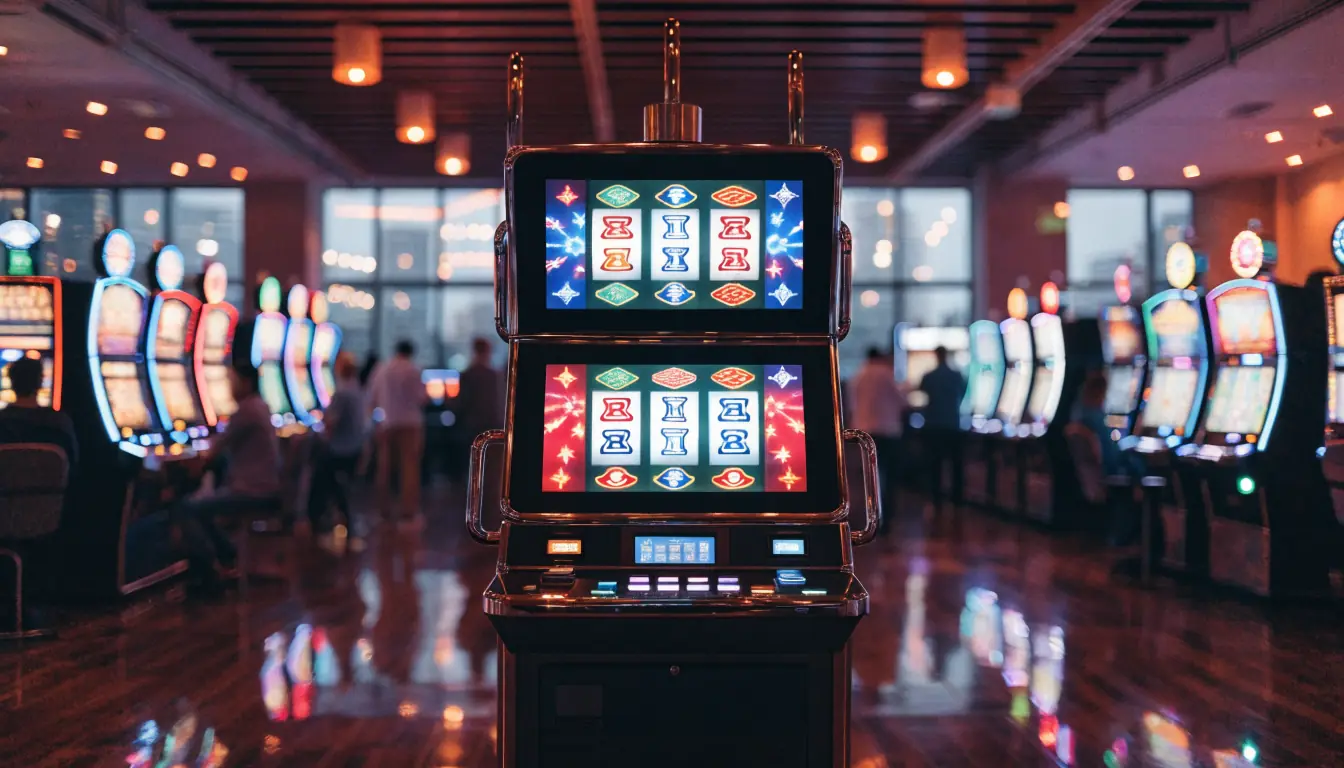
I stopped resenting that trade-off once I stopped treating every session like a lottery ticket. If what you actually want is to sit down, play for a good while, and not watch your balance disappear in ten spins, that spread-out structure is doing exactly what you asked it to.
A short checklist for the floor
Before you feed a note into a physical machine, this is roughly what I run through now:
- Pull up the pay table. Look at how many symbols pay, not just the biggest one.
- Check how many paylines are active, and whether you can bet across all of them for less than betting big on one.
- Ask yourself whether you’re there for a long, steady session or a shot at a big number. Pick the machine that matches the answer.
- Set what you’re willing to lose before you sit down, not after.
None of that is complicated. It’s just the sort of thing I wish someone had pointed out to me before I spent a few too many sessions guessing.
Pragmatic Play’s Low‑Volatility Slots
Pragmatic Play isn’t a name you’ll see marketed as "the low-volatility provider" anywhere — but spend enough time with their catalogue and you’ll notice a pattern. A chunk of their library is built around the same idea: smaller, steadier wins rather than the feast-or-famine swings you get elsewhere in their portfolio.
A low‑volatility slot from Pragmatic Play that offers frequent small wins, keeping the balance steady and extending playtime.
A high‑volatility slot from the same provider that delivers rare, large payouts but can deplete your bankroll quickly.
I got into this because I burned through a session on one of their high-volatility titles in about ten minutes flat. Nothing. Then nothing. Then one big hit that didn’t come close to covering what I’d already lost. That’s the whole point of high-volatility slots — infrequent payouts, larger wins when they land — and it’s not what I wanted that night.
Switching to one of their calmer titles felt different almost immediately. Same provider, same polish, completely different rhythm. Smaller wins landed often enough that the balance didn’t just bleed out.

The way to actually check this before you commit any money is the pay table. It sounds boring, I know, but it’s the one place a slot tells you the truth about itself. Look at the gap between the smallest and largest prizes on offer — a tight gap with modest top prizes usually points to something calmer; a huge spread with a small chance at a massive multiplier is the opposite.
What draws players to Pragmatic Play’s calmer titles isn’t the promise of a jackpot story. It’s that the games keep giving you something to work with. Frequent small returns keep your stack moving instead of watching it disappear in silence between big swings. If that’s the kind of night you’re after, checking the pay table before you spin isn’t optional — it’s the only real clue you get in advance.
Low‑Volatility Pokies in Australia
Ask an Aussie what they’re playing and they won’t say "slots" — it’s "pokies." Same machines, same math, different word, and I still catch myself switching between the two depending on who I’m talking to.
pokie
In Australian parlance, “pokie” is the colloquial term for a slot machine, referring to the same electronic gaming device.

Here’s the thing though: "pokie" doesn’t tell you anything about how the game actually behaves. A pokie can be brutal or gentle, and the terminology gives you zero clue which one you’re looking at. That’s on you to figure out.
Low‑volatility pokies work the same way low-volatility slots do anywhere else — they pay out more frequently, but the rewards are smaller. No secret Australian twist to the mechanics, no local version of the maths. What changes is where you find them and how people talk about them, not what’s under the hood.
For a casual session — say you’re at a mate’s place watching the cricket and want something to fiddle with on your phone during the ad breaks — that steadier payout pattern matters more than chasing one big hit. You get more rounds, more small wins landing along the way, less watching your balance vanish in three spins.
I used to think "low volatility" was just marketing fluff until I actually sat with a session and counted how often something landed versus how often I was staring at a blank screen waiting for the next spin to matter. The difference was real. Longer sessions, less risk of burning through your balance in minutes — that’s the whole appeal.
If someone tells you pokies in Australia work differently to slots elsewhere, they’re talking about the name, not the numbers.
Highest RTP Low‑Volatility Slots

I get why people chase RTP numbers — it feels like the closest thing to a guarantee you’ll find in this business. It isn’t, but it’s still the most useful figure on the pay table.
Here’s the thing about low-volatility slots: the whole appeal is frequency, not size. Smaller wins, more often. Pair that with a decent RTP and you’ve got a game built for sessions, not miracles.
A few names worth knowing from earlier in this piece: Starburst, Gemix, and Wild Wild Chest all sit in the low-volatility camp and get mentioned often for steady, frequent payouts.
My own habit, learned the hard way: spread smaller bets across machines with multiple paylines rather than loading everything onto one big spin. It doesn’t change the math, but it keeps you in the game longer — which, with low-volatility titles, is really the point.
RTP tells you the theory. Volatility tells you how that theory actually feels while you’re playing.
Quick Guide to Low‑Volatility Slot Games
Here’s what I actually check before I sit down at any low-volatility slot game, online or in a venue:
- The pay table first. Before you spin, look at what’s on offer. Pay tables can indicate a slot’s volatility — a table full of modest, frequent wins tells you it’s built for steady play, not a jackpot chase.
- Win frequency over win size. You’re trading big-ticket dreams for a fuller wallet more of the time. If the numbers on the pay table are small but repeat often, that’s the tell.
- Session length as the goal. Low-volatility slots allow for longer playing sessions with reduced risk, so if you’re after hours of play rather than one dramatic swing, this is the category to stay in.
That’s it. Three checks, no guesswork.
What does RTP mean in pokies?
RTP, or Return to Player, indicates how a slot pays you back over time. In low-volatility pokies, this means you’ll see more frequent but smaller rewards, while high-volatility games pay out infrequently but with larger wins.
What are the key limits on providing services to customers?
Online casino games, including slots, poker, blackjack, and roulette, are prohibited from being offered to Australian residents under the federal Interactive Gambling Act 2001. It is illegal to operate an online casino domestically, and the ACMA actively blocks offshore sites offering these prohibited services.
What payment methods are available for Australian players at online casinos?
Some offshore platforms accept cryptocurrencies like Bitcoin, though you should verify how safely your funds are protected before playing, as Australian state regulators have limited power over these offshore operators.