Best 7 Reel Slots in Australia: RTP and Rules Explained
 Available in AU
Before you spin the reels on a 7-reel slot, it helps to know which casinos actually back that experience with solid licensing, workable bonus terms, and dependable payouts. Here’s a quick, no-nonsense verdict on each operator to help you decide where to look closer.
License: Curacao · Bonus: up to A$2,000 Operates under a Curacao licence and offers a welcome bonus of up to A$2,000, giving you a straightforward entry point if you’re after extra bankroll to test 7 reel slots.
License: Curacao Gaming Control Board OGL/2023/176/0095 (Hollycorn N.V.) · Bonus: up to A$5,000 + 300 free spins across 4 deposits Licensed by the Curacao Gaming Control Board under Hollycorn N.V., with a sizeable welcome package of up to A$5,000 plus 300 free spins spread across four deposits, giving you room to build up your bankroll gradually.
License: international iGaming licence – jurisdiction not named in the source · Bonus: 100% up to A$1,000 + 100 free spins, 35x wagering · Payout speed: PayID 1-24 hours · Min. deposit: A$30 (PayID from A$10) Runs on an international iGaming licence and pairs a 100% bonus up to A$1,000 with 100 free spins under 35x wagering; PayID withdrawals are typically processed within a day and deposits start from as little as A$10 via PayID.
License: Curacao Gaming Control Board OGL/2023/174/0082 (Dama N.V.) · Bonus: up to A$5,000 + 300 free spins across 4 deposits Holds a Curacao Gaming Control Board licence through Dama N.V. and offers up to A$5,000 plus 300 free spins across four deposits, useful if you want your bonus spread out over multiple top-ups.
License: Curacao eGaming OGL/2024/923/0383 (Antillephone N.V.) · Bonus: up to A$2,000 + 100 free spins across 2 deposits · Min. deposit: A$30 Licensed by Curacao eGaming via Antillephone N.V., with a welcome offer of up to A$2,000 plus 100 free spins over two deposits and an accessible A$30 minimum deposit.
License: Curacao eGaming (Dama N.V.) · Bonus: up to A$10,000 + 180 free spins, 40x wagering Operates under a Curacao eGaming licence held by Dama N.V. and stands out for a generous bonus of up to A$10,000 plus 180 free spins, though the 40x wagering requirement is worth factoring in.
License: Curacao Gaming Control Board OGL/2023/176/0095 (Hollycorn N.V.) · Bonus: up to A$11,000 + 300 free spins (code NEO100) Licensed by the Curacao Gaming Control Board under Hollycorn N.V., with one of the larger bonuses on this list at up to A$11,000 plus 300 free spins, unlockable via a bonus code.
Bonus: 240% up to A$4,100 + 300 free spins Offers a notably high-percentage bonus at 240% up to A$4,100 plus 300 free spins, making it worth a look if you want a bigger initial boost to your balance.
License: Curacao (operating since 2017) · Bonus: 250% up to A$2,000 + 50 free spins on the first of six deposits · Min. deposit: A$20 Curacao-licensed and operating since 2017, giving it a longer track record than some newer sites; its bonus runs 250% up to A$2,000 plus 50 free spins on the first of six deposits, with a low A$20 minimum deposit.
Bonus: 100% up to A$750 + 200 free spins, 35x wagering · Payout speed: crypto 30-120 minutes, fiat 24-72 hours · Min. deposit: A$30 Combines a 100% bonus up to A$750 with 200 free spins under 35x wagering, and backs it with fast payout options — crypto withdrawals in as little as 30 minutes, fiat within a few days — plus an A$30 minimum deposit.
Table of Contents
- Understanding 7‑Reel Slots in Australia: RTP, Regulations and What Sets Them Apart
- What Is a 7‑Reel Slot Machine? Mechanics, Volatility and Land‑Based Standards
- Playing 7‑Reel Slots for Real Money Online: RTP Advantages and Legal Landscape
- Classic 7‑Reel Slots You Can Play for Free Online – How They Differ
- The Term ‘7‑Reel Slot’: Definition and Why It Matters to Players
- Free 7‑Reel Slots with Bonus, No Download Required – What to Expect
- Safe Online Play: Age, Licensing and Identity Checks for 7‑Reel Slots
Understanding 7‑Reel Slots in Australia: RTP, Regulations and What Sets Them Apart
I got into 7-reel slots the way most people probably do — by accident, clicking through a menu and noticing a grid that looked wider than the usual 5×3 I was used to. More reels, more symbols, more ways for something to happen on screen. That’s it. That’s the whole appeal at first glance. But once you start actually paying attention to what’s underneath the animations, you realise the reel count is the least interesting thing about these games. What matters is the number sitting quietly in the info panel that almost nobody reads on their first spin: the RTP.
I used to skip that screen entirely. Now I check it before I do anything else, and I want to walk through why, because it changes how you think about every 7-reel slot you’ll come across in 2026.
What RTP actually means, without the marketing gloss
RTP stands for Return to Player. It’s the percentage of wagered money a slot machine returns to players over time. That’s the whole definition — no asterisks, no hidden clauses. If a game has an RTP of 96%, the maths behind it is built so that, across a very large number of spins, $96 comes back for every $100 wagered. Not to you personally. Not in your session. Across the whole pool of everyone who’s ever played it, theoretically, forever.
That distinction between "you" and "everyone, theoretically, forever" is where most confusion starts, and it’s worth sitting with for a second, because it’s also where a lot of misleading talk creeps in. RTP is not a promise about your Tuesday night session. It’s a long-run average calculated from probability-weighted outcomes — every possible result on those reels, weighted by how likely it is to occur, averaged out across a simulated ocean of spins. Regulators require this kind of number to be calculated properly, not guessed at, and it has to be verified by an independent third party before a game goes live. That’s not a nice-to-have. It’s the whole reason the number means anything at all.

I’ll say this plainly, because it’s a phrase I’ve genuinely seen thrown around by people who should know better: RTP does not show the exact amount you will win. It never did. It’s not designed to. Treating it as a session-by-session forecast is like reading a life-expectancy table and expecting it to tell you the date on your calendar.
House edge is the mirror image, not a separate thing
Here’s something that took me embarrassingly long to properly internalise: RTP and house edge are inverse values. They’re not two different numbers you need to track — they’re the same fact, described from two directions. If a slot returns 96% to players over time, the house-edge percentage is 4%. One number tells you what comes back, the other tells you what the operator keeps, on average, across that same theoretical run of spins. Add them together and you get 100%, always.
I mention this because Australian sites and reviewers use both terms, sometimes in the same paragraph, and if you don’t realise they’re describing the identical mechanism, you can end up thinking a 4% house-edge slot and a 96% RTP slot are two different categories of game. They’re not. They’re the same game, same maths, just framed from opposite ends. On this market, you’ll more often see it written as "house-edge percentage" rather than the shorter "house edge" or "casino edge" you might spot on other markets — small difference, same idea.
Why Australian pages bother disclosing RTP at all
This is where it gets specifically local. In Australia, game information often includes RTP values to protect players. That "protect" isn’t decorative language — it reflects a broader regulatory instinct in this market that leans hard toward disclosure and harm minimisation rather than restriction-by-vague-suggestion. You’ll see RTP figures sitting next to volatility indicators, paytables, and sometimes a line about the game’s certification body. The presence of that number is itself a signal that someone, somewhere, had to verify it before it could be published.
Verification of RTP figures is mandatory in Australia – a third‑party testing lab must confirm the percentage before it can be published.
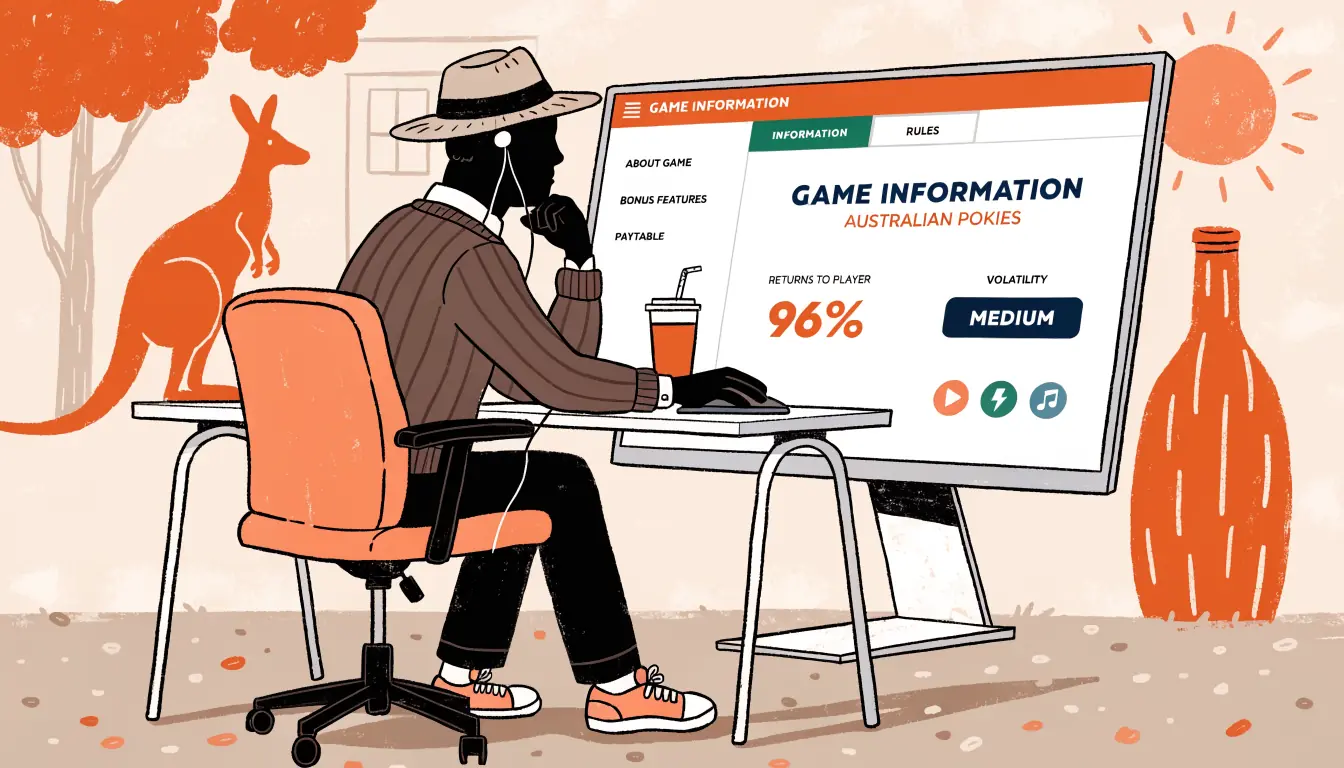
That verification point matters more than people give it credit for. Regulatory certification requires third-party RTP verification — meaning a slot’s advertised percentage isn’t just something a developer typed into a spec sheet and hoped nobody would question. Independent testing labs run the maths, confirm the simulated outcomes match the claimed percentage, and only then does the number get attached to the game publicly. When you see an RTP figure quoted without any indication of where it came from or who checked it, that’s worth noticing — not because the number is necessarily wrong, but because the whole point of RTP as a protective disclosure is the verification chain behind it, not the digit itself.
What counts as "high" and what counts as "low"

There’s a rough industry benchmark worth knowing, because it gives the number some context instead of leaving it floating in isolation. The benchmark sits around 96% — percentages above that are generally treated as high RTP, and percentages below it as low RTP. I don’t treat that 96% as a magic line where good becomes bad. It’s a reference point, nothing more. A slot sitting a bit under the benchmark isn’t automatically a trap, and one sitting above it isn’t automatically generous in any way that matters over a short session. But when you’re comparing two 7-reel titles side by side and trying to work out which one theoretically favours the player more over time, that benchmark gives you something to measure against instead of guessing.
I’d add the obvious caveat here, because it’s the one thing I got wrong for longer than I’d like to admit: a high RTP does not guarantee profit in short sessions. It can’t. The number is an average smoothed out over a volume of spins no single player will ever personally reach. You could sit down at a 97% RTP slot and lose every cent in your session, and the number wouldn’t have lied to you — it just wasn’t describing your session in the first place. It was describing the machine’s long-run behaviour, calculated the same way every other certified slot’s behaviour gets calculated: through probability-weighted simulation, run enough times that the noise cancels out and the underlying maths shows through.
The legal shape of online gambling in Australia — and where 7-reel slots actually sit
Now for the part that actually matters more than any percentage: whether you’re even meant to be playing these games online in Australia in the first place, and under what law.
The primary piece of Commonwealth legislation here is the Interactive Gambling Act 2001, usually shortened to the IGA. It was introduced with a clear stated purpose — protecting the public, with harm minimisation as the central idea running through it, not restriction for its own sake. Under this Act, online casino-style games — and that list explicitly includes slots, alongside poker, blackjack, and roulette — are prohibited.
Illegal Provision
Providing online casino games, including 7‑reel slots, to Australian residents is prohibited under the Interactive Gambling Act.

I want to be precise here rather than vague, because vagueness is exactly what gets people into trouble on this topic. There’s a version of this rule you’ll sometimes see cited under the Interactive Gambling Act 1997, which is described as prohibiting the provision of online casino games to Australian residents. That’s a different year, a different citation, and the two sources I’ve drawn on for this don’t agree on which one is the operative reference. I’m not going to quietly pick one and pretend the discrepancy doesn’t exist — it does, and if you go digging yourself you may run into both citations used interchangeably in different places. What both versions agree on, regardless of which year gets attached to it, is the substance: providing online casino games — slots very much included — to people in Australia is prohibited under this legislative framework.
Here’s the distinction that actually changes how you should think about your own position as a player, and it’s the one part of this legal picture that consistently gets flattened into scarier language than it deserves: it is not illegal for individual Australians to play at offshore-licensed online casinos. The law targets operators, not players. Read that twice if you need to, because it’s the single most misunderstood fact in this entire space. The IGA restricts who can lawfully provide these games to Australian residents — it’s a supply-side law. It was never written to criminalise the person sitting on their couch spinning a 7-reel slot on a site licensed somewhere overseas.
That doesn’t mean the landscape is simple, and it definitely doesn’t mean every offshore operator is equivalent, trustworthy, or even reachable if something goes wrong. There’s no domestic licence category for this kind of online casino product in Australia — none exists, and none can be obtained here for operating one. So any 7-reel slot you play for real money online is, by definition, running under licensing arrangements issued somewhere outside Australia’s own regulatory system. I’ll get into what that means practically for identity checks and safety in a later section, because it deserves its own space rather than a rushed paragraph here. For now, the point I want to land is narrower: the prohibition in Australian law sits on the provider side of the transaction, and understanding that distinction is the difference between panicking over nothing and actually knowing where you stand.
How this differs from other markets, and why it trips people up
If you’ve ever compared notes with someone playing 7-reel slots in the UK or in parts of Europe, you’ll notice the conversation feels different almost immediately. Those markets tend to run on a licensing model where a domestic regulator actively licenses online casino operators, publishes a register, and players are pointed toward "check the licence" as a genuine, actionable piece of safety advice — because there’s something concrete to check.
RTP shows the long‑run return to players; the house edge is simply 100 % minus that RTP.
A verified RTP has been independently tested; an unverified figure may be marketing copy without proof.
Australian‑licensed operators cannot offer slots; offshore sites can, but they lack domestic regulatory oversight.
Australia doesn’t work that way for online casino products, 7-reel slots included. There’s no domestic online casino licence to hold, so there’s no domestic register of licensed online slot operators to check against. The regulatory energy here is aimed almost entirely at the supply side through the IGA’s prohibition, while leaving the player’s individual act of playing outside the criminal frame. It’s a genuinely different structure, not just a stricter or looser version of the same thing — the whole shape of who the law is talking to is different.
This is why I get uneasy when I see advice recycled from other markets and pasted onto Australian pages without adjustment — things like blanket instructions to "always check the operator’s licence in the local register" as if that’s a universally portable piece of caution. On markets where a domestic register exists, that’s genuinely useful advice. Here, there’s no such register for online casino products to check against, so the advice doesn’t transfer cleanly. It’s worth knowing that gap exists rather than assuming the same safety net is sitting under you that would be sitting under a player in a different jurisdiction.

None of this touches sports betting or racing wagering, by the way — those run under a completely separate licensing structure at the state and territory level, and they’re legal in a way that’s structurally distinct from the online casino prohibition. I’m not going to wander into that territory here since it’s a different product category with its own rules, but it’s worth knowing the two aren’t governed by the same logic, so "gambling is legal in Australia" and "gambling is illegal in Australia" are both too blunt to be true — it depends entirely on which product you’re talking about.
Putting RTP and regulation together
So where does that leave you, sitting down to actually look at a 7-reel slot in 2026? Two separate threads, and it’s worth keeping them separate in your head rather than blending them into one vague feeling of "is this safe."
The first thread is mathematical: what’s the RTP, is it disclosed, was it independently verified, and does it sit above or below that rough 96% benchmark. This tells you something about the long-run character of the game itself — nothing about your own session, but something real about how the machine is built.
The second thread is legal: where is this game being offered from, under what licensing framework, and where does Australian law actually draw its line. The IGA framework prohibits the provision of online casino games — slots among them — to Australian residents, while leaving individual play at offshore-licensed sites outside the criminal net. Two different legal citations get thrown around for the origin of that prohibition, and I’d rather flag that inconsistency than pretend one version is settled fact.
I used to conflate these two threads constantly — as if a well-disclosed RTP somehow meant a game was operating in a clean legal space, or as if legal uncertainty automatically meant the maths behind a slot was untrustworthy. They don’t actually touch each other. A slot can have a rigorously verified, independently certified 97% RTP and still be offered by an operator sitting entirely outside any Australian licensing structure, because no such structure exists for this product here. Understanding that these are two unrelated questions — one about probability, one about jurisdiction — is honestly the single most useful mental shift I made once I stopped just chasing the biggest-looking percentage on the screen and started asking what that percentage was actually describing, and under whose authority the game reached me in the first place.
A quick word on why "protecting players" keeps coming up
You’ll notice the phrase "protect players" attached to RTP disclosure requirements, and it’s worth asking what that protection is actually meant to achieve, because it’s narrower than it sounds. It’s not protection from losing money — nothing in an RTP figure prevents that, and nothing legally could, since the outcome of any individual spin is still down to chance regardless of the long-run average sitting behind it. What the disclosure protects against is not knowing — going in blind, with no verified figure at all, trusting a developer’s marketing copy instead of an independently checked number. That’s a meaningfully smaller promise than "protection from loss," and I think a lot of the confusion around RTP comes from people expecting the bigger promise when only the smaller one was ever on offer.
It ties back to the same harm-minimisation thread running through the IGA itself — the emphasis isn’t on stopping people from making their own choices, it’s on making sure the information available to them before they make those choices is accurate, verified, and not dressed up as something it isn’t. A disclosed, third-party-verified RTP figure and a legal framework that targets suppliers rather than players are, in that sense, cut from the same cloth: both are structured around information and accountability sitting upstream of the individual decision, rather than punishment sitting downstream of it.
That’s the frame I’d carry into everything else on this page — the mechanics of how these games are actually built, what playing them for real money looks like in practice, and where the free versions fit into the picture. The number on the info screen and the law sitting behind the operator offering it are two different conversations, and mixing them up is how a lot of players — myself included, for longer than I’d like to admit — end up either more relaxed or more anxious than the actual facts support.
What Is a 7‑Reel Slot Machine? Mechanics, Volatility and Land‑Based Standards
Strip away the marketing and a 7-reel slot machine is just what it sounds like: seven vertical columns of symbols spinning instead of the usual five. More reels mean more symbol positions on screen at once, which usually translates into more ways to line up a win. That’s the whole mechanical pitch. Everything else — the theme, the sound effects, the "bonus wheel" — is dressing on top of that basic grid.
I used to think more reels automatically meant a better game. It doesn’t. It means a different game, with its own rhythm.
Volatility: why some 7‑reel games feel dead, then explode
Volatility describes win patterns, frequency and size of payouts. A low-volatility machine gives you small, frequent hits that keep the balance ticking over without much drama. A high-volatility one goes quiet for long stretches, then pays out in a lump that’s supposed to make up for the silence. With seven reels, developers have more room to stack volatility high, because there are simply more symbol combinations available to gate behind rarer outcomes.
That’s the trap I fell into early on. I sat at a 7-reel game expecting the extra reels to mean extra action, and instead got long, flat stretches with nothing happening. Turned out I’d picked a high-volatility title and judged it after twenty minutes, which is nowhere near enough spins to see its actual pattern.
RNG: no memory, no pattern to chase
Every spin runs through a random number generator, and each spin is independent — the RNG ensures outcomes are random and not influenced by previous spins. This matters more on 7-reel machines than people assume, because the extra columns tempt players into thinking there’s some sequence to spot: "it’s been cold for a while, it’s due." It isn’t due. The machine has no memory of the last spin, and the next one doesn’t owe you anything.
I know that sounds obvious written down, but sitting in front of a machine at 1am, tired and $50 lighter, it stops feeling obvious. It’s worth saying plainly here because the rest of this guide talks about RTP and volatility as if they’re strategy tools. They’re not. They describe the game’s design, not a way to beat it.
Land-based standards: the Crown Perth floor
Software design is one thing; the physical, regulated version on a casino floor is another. In Australia, land-based machines operate under minimum return-to-player rules set by the venue and its regulator. All slot machines at Crown Perth, for instance, have a minimum RTP of 90%. That’s a floor, not a target — individual machines can and do sit above it.
Put that next to how RTP actually works: a 96% RTP slot is built to return about $96 for every $100 wagered, calculated over a very large number of spins, not over your Saturday night. A 90% minimum on a land-based floor sits noticeably below that 96% figure some digital machines are built around. It doesn’t make the land-based version broken — it’s a regulatory floor, not a promise — but it’s a real gap worth knowing before you assume every 7-reel cabinet in a venue performs the same as its online counterpart.
None of this — RTP, volatility, RNG — tells you when a machine will pay. It tells you how it’s built. Those are different things, and mixing them up is how I lost more sessions than I’d like to admit.
Playing 7‑Reel Slots for Real Money Online: RTP Advantages and Legal Landscape
Here’s the thing nobody tells you when you first search for a 7-reel slot to play for actual money: the machine at the pub and the game on your screen aren’t built the same way underneath. Online slots run higher RTP than their land-based cousins. That’s not marketing spin — it’s just how the economics work when you’re not paying for a physical cabinet, a venue floor, and a technician to service it.
RTP itself isn’t a guess someone typed into a spreadsheet. It comes from running millions, sometimes billions, of simulated spins through the game’s math model before it ever goes live. Take a simplified version of what that means in practice: if a slot took in $110,000 across all bets and paid out $100,000 in winnings, you’d be looking at an RTP of 90.9%. Scale that up to the simulation numbers providers actually run, and you get a stable percentage instead of something that swings wildly from week to week.

Where this gets less straightforward is the legal side, and I wish someone had explained it to me plainly instead of letting me piece it together from forum posts. In Australia, the Interactive Gambling Act 2001 is the federal law governing this space, and its focus is harm minimisation. Under that Act, online casino games — slots included — are prohibited from being offered to Australian residents by operators here. There is no local licence you can point to and say "this site has it," because that licence doesn’t exist for online casino products in this country.
What the law doesn’t do is criminalise you for playing. The Act targets operators, not individual players. So if you’re placing real-money bets on a 7-reel slot hosted offshore, you’re not breaking the law by doing so — but you’re also playing on a site that has no domestic oversight, no local regulator checking its RTP claims, and no Australian dispute process if something goes wrong.
That gap matters more than the RTP number does. A "verified" badge on a game means little if there’s no local body behind the verification. Before you deposit anything, it’s worth being honest with yourself about what protection actually exists versus what a homepage implies. Sports betting and lotteries are licensed properly in Australia. Online casino slots, including 7-reel ones, sit in a different, murkier category — legal to play, but not licensed here, and that distinction is the one thing worth remembering before real money leaves your account.
Classic 7‑Reel Slots You Can Play for Free Online – How They Differ
I spent a stretch of last year clicking through demo versions of classic 7‑reel machines before I’d risk a cent on them. Good habit, honestly. It’s the closest thing to a test drive you get in this hobby.
Here’s what nobody tells you upfront: the free version isn’t just the real thing with a "no money" sticker on it. The maths engine underneath can behave the same, but what you’re shown, and how long you play before it means anything, is different.

Take a title like Cat’s Soup, which BGaming lists with a 98.06% RTP and medium volatility. That number is theoretical — it’s the built-in percentage the game is designed to pay out over a very long run, not something you’ll see confirmed in a twenty-minute free session. When you’re playing for fun with no balance at stake, you’re watching experienced RTP: whatever pattern of wins and dry spells happens to show up for you, right then. It can look nothing like the number on the info screen, and that’s normal, not a glitch.
This matters more with classic 7‑reel setups because the extra reels change how volatility feels in a short free spin. A medium-volatility game like Cat’s Soup will still throw you a run of nothing followed by a decent hit — free play just means you can sit through more of those dry runs without caring.
What to actually watch for in a free version
- The stated RTP is a target, not a promise. A 96% RTP slot is built to return around $96 for every $100 wagered over its full lifetime — free play won’t get you anywhere near that sample size.
- Volatility shows up faster in demo mode because you’re not flinching every time the balance drops. You notice the swings more honestly.
- Free versions are the right place to learn a game’s rhythm — how often it pays small, how long the quiet stretches run — before real-money play changes how you read the same information.
Free 7‑reel classics are a genuine tool for that. Just don’t mistake a few dozen free spins for evidence of anything.
The Term ‘7‑Reel Slot’: Definition and Why It Matters to Players
Strip away the marketing gloss and a 7‑reel slot is exactly what it says: a game built around seven vertical reels instead of the usual five or three. That’s it. No secret formula, no hidden category of "better" machines. I used to think more reels meant more chances to win — turns out reel count on its own tells you nothing about what you’ll actually get back.
What it does change is the math behind the screen. More reels usually means more symbol positions in play, which affects how the game’s probability‑weighted outcomes get calculated — and that math is what produces the RTP, the percentage of wagered money the machine is built to return over time. Same principle as any slot, just spread across a wider grid.
So when you see "7‑reel" in a title, treat it as a layout description, not a promise. The number that actually matters is the RTP listed next to it.
Free 7‑Reel Slots with Bonus, No Download Required – What to Expect
Type "free spins" or "bonus round" into any slot search and you’ll get a wall of results promising both, no download, no fuss. Fair enough — that’s exactly what most of these pages deliver. You click, the reels load in the browser, and you’re spinning with a fake balance.
Here’s the part people skip: a "bonus" doesn’t change how the maths behind the slot works. It’s a feature, not a discount. Some titles bundle a Hold & Spin mechanic — Blazing Fire Pots Hold & Spin runs at 96.27% RTP with medium‑high volatility, according to its provider, BGaming — and that number stays the same whether you’re playing for fun or for real stakes, because the free version just mirrors the paid one.
One thing worth remembering: progressive jackpot slots often carry lower RTP, since part of every wager feeds the prize pool. "Bonus" on the box says nothing about that.
Safe Online Play: Age, Licensing and Identity Checks for 7‑Reel Slots

Here’s the part nobody wants to hear but everyone should: there’s no local licence to check. Real-money online casino games, 7-reel slots included, aren’t licensed for Australian residents at all. The Interactive Gambling Act 2001 makes offering them illegal, full stop. No registry, no "verified operator" badge that means anything here. Anyone telling you to "check the licence" on an Australian-facing casino site is asking you to check something that doesn’t exist.
That doesn’t make it illegal for you personally to spin a 7-reel slot on an offshore site — the law goes after operators, not players. But it does mean you’re on your own for due diligence.
A few things I actually stick to:
- Age gate first. Under-18 access isn’t a grey area, it’s a hard no.
- Identity checks before withdrawal. If a site skips ID verification entirely, that’s a red flag, not a convenience.
- Treat “responsible gambling” messaging as mandatory, not decoration. If it’s missing, so is the operator’s basic compliance.
No badge fixes the legal gap. Just informed caution.
Is online gambling legal in Australia?
Online sports betting is legal under state or territory licences, but online casino games, pokies, poker, and in-play betting are federally prohibited under the Interactive Gambling Act 2001. However, it is not illegal for individual Australians to play at offshore-licensed online casinos, as the law targets operators, not players.
What does RTP mean in pokies?
RTP stands for Return to Player — the percentage of wagered money a slot returns to players over time. For example, a 96% RTP game is mathematically built to return around $96 for every $100 wagered across a very large number of spins. It is a long-run average verified by independent testing labs, not a guarantee of your session results.
Are my personal and financial details safe?
Regulatory bodies require third-party verification of game maths to protect players, but the general safety of your personal and financial details depends on the specific operator’s security measures and licensing jurisdiction.
What are the mobile experience considerations?
The same slot can have different RTP versions at different operators, so when playing on mobile you should still check the game’s info panel to verify the RTP and volatility before spinning. Aside from checking those figures, specific mobile experience details depend on the operator’s platform and interface design.
Written by the editors at Casino Payments Guide.