
Casino Gambling in Australia: Rules, Bonuses and Payments
 Available in AU
With so many casino sites competing for your attention, it helps to see how each one stacks up on licensing, bonus terms, and payout practicalities before you sign up.
License: Curacao · Bonus: up to A$2,000 Holds a Curacao licence and offers a welcome bonus of up to A$2,000, giving you a straightforward entry point if you’re after a sizeable initial match.
License: Curacao Gaming Control Board OGL/2023/176/0095 (Hollycorn N.V.) · Bonus: up to A$5,000 + 300 free spins across 4 deposits Operates under a Curacao Gaming Control Board licence via Hollycorn N.V., and its welcome package spreads up to A$5,000 plus 300 free spins across four deposits, giving you room to build your bankroll gradually.
License: international iGaming licence – jurisdiction not named in the source · Bonus: 100% up to A$1,000 + 100 free spins, 35x wagering · Payout speed: PayID 1-24 hours · Min. deposit: A$30 (PayID from A$10) Runs on an international iGaming licence and pairs a 100% bonus up to A$1,000 with 100 free spins on 35x wagering; fast PayID withdrawals within 1-24 hours and a low A$10 minimum deposit via PayID make it convenient for quick top-ups and cash-outs.
License: Curacao Gaming Control Board OGL/2023/174/0082 (Dama N.V.) · Bonus: up to A$5,000 + 300 free spins across 4 deposits Licensed by the Curacao Gaming Control Board through Dama N.V., with a welcome offer of up to A$5,000 plus 300 free spins spread over four deposits for you to unlock in stages.
License: Curacao eGaming OGL/2024/923/0383 (Antillephone N.V.) · Bonus: up to A$2,000 + 100 free spins across 2 deposits · Min. deposit: A$30 Licensed under Curacao eGaming via Antillephone N.V., offering up to A$2,000 plus 100 free spins across two deposits, with a A$30 minimum deposit to get started.
License: Curacao eGaming (Dama N.V.) · Bonus: up to A$10,000 + 180 free spins, 40x wagering Holds a Curacao eGaming licence through Dama N.V. and offers a generous welcome bonus of up to A$10,000 plus 180 free spins, though the 40x wagering requirement is worth keeping in mind.
License: Curacao Gaming Control Board OGL/2023/176/0095 (Hollycorn N.V.) · Bonus: up to A$11,000 + 300 free spins (code NEO100) Licensed by the Curacao Gaming Control Board via Hollycorn N.V., with a large welcome bonus of up to A$11,000 plus 300 free spins available through the code NEO100.
Bonus: 240% up to A$4,100 + 300 free spins Stands out for a high-percentage welcome offer of 240% up to A$4,100 plus 300 free spins, giving you a substantial boost on your first deposit.
License: Curacao (operating since 2017) · Bonus: 250% up to A$2,000 + 50 free spins on the first of six deposits · Min. deposit: A$20 A Curacao-licensed operator running since 2017, offering 250% up to A$2,000 plus 50 free spins on the first of six structured deposits, with a A$20 minimum deposit to join.
Bonus: 100% up to A$750 + 200 free spins, 35x wagering · Payout speed: crypto 30-120 minutes, fiat 24-72 hours · Min. deposit: A$30 Offers a 100% bonus up to A$750 plus 200 free spins on 35x wagering, with quick crypto payouts within 30-120 minutes or fiat within 24-72 hours, and a A$30 minimum deposit.
Table of Contents
- Legal Landscape and Player Information in Australia
- Casino Bonuses: What’s Allowed and What Isn’t
- Payments and Deposits: Methods Permitted for Australian Players
- Game Types Available to Australian Players
- Understanding Casino Reviews When Operators Are Offshore
- Online Casino Providers Targeting Australian Players
- Regional Considerations: State and Territory Regulations
Legal Landscape and Player Information in Australia
First time I tried to figure out who actually regulates online gambling here, I expected one body, one website, one set of rules. Took me an embarrassing number of tabs to realise that’s not how it works. There’s no single law and no single regulator covering the whole thing — it’s split between the Commonwealth and the states, and nobody hands you a summary.
At the federal level, the relevant law is the Interactive Gambling Act 2001. The body that enforces it is the Australian Communications and Media Authority — ACMA. That’s the name you’ll see turning up in press releases about blocked sites and warning notices. But ACMA doesn’t license casinos, doesn’t run a complaints desk for your withdrawal that never arrived, and doesn’t sit above the states telling them what to do. It has one job: enforce the federal law on interactive gambling. That’s it.
Then you’ve got the states and territories, and this is where it gets genuinely messy. Every single one runs its own regulator, with its own remit, its own paperwork, its own priorities. There isn’t a state-level body that regulates "online casinos" for Australians, because none of them license online casinos — that market doesn’t exist domestically, full stop. What the state regulators actually do is oversee the stuff that is legal in their patch: land-based casinos, wagering operators headquartered there, poker machines in pubs and clubs.
Who does what
Roughly how the pieces sit:

- ACMA — federal, enforces the Interactive Gambling Act 2001, deals with illegal offshore operators (blocking, warnings, referrals).
- Northern Territory Racing Commission (NTRC) — licenses most of the national online bookmakers, largely because the tax setup there is friendlier than elsewhere. This has made it the de-facto regulator for online wagering in practice, even though it’s technically just one territory’s body.
- Victorian Gambling and Casino Control Commission (VGCCC) — doesn’t just watch Victorian operators. It monitors wagering service providers across the country for compliance with the National Consumer Protection Framework, regardless of where they’re actually based.
- Liquor & Gaming NSW and the equivalent bodies in other states and territories — each handling their own patch, mostly land-based venues and locally licensed wagering.
Land-based casinos sit in a completely different lane again. Those are regulated by state government bodies and law enforcement, not by ACMA — the physical casino on the corner and the "online casino" you find through a search are governed by entirely separate machinery, even though they share a name.
Where this leaves you as a player
Here’s the part that actually matters if you’re trying to play something. None of these regulators — not VGCCC, not Liquor & Gaming NSW, not any state body — has real authority over an offshore online casino. They can monitor, they can flag, they can publish warnings. What they can’t do is force a site licensed in another country to pay you, follow Australian consumer protection rules, or answer to an Australian ombudsman. I learned this the annoying way, chasing an operator that simply stopped replying. There was no local body to escalate it to, because no local body ever licensed that site in the first place.
So the practical picture looks like this: sports betting and racing are legal and licensed, mostly out of the Northern Territory, with oversight layered on top by bodies like VGCCC. Online casino games — pokies, blackjack, roulette, that whole category — aren’t licensed anywhere in the country, by any regulator, state or federal. Not because nobody’s got around to it yet, but because the federal law specifically rules it out. Whatever site you’re looking at, if it’s taking real-money casino bets from an Australian address, it’s operating from somewhere else, under somebody else’s rules.

That’s not automatically a red flag on its own — plenty of licensed offshore operators serve this market and have for years. But it does mean the safety net you’d expect from a domestic regulator simply isn’t there. No local licence to check, no local complaints tribunal, no VGCCC hotline for an offshore dispute. Worth sitting with that before you deposit anything, not after.
The next sections get into what that split actually means for bonuses, payments, and the games themselves — because "legal at federal level" and "regulated at state level" turn out to affect very different parts of the experience.
Casino Bonuses: What’s Allowed and What Isn’t
Here’s the thing that trips people up: since every real-money casino site taking Australian players is offshore, none of them are operating under Australian advertising rules by choice. They’re not allowed to advertise to you in the first place. The Interactive Gambling Act doesn’t just ban the games — it bans the promotion of them. So the moment you see a flashy offer plastered across a page, aimed at Australians, you’re already looking at something that shouldn’t exist under local law, regardless of what the fine print says.
I used to think "bonus" meant free money with a few strings attached. It took losing a decent chunk of a "deposit match" to a bet I didn’t understand to figure out that the string is the whole point.
What operators legally cannot do

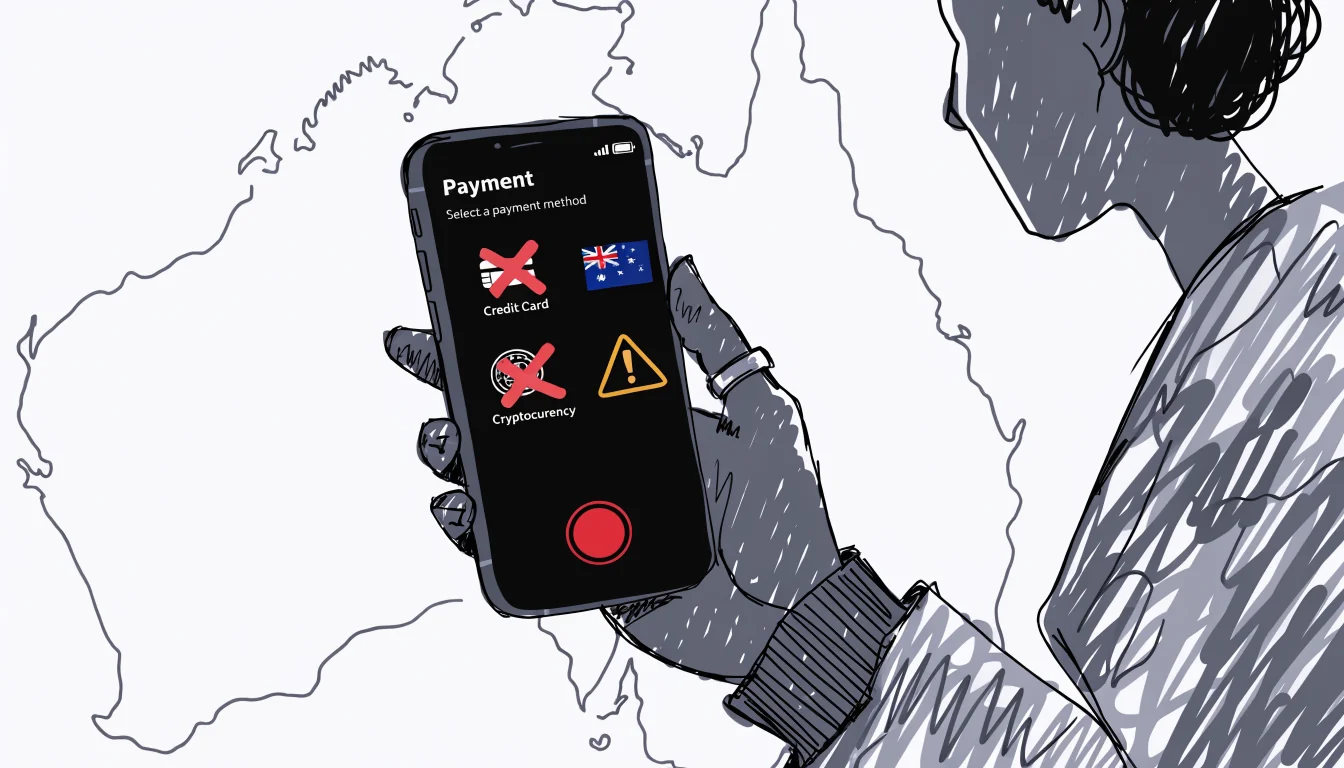
Under the advertising restrictions that apply to this market, no operator is allowed to run what’s typically called a "welcome bonus" — that phrase itself describes an inducement to open an account, and offering a reward specifically to get someone to sign up is treated as an illegal inducement. Doesn’t matter if it’s framed as a deposit match, free spins, or "bonus credit." If the trigger is opening a new account, it’s off-limits.
That also rules out:
- Any bonus advertising directed at social media or other online platforms
- Static ads promoting a betting or gambling offer
- Any promotional language that treats losing money lightly, or turns problem gambling into a joke
None of that is a grey area. It’s a straight breach.
What’s technically still out there
None of this stops offshore casinos from running promotions anyway. They’re outside Australian jurisdiction, and ACMA can block a website, refer a case to the Australian Federal Police, or lean on an ISP — but it can’t force a Malta or Curacao-licensed site to rewrite its bonus terms. So bonuses keep showing up. What changes is how they’re framed, at least on sites that bother to look compliant: less "sign up and get rewarded," more generic loyalty perks buried a few clicks into the site rather than screamed on the homepage.
That distinction matters more than it sounds. A site actively pushing bonus offers at Australian visitors through ads or affiliate placements is showing you exactly how much it cares about the rules that are supposed to protect you. A site that quietly lists ongoing promotions inside a members’ area, without chasing new sign-ups through inducements, is still offshore and still outside the law’s reach — but at least it’s not compounding the problem by advertising illegally on top of operating illegally.
Wagering requirements: the part that actually costs you money
Whatever the bonus is called, Australian rules require the terms — specifically the wagering requirements — to be displayed clearly and up front, before you’re offered anything. Not in a help article. Not after you’ve already opted in. Before.

Wagering requirements are the play-through conditions attached to bonus funds: how many times you need to churn the money through games before you can touch it as real cash. I’ve opened bonus terms that read like they were written to be skipped, three clicks deep in a PDF nobody links from the promo banner. If a site is asking you to accept a bonus before it will show you the wagering requirements, that’s the sign to close the tab. Not because the bonus is definitely rigged, but because the site’s already choosing not to comply with the one part of the framework designed for your benefit.
What to actually check before touching any offer
- Are the wagering requirements shown before you accept the bonus, not after
- Is the promotion framed as an ongoing perk, or clearly aimed at getting you to sign up
- Does the site push the offer through ads or affiliates, or just list it quietly on-site
- Is there responsible-gambling messaging anywhere near the offer, or is it just upside with no context
None of these tell you whether a casino will actually pay you. They tell you whether the operator treats the advertising rules as real. In a market with no local licence and no register to check, that’s most of the signal you get.
The honest version of this section is short: a compliant bonus, by Australian advertising standards, barely looks like a bonus at all. It’s not chasing you. It’s not hiding the wagering requirements. And it’s definitely not calling itself a "welcome" anything. If what you’re looking at ticks the opposite of all three, that’s not marketing flair — that’s the tell.
Payments and Deposits: Methods Permitted for Australian Players
I found this out the hard way, sitting there with a card that kept getting declined and no idea why. Turns out my bank wasn’t being difficult — the law had already made the decision for me. Credit card deposits for gambling are prohibited in Australia. Doesn’t matter which offshore site you’re on, doesn’t matter how "instant" their deposit page claims to be. If a payment method reads out as a credit card, it’s off the table.
Same goes for digital currencies. Bitcoin, Ethereum, whatever else gets pitched to you as the fast, anonymous way to fund an account — none of it is a legal deposit route for Australian players anymore. I’ve seen offshore casinos still list crypto options on their banking pages like nothing changed. Nothing changed for them. It changed for you.
What you can actually use
This is where it gets a bit less dramatic than the warnings make it sound. There are still working ways to move money, they’re just narrower than they used to be.
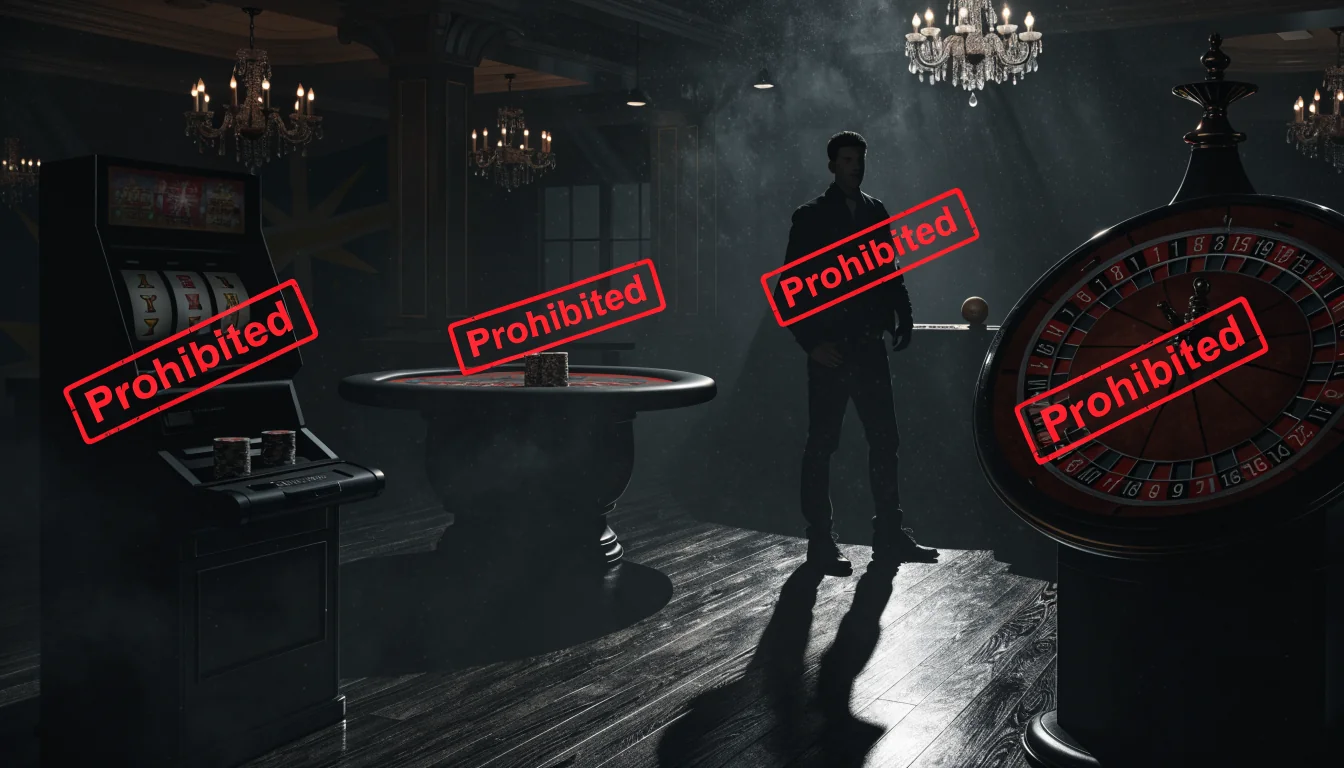
- PayID — this is the one most Australians I know default to now. It’s tied to your bank account, moves fast, and doesn’t carry the same red flags a credit card transaction does.
- Bank transfers (debit-linked) — standard transfers from a bank account, not a credit line, remain a permitted route.
- E-wallets — some offshore operators still offer wallet-based deposits, though which ones are available depends entirely on the platform and its own compliance posture.

Notice what’s missing from that list. No credit cards. No crypto. If a site pushes either as a "quick option," that’s a signal about how seriously they’re taking the rules that apply to you, not just to them.
Why the restriction exists, and why it doesn’t go away at checkout
The Interactive Gambling Act 2001 is the law doing the work here, and its whole point is harm minimisation — not making your life difficult for its own sake. Credit cards let you spend money you don’t have yet. Crypto strips out the paper trail and the friction that makes people pause before a transaction. Both of those things make gambling losses easier to rack up without noticing. That’s the actual reasoning, not just red tape.
What surprised me is that this restriction applies regardless of where the casino is licensed. It’s not an Australian licensing condition, because there’s no such licence to attach it to. It’s a restriction that sits on the payment method itself, at the banking level, on the Australian side of the transaction. So even a casino running out of Curacao or Malta, with none of its own operations in Australia, still can’t get a credit card transaction processed for an Australian gambler. The banks and payment processors are the ones enforcing it in practice.
KYC comes with the territory
Before any of this matters much, you’ll go through KYC — Know Your Customer checks — which means handing over identification. I used to find this annoying, honestly, filling out forms and uploading a driver’s licence just to move my own money. But identity verification before withdrawal isn’t optional for the operator to skip, and it’s not there to slow you down for fun. It’s the mechanism that confirms you’re actually 18 or older and actually who you say you are, which matters more once real money is leaving an account rather than going into one.
Reading a banking page like you mean it
Here’s the practical habit I picked up: before depositing anywhere, I go straight to the banking or payments page and read what’s listed, not what the promotional banner says. If credit card logos are sitting there next to a "deposit now" button, or crypto icons are still up top like it’s 2021, that tells me the operator hasn’t updated its systems to match Australian restrictions — or doesn’t care to. Either way, it’s not a good sign for anything else on the site either.

The methods that do work — PayID, straight bank transfers — aren’t exciting. No loyalty points for using them, no flashy branding. Just money moving from your account to theirs and, eventually, hopefully, back. Boring is fine. Boring is what you want when it’s your own cash on the line.
One quiet reality worth sitting with: none of this makes the underlying activity risk-free, and Gambling Help Online exists precisely because payment restrictions don’t stop losses on their own — they just make the path to those losses slightly less frictionless than a tap of a credit card would be.
Game Types Available to Australian Players
Here’s where a lot of people trip up, because the law doesn’t ban "gambling" as one big category. It splits games into two piles: the ones you can legally play online through a licensed local operator, and the ones you technically can’t be offered at all, no matter who’s running the site.
Online sports betting and racing sit in the legal pile. You can put money on the footy, the horses, or pretty much any sporting market through an operator licensed by an Australian state or territory. That part’s straightforward and nobody’s hiding it.
Everything that looks like a casino floor is different. Online pokies, poker, blackjack, roulette — all of it falls under "interactive gambling services" as defined by the Interactive Gambling Act 2001, and offering those games to someone in Australia is illegal for the operator. Not a grey area, not a loophole, just illegal to provide. I spent a while assuming "illegal" meant illegal for me too, and that’s not how it’s written. The Act goes after the business offering the game, not the person clicking play. So you won’t get a knock on the door for spinning a pokies reel on your phone — but you also won’t find a single Australian-licensed casino site to do it on, because none exists and none can be licensed here.
What’s actually banned
- Online pokies — the digital equivalent of the machines in pubs and clubs, prohibited under the IGA regardless of theme or provider.
- Online poker — cash games and tournaments both, banned the same way.
- Blackjack, roulette, baccarat and other table games — same rule, same Act.
- In-play (live) betting online — placing a bet after a sporting event has started is illegal if done through a website or app.

That last one trips people up because it’s specific to how you place the bet, not what you’re betting on. Betting on the same match before it starts is fine through a licensed bookmaker. Betting on it mid-game through an app is not. Oddly, ringing up and doing the same live bet by phone is legal — a leftover quirk of how the law was drafted, and one that shows its age.
What’s legal
- Sports betting — footy, cricket, tennis, whatever’s on, through a state or territory licensed bookmaker.
- Racing — horses, greyhounds, harness racing, same licensing setup.
- Lotteries — licensed and sold openly.
That’s the entire legal online list. No pokies, no poker, no roulette, no blackjack, no in-play. If a site offers those and claims to be operating for Australians, it’s not doing so under any local licence, because that licence doesn’t exist.
So where do the pokies and table games actually come from?
Offshore. Every real-money pokies, poker or roulette game an Australian plays online comes from an operator based outside the country, running on a licence from somewhere like Curacao, Malta, or Kahnawake. That’s not a dark secret — it’s just the only way these games exist online for Australian players, because domestic licensing was never on the table for casino-style games in the first place. The games themselves are usually built by studios you’ll recognise once you start looking — Pragmatic Play pokies, Evolution Gaming live tables, NetEnt slots, Microgaming titles — and the software doesn’t change depending on who’s licensing it. What changes is who’s accountable when something goes wrong, and the honest answer is: not ACMA, and not any Australian regulator, because it’s outside their reach.

I used to think "well, it’s the same game, same software, so it doesn’t matter where it’s licensed." It matters more than the graphics on the screen. The Curacao or Malta licence is what determines whether there’s anyone to complain to if a withdrawal gets stuck. The IGA doesn’t touch that relationship at all — it only tells you the game shouldn’t have been offered here in the first place.
Where poker sits, specifically
Online poker gets lumped in with casino games under the IGA, not treated separately like it sometimes is elsewhere. Doesn’t matter if it’s played against other people rather than the house — the Act doesn’t distinguish. Same for blackjack variants, roulette variants, and anything branded as a "live dealer" table. If it’s playable for real money through a screen and it’s not sports or racing, it’s in the prohibited category.
The practical upshot: if you’re trying to work out whether a specific game is allowed, ask what it’s not — is it a sporting event, a race, or a lottery draw? If yes, legal, licensed locally, easy. If it’s pokies, poker, blackjack, roulette, or any live in-play bet placed through an app or website, it’s not something any Australian licence covers, and won’t ever be, under the law as it stands.
Understanding Casino Reviews When Operators Are Offshore
Here’s something that took me embarrassingly long to work out: every real-money online casino review you read about an Australian-facing site is, by definition, reviewing a business that isn’t allowed to operate here. There’s no local licence to check because there’s no local licensing regime for online casinos at all. So when a review tells you a site is "fully licensed and regulated," the first question isn’t whether that’s true — it’s regulated by whom, and does that regulator have any actual reach into what happens to your money once you’re a customer.

I used to skim past the licensing line entirely. Now it’s the first thing I look for, and the second thing I look for is what that licence actually means in practice.
Why "offshore" isn’t automatically a red flag — but it changes what you’re checking
Under the Interactive Gambling Act 2001, it’s the operator that’s breaking the law by offering casino games to Australians, not the player sitting on the couch playing them. That’s a genuinely useful fact to know, because it means you’re not doing anything illegal by reading a review or signing up. But it also means ACMA, the regulator that enforces the IGA, has no power to license these operators, audit their payout percentages, or force them to pay out a disputed withdrawal. ACMA can block the website in Australia and refer directors to other agencies — that’s the extent of its reach over an offshore business. It can’t act as your ombudsman.
So a review that leans on "Australian-regulated" language is either wrong or hoping you won’t check. There’s no such thing, for online casino games. What a decent review can tell you instead is which overseas regulator actually issued the licence — Malta Gaming Authority, UK Gambling Commission, Curacao Gaming Control Board, Kahnawake Gaming Commission all show up regularly in this space, and they’re not interchangeable. Some of them run dispute resolution processes and audit game fairness; others historically have done far less. A review worth trusting names the specific regulator and licence, not just the word "licensed."
What compliance actually looks like from the outside
Since none of these operators can be verified against an Australian register — there isn’t one — you’re stuck reading behaviour instead of checking paperwork. A few things I’ve learned to treat as genuine signals rather than noise:
- KYC on withdrawal, not just on deposit. A site that asks for ID only when you try to take money out, and drags it out for weeks, is telling you something. A site that’s upfront about needing verification before you can withdraw is at least behaving the way a properly run operator should.
- Wagering requirements stated plainly, before you accept anything. If a review has to dig through terms pages to explain what a bonus actually costs you, that’s the review doing work the casino should have done on its own site.
- A visible privacy policy and a real complaints process. Not a contact form that vanishes into nothing — an actual named alternative dispute resolution scheme. If a review doesn’t mention one, that’s usually because there isn’t one to mention.
- No credit card or crypto deposit option. If a review is casually listing Bitcoin or credit card deposits as a selling point, it’s either outdated or describing a site that isn’t playing by the rules that apply here. Either way, it’s telling you something about how carefully that review was put together.
Reading between the lines of the review itself
The other thing offshore status changes is how you read the review’s own incentives. A lot of these sites pay commissions for referred players, which is one reason "welcome offer" language gets pushed so hard in places it technically shouldn’t be. A review that spends more time on the size of a signup deal than on withdrawal times, verification steps, or what happens when something goes wrong is doing marketing, not reviewing.
I look for reviews that read like someone actually tried to get money out, not just put money in. Anyone can screenshot a slot spinning. Fewer people bother testing whether the KYC process is reasonable or whether the site drags its feet on payouts once you’ve won something worth having. That’s the part offshore status makes matter most — because if it goes wrong, there’s no local regulator coming to sort it out for you.
Online Casino Providers Targeting Australian Players
Here’s the thing nobody at the top of any search result wants to say plainly: every single operator taking real-money bets from Australian pokies players is offshore. Not "mostly offshore." Not "some grey area." All of them. There’s no domestic licence to get, so if a site is offering you blackjack or roulette and calling itself Australian-friendly, it’s licensed somewhere else and just letting you through the door.
That’s not automatically a red flag. It’s just the starting fact you build everything else on.
Where these operators actually get licensed
I’ve lost count of the number of sites I’ve looked at over the years, and the licensing jurisdictions repeat themselves constantly. The two you’ll see most:
- Curacao Gaming Control Board — historically the cheapest, fastest licence to get, which is exactly why so many casinos accepting Australians hold one. Doesn’t mean the operator is bad, just means the bar to entry was low.
- Kahnawake Gaming Commission — based out of Mohawk Territory in Canada, been around longer, generally asks more of operators before handing out a licence.

You’ll occasionally see a Malta Gaming Authority or UK Gambling Commission licence attached to a brand too, but that’s usually because the operator runs separate platforms for different markets — the version accepting Australians often isn’t the one under the stricter European licence. Worth checking which licence actually applies to the .com or .io domain you’re signing up on, not just the one mentioned in the site’s marketing copy.
None of these regulators enforce Australian law. Liquor & Gaming NSW, the Victorian Gambling and Casino Control Commission, the Northern Territory Racing Commission — none of them have any authority over a company incorporated in Curacao. If something goes wrong with your account, you’re dealing with whatever dispute process that offshore licence requires, not an Australian one.
What actually varies between them
Licensing jurisdiction is the headline difference, but it’s not the only one. Where operators genuinely separate themselves:
- Payment rails. Some offshore casinos still try to run credit card or crypto deposits for Australian users. That’s not a grey area you can shrug off — it’s flatly against local restrictions, and an operator doing it is telling you something about how seriously they take compliance generally. PayID and standard bank transfer options are the sign of an operator actually paying attention to who its Australian users are.
- Game software. The actual pokies and table games running underneath the operator’s branding come from a handful of studios — Pragmatic Play, Microgaming, NetEnt, Evolution Gaming for live dealer tables. Two offshore casinos can look completely different on the surface and be running identical game libraries underneath. If you’re chasing a specific title, check the provider logo at the bottom of the game screen, not the casino’s homepage.
- Identity checks. Every legitimate operator, regardless of where it’s licensed, will ask for KYC documents before letting you withdraw. I used to treat this as an annoyance. Now I treat the absence of it as the actual warning sign — an operator that lets you deposit and play for weeks without ever asking who you are isn’t being generous, it’s not built to protect you or itself.
- Affiliate behaviour. Under Australian rules operators aren’t supposed to be paying commissions for referring Australian gambling customers. In practice you’ll still find offshore brands running affiliate programs that clearly target this market. It doesn’t change your legal position as a player, but it tells you how the operator treats the rules generally.
Reading the differences without pretending there’s a "safe" list
I’m not going to hand you a ranked list of offshore casinos, because that’s exactly the trap — a "top 10" makes it sound like there’s an approved tier, and there isn’t. No offshore operator serving Australians is doing so under a licence that ACMA or any state regulator issued or endorsed. Some are simply more careful about the surrounding details: KYC before withdrawal, no credit card deposits, clear wagering terms, an actual complaints process. Others aren’t.
The practical move, every time, is the same: check which specific entity holds the licence for the exact platform you’re using, not the brand name in the ad. Check what happens when you try to withdraw, not what the sign-up page promises. And remember that ACMA has already pushed over 220 illegal services out of this market entirely since it started enforcing site-blocking — the ones still standing aren’t there by accident, but that also doesn’t mean they’re all standing for the same reasons.
Regional Considerations: State and Territory Regulations
Here’s the thing that trips up half the people I know who’ve asked me about this: Australia doesn’t have one gambling law. It’s got a federal one — the Interactive Gambling Act 2001 — sitting on top of eight different state and territory systems, none of which talk to each other in any meaningful way when it comes to online casinos.
I used to think this meant something. Like maybe if I lived in one state instead of another, I’d have a different set of rules for playing pokies online. I spent a while digging through this before I realised the answer, at least for online casino games specifically, is basically: it doesn’t matter where you are. The IGA bans online casino, poker, and in-play betting nationally. No state or territory carves out an exception for its own residents. There’s no domestically licensed real-money online casino anywhere in the country, in any state, full stop.
So why do state regulators even come up?
What states and territories actually control
The state and territory bodies exist, and they matter, but for different things than most people assume.
- Liquor & Gaming NSW regulates gambling activity within New South Wales, mostly land-based venues and licensing matters that sit under state control.
- Victorian Gambling and Casino Control Commission (VGCCC) oversees wagering service providers for compliance with the National Consumer Protection Framework — and notably, it monitors providers even when they’re based in other states, which tells you the framework was built to patch over the fact that gambling companies don’t stay neatly inside one jurisdiction’s borders.
- Northern Territory Racing Commission (NTRC) is worth knowing about even if you’ve never set foot in the NT — it’s the body that licenses most of the national online bookmakers, largely because of the lower tax rate there. That’s why so many betting brands you see advertised everywhere are technically NT-licensed regardless of where their customers actually live.
- Office of Liquor and Gaming Regulation (OLGR) in Queensland and the Tasmanian Liquor and Gaming Commission run similar oversight for their own states, mostly land-based and licensed wagering activity.
None of these bodies license online casinos. None of them can, because state law doesn’t override the federal ban, and the federal ban doesn’t bend for state borders. What they license is sports betting and racing — the stuff that’s actually legal to offer online in Australia.
Where the regional differences actually show up
If the ban is the same everywhere, what’s actually different state to state? Mostly land-based casino licensing and enforcement culture, not anything that changes what an Australian player can legally do online.
Each state runs its own land-based casino regulator and its own law enforcement approach to gambling venues — that’s separate entirely from ACMA’s federal role policing the online space. A casino floor in one state answers to that state’s regulator; the online casino sites you’d find through a search engine answer to nobody in Australia at all, because they’re offshore.
State regulators also have limited reach once you’re talking about an operator based in Curaçao or Malta. VGCCC can watch a wagering provider’s conduct closely if that provider is licensed to operate in Australia. It has nowhere near the same power over a site running out of another jurisdiction entirely, taking Australian customers anyway. That’s a federal enforcement job, and it falls to ACMA — blocking notices to internet service providers, warnings to third parties, referrals to the Australian Federal Police when it’s warranted.
Why this matters more than it looks like it should
I get why people search state by state for this. It feels like the kind of thing that should vary — different states, different drinking ages once upon a time, different shop hours, so why not different gambling rules?
But treat the "state" angle as relevant to land-based venues and to sports wagering licensing, not to whether you can legally access an online casino. It’s the same offshore landscape whether you’re in Perth or Hobart. The safeguards that do exist regionally — self-exclusion tools, support services — apply the same way nationally too, through BetStop, the national self-exclusion register, and Gambling Help Online, rather than through anything a single state runs on its own.

If there’s one practical takeaway from all this state-by-state digging: the jurisdiction that actually governs your online casino experience isn’t the one you live in. It’s the one the operator is licensed in, offshore, somewhere else entirely. Everything domestic — state or federal — is regulating around the edges of that fact, not inside it.
Published by the Casino Payments Guide team.