Best Pokie Machines to Play in Australia: A Real Guide
 Available in AU
With so many pokie sites competing for your attention in 2026, it helps to see how each one stacks up on licensing, bonuses, and payout basics before you sign up.
License: Curacao · Bonus: up to A$2,000 Golden Pokies holds a Curacao licence and offers a welcome bonus up to A$2,000, giving you a solid starting balance to explore its pokies.
License: Curacao Gaming Control Board OGL/2023/176/0095 (Hollycorn N.V.) · Bonus: up to A$5,000 + 300 free spins across 4 deposits Rollero Casino operates under a verifiable Curacao Gaming Control Board licence and backs it with a generous bonus package of up to A$5,000 plus 300 free spins spread across four deposits.
License: international iGaming licence – jurisdiction not named in the source · Bonus: 100% up to A$1,000 + 100 free spins, 35x wagering · Payout speed: PayID 1-24 hours · Min. deposit: A$30 (PayID from A$10) House of Pokies runs on an international iGaming licence and pairs a 100% bonus up to A$1,000 with 100 free spins under 35x wagering, while PayID withdrawals can land within 1-24 hours and deposits start from as little as A$10 via PayID.
License: Curacao Gaming Control Board OGL/2023/174/0082 (Dama N.V.) · Bonus: up to A$5,000 + 300 free spins across 4 deposits SpinsUp is licensed by the Curacao Gaming Control Board and matches that with a bonus of up to A$5,000 plus 300 free spins across four deposits.
License: Curacao eGaming OGL/2024/923/0383 (Antillephone N.V.) · Bonus: up to A$2,000 + 100 free spins across 2 deposits · Min. deposit: A$30 WinSpirit Casino carries a Curacao eGaming licence and offers up to A$2,000 plus 100 free spins over two deposits, with a low A$30 minimum deposit to get started.
License: Curacao eGaming (Dama N.V.) · Bonus: up to A$10,000 + 180 free spins, 40x wagering JeetCity Casino is licensed under Curacao eGaming and stands out with a bonus reaching up to A$10,000 plus 180 free spins, subject to 40x wagering.
License: Curacao Gaming Control Board OGL/2023/176/0095 (Hollycorn N.V.) · Bonus: up to A$11,000 + 300 free spins (code NEO100) Neospin holds a Curacao Gaming Control Board licence and offers one of the larger bonuses on this list, up to A$11,000 plus 300 free spins, redeemable with a bonus code.
Bonus: 240% up to A$4,100 + 300 free spins WinShark brings a notably high 240% bonus up to A$4,100 along with 300 free spins for players looking to boost their bankroll early on.
License: Curacao (operating since 2017) · Bonus: 250% up to A$2,000 + 50 free spins on the first of six deposits · Min. deposit: A$20 Uptown Pokies has been operating under a Curacao licence since 2017 and offers a 250% bonus up to A$2,000 plus 50 free spins on the first of six deposits, with a low A$20 minimum deposit.
Bonus: 100% up to A$750 + 200 free spins, 35x wagering · Payout speed: crypto 30-120 minutes, fiat 24-72 hours · Min. deposit: A$30 MrPacho offers a 100% bonus up to A$750 plus 200 free spins under 35x wagering, and stands out for fast crypto payouts within 30-120 minutes alongside fiat withdrawals in 24-72 hours.
Table of Contents
- What Pokies Are and Why They Dominate Australian Venues
- Australian Casino and Pokie Regulations You Must Know
- Playing Pokies Online – What’s Legal and What’s Not
- Free Pokie Demos: How to Try Without Spending Money
- Real‑Money Pokies: Risks, Losses and Taxation
- Understanding Pokie Odds and How They Affect Your Chances
- RTP and Quick Tips for Getting the Most Out of Pokies
- The Technology Behind Modern Pokie Machines
- Pokie Apps and APIs: What Developers and Players Should Expect
- Popular Pokie Game Types and Their Appeal
What Pokies Are and Why They Dominate Australian Venues
Walk into pretty much any pub in this country and you’ll hear them before you see them. That looping little jingle, the fake coin sounds, the screen flashing like it’s got somewhere to be. Pokies. Everyone calls them that here — not "poker machines," not "slots," just pokies, the way you’d say "servo" instead of "petrol station." If you’re new to the term, that’s your first lesson: on this market, the word is pokies. Full stop.
I spent way more hours than I’d like to admit sitting in front of these things, feeding coins in and watching reels spin, before I ever asked myself the basic question: what actually is this machine I’m putting my money into?
A pokie is an electronic gaming machine, or EGM if you want the dry regulatory term for it. Strip away the theme — pirates, Egyptian gods, fruit, whatever skin they’ve slapped on it that year — and underneath every single one is the same thing: a random number generator deciding an outcome, a screen dressed up to make that outcome feel like a story, and a note acceptor happy to take whatever you’re willing to feed it. That’s it. No skill, no strategy that changes the math, just you and a machine built to be entertaining enough that you keep pressing the button.
What surprised me, once I started paying attention instead of just playing, is how normal all of this is here. In most countries I’ve talked to people from, a slot machine is a casino thing — you go somewhere specific for it. In Australia, it’s a pub thing, a club thing, a "meet you there for a counter meal and I might have a go after" thing. Electronic gaming machines are operated in every state and territory — every single one, including the ACT and the Northern Territory. There isn’t a corner of the country where pokies aren’t legally part of the furniture in licensed venues. That’s not a marketing line, that’s just how the landscape is set up.
Why they’re everywhere
I used to think this was just an Australian quirk, like meat pies or ute culture. Turns out it’s a bigger deal than that. Depending on which figures you look at, Australia accounts for something like 3% of the world’s pub and club poker machines — or, by another commonly cited estimate, closer to 18%. I’ll be straight with you: those two numbers don’t agree, and I’m not going to pretend one of them is obviously right just to make this paragraph tidier. What both versions agree on is the direction — Australia punches well above its weight in pokie density for a country its size. Whether it’s a sliver of the global total or nearly a fifth of it, either way you’re looking at a country that has built pokies into everyday venue life in a way most places haven’t.
That’s the bit that actually matters if you’re trying to understand why these machines feel unavoidable here. You don’t need to seek out a pokie room in Australia. It finds you. It’s in the corner of the bowls club. It’s in the "gaming lounge" section of the RSL, usually behind frosted glass and a door that swings shut a bit too heavily. It’s in your local pub, sometimes literally next to the pool table, humming away while people wait for their parma.
Pubs, clubs, casinos — not the same thing
Worth being precise here, because I wasn’t for a long time and it cost me some confused conversations. "Pokies" as most Australians experience them live in pubs and clubs — RSLs, leagues clubs, your standard suburban pub with a gaming room out back. That’s the bulk of the machines you’ll actually encounter day to day. Casinos are a separate, much smaller slice of the picture — bigger venues, more machine variety, table games alongside them, the whole "night out" package rather than "five minutes before the bus."
I mention this distinction because when people say pokies are "widely used" across pubs, clubs and casinos, it’s true, but the experience isn’t identical in each. A pub pokie room is often small, a bit tired-looking, populated by regulars who know the bartender by name. A casino floor is louder, shinier, and — in my experience — a lot easier to lose track of time in. Same underlying machine, different social context wrapped around it.
Why this matters before you go further

I’m laying this out now because everything else in this piece — the rules, the online situation, the odds, the tech running under the hood — only makes sense once you’ve got this part straight: pokies aren’t a niche gambling product here. They’re default infrastructure in a huge number of licensed venues, present in every state and territory, and normalised in a way that took me an embarrassingly long time to actually notice, because I’d grown up around it.
Small gaming rooms, often behind frosted glass, frequented by regulars.
Larger venues like RSLs with dedicated gaming lounges, more machines.
Bright floors, more variety, louder atmosphere, separate licensing.
That normality is exactly why it’s worth slowing down before you play. Not because the machine is doing anything sneaky — it’s doing exactly what it’s built to do — but because "everyone does it" is a terrible reason to skip understanding what "it" actually is. Know the machine first.
Next up: the actual rules governing all of this, because "it’s everywhere" and "it’s unregulated" are not the same thing, and confusing the two is where a lot of people — me included — got things wrong early on.
Australian Casino and Pokie Regulations You Must Know
I used to think "regulation" meant one big rulebook somewhere in Canberra. It doesn’t. Every state and territory runs its own show for pokies in pubs and clubs, while a single federal law decides what happens online. Mixing those two up is how people end up confused about what’s actually legal.

Start with the federal layer. The Interactive Gambling Act, from 2001, makes it an offence for online operators to offer real-money gambling to Australian residents. That’s the law you’ll bump into again if you look up online pokies — it’s aimed at operators, not at your local club with a row of machines against the wall.
Offline, the rules get local fast. Each state and territory sets its own limits on machine numbers, venue types, and how casinos are policed. NSW is worth watching closely right now, because it’s been the site of the most public pressure for change. The 2022 Islington Report — a review commissioned in NSW — recommended making all pokies in the state cashless by the end of 2028. Whether that timeline holds is genuinely unclear; it’s a recommendation from one report, not a locked-in law, so treat it as a direction of travel rather than a done deal.
Casinos themselves sit under their own legislation, separate from pub and club pokies. In NSW, an amendment to the Casino Control Act 1992 gave regulators the power to fine casino operators up to AUD 100 million for compliance failures. That’s not a parking-ticket number. It tells you how seriously breaches are treated once you’re talking about a licensed casino floor rather than a fifteen-machine pub.
Here’s the split that actually matters for you as a player:
- Physical pokies (pubs, clubs, casinos): regulated state by state, with venue licensing, machine caps, and increasing pressure toward cashless systems.
- Online real-money pokies: blocked for Australian residents under federal law, regardless of which state you’re in.
There is no public register that lists “approved” pokie venues, so you can’t verify a venue’s legitimacy through an official list.
No single register lets you look up "approved" pokie venues the way you might check a tradesman’s licence. What you can do is know which layer of law you’re dealing with — state rules for the machine in front of you, federal law for anything online claiming to take your money through a screen.
Next up: what "legal" actually means once pokies move off the pub floor and onto your phone.
Playing Pokies Online – What’s Legal and What’s Not

Here’s where I’ve seen the most confusion, including my own for a while. Someone tells you they were "playing pokies online last night" and you assume that means the same thing as feeding coins into a machine at the local club. It doesn’t, and the gap between those two things is exactly where a lot of Australians get themselves into trouble without realising it.
Let’s be blunt about the law first, because everything else in this section depends on it. The Interactive Gambling Act 2001 makes it an offence for an online operator to offer real-money gambling to Australian residents. Read that again — it’s the operator who’s committing the offence, not you for clicking a link. That’s a real distinction and it matters, but it doesn’t mean the situation is some grey zone you can comfortably sit in. It means there is no legally operating online casino that can offer you real-money pokies here. Not "limited," not "restricted to certain states" — none. If a site is taking real-money bets from an Australian pokie player and calling itself an online casino, it is not doing so with any domestic approval, because that approval doesn’t exist to give.
Offshore Risk
Playing on offshore pokie sites isn’t illegal for you, but those operators provide no Australian consumer protection and you have no recourse if things go wrong.
I want to be specific about what this covers, because "online gambling" is a phrase people throw around loosely. Sports betting online is legal, licensed state by state. Lotteries are legal too. What’s banned is the casino-style stuff — slots, roulette, blackjack, and yes, pokies, when they’re offered for real money to someone sitting in Australia. So when people search for "online pokie machine real money," the honest answer isn’t a list of places to go. It’s that no domestically licensed version of that exists, full stop.
Where the confusion actually comes from
Offshore sites still exist, still have flashy pokie libraries, and still take Australian sign-ups. Nothing in the law makes it illegal for you personally to open an account and play there — the Act targets the operator’s conduct, not the punter’s. But I’d be doing exactly what I said I wouldn’t do if I dressed that up as some safe workaround. There’s no regulator here backing that transaction. There’s no licence to check, because there’s no public register of licensees for this kind of product in Australia — there’s simply nothing to look up. If something goes sideways with a withdrawal, a locked account, a dispute over a "bonus," you’re dealing with a company that answers to whatever jurisdiction it’s actually licensed in, if any, and that’s usually somewhere far away and unmotivated to help you.
I learned this the annoying way, not the expensive way, thankfully. I chased a withdrawal from an offshore pokie site for about three weeks. Got the standard runaround — "under review," "compliance check," "please allow additional time." Nothing illegal happened to me, exactly. But nothing protected me either. That’s the part people skip over when they talk about this being technically legal to access. Technically legal and actually safe are not the same sentence.
The scale of this, even offline
It’s worth sitting with how big pokies are as a category before assuming the online version is some fringe niche. In the 2020–2021 financial year, Australians placed bets worth almost AUD 150 billion on electronic gaming machines. That’s the wagering figure — the total amount pushed through the machines, not what anyone actually lost. Out of that enormous churn, the total player loss for that same year came to about AUD 12 billion. Both of those numbers describe land-based, regulated machines — pubs, clubs, and casinos operating under state and territory oversight. They’re not online figures, and I’m not going to pretend they are. But they tell you something useful anyway: this is not a small habit for a small number of people. It’s a mainstream activity with mainstream money behind it, and that’s exactly the kind of environment where an unregulated online alternative can look tempting, because the appetite is clearly already there.
So what’s actually available online, legally
Sports betting apps, yes. Lottery platforms, yes. A licensed online casino offering pokies to you specifically, in Australia — no, and nobody can sell you one, because it would mean the seller is breaking the law themselves. That’s the whole picture, and it’s shorter than most sites want to make it sound.
I’d also flag something people don’t ask about but should: there’s no public list you can check to confirm an online pokie operator is "approved" for the Australian market, because approval for this category doesn’t exist here to be listed. Any site telling you to "check the licence" before playing online pokies for real money is either talking about a foreign licence that has nothing to do with protecting you as an Australian consumer, or it’s just filler advice that sounds responsible without meaning anything.
What this means for you, practically
If you’re searching for genuine online pokie machine games, real money, playable from Australia — the honest map looks like this:
- No domestic real-money online pokies exist. The IGA blocks operators from offering this to you legally.
- Offshore platforms aren’t illegal for you to use, but they carry no local protection. Disputes, withdrawals, fairness — none of it is backed by an Australian regulator.
- Sports and race betting online is a separate, fully legal category. Don’t let the two blur together just because both involve a phone and a bank card.
- Land-based pokies remain the regulated, accountable option, and that’s where the enormous wagering and loss figures above actually come from.
None of this is meant to scare you off having an opinion about it — plenty of people use offshore sites anyway, eyes open, and that’s their call to make. What I won’t do is tell you it’s the same as flipping a legal switch. It isn’t. Knowing the difference is the whole point of this section.
Free Pokie Demos: How to Try Without Spending Money
Before I ever put real money into a pokie, I spent a solid few weeks just clicking through demo versions. Not because I was being careful — I just didn’t want to look stupid not knowing how a bonus round worked in front of anyone. Turns out that’s a decent reason to start there anyway.
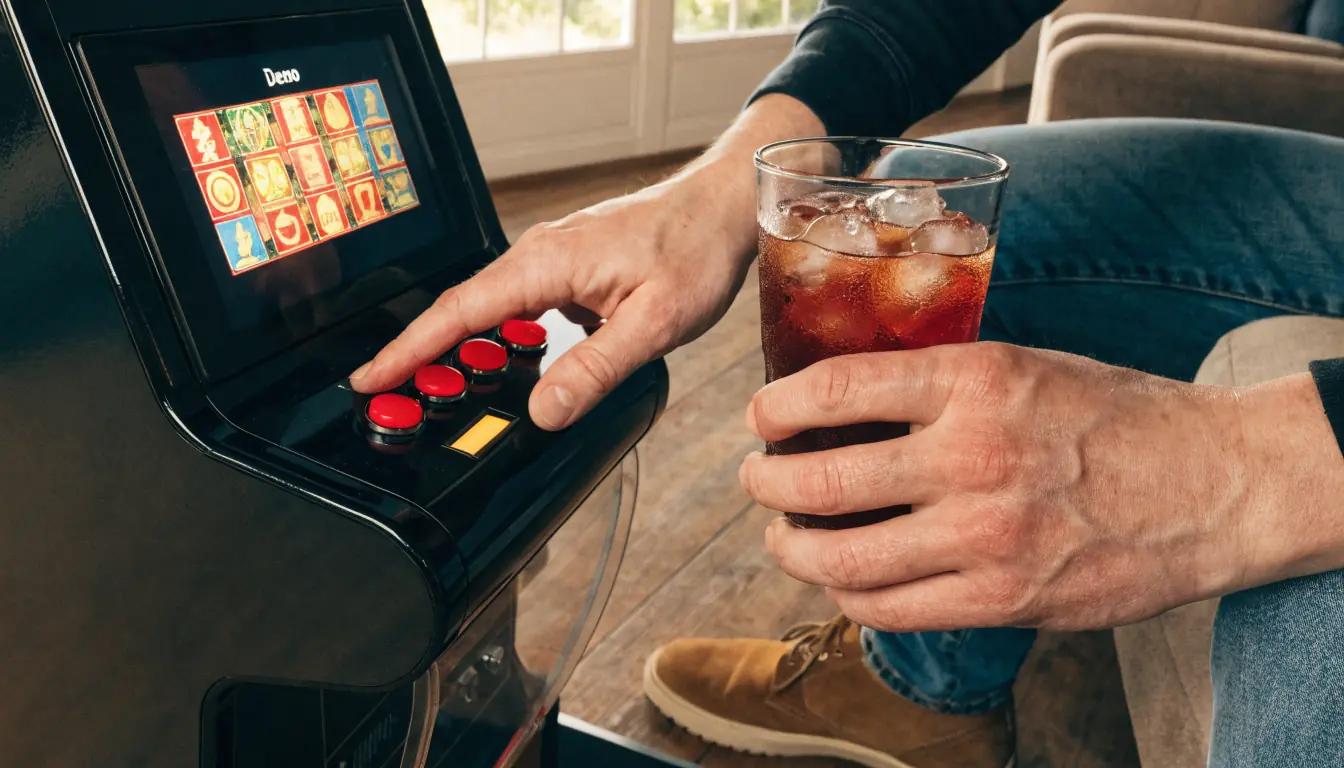
Free-play or demo modes exist because software providers want you comfortable with a game before you decide whether it’s worth your cash. You get fake credits, usually a big pile of them, and you play exactly the same reels, the same bonus triggers, the same visual style as the real-money version. Nothing about the spin outcomes is different. What’s different is that nothing you win or lose in demo mode counts anywhere.
That last part matters more than it sounds. Australians placed almost AUD 150 billion in bets on electronic gaming machines in the 2020–2021 financial year — a number that only exists because it’s tracked, reported, and tied to actual cash moving through actual machines. Demo spins never touch that ledger. You could sit there for a weekend hammering the "spin" button on a free version and it changes nothing about national turnover, nothing about anyone’s loss figures, nothing about any regulator’s dataset. It’s a private sandbox. The moment you switch to real credits, you re-enter a system that’s counted; before that, you’re basically invisible to it.
Where you’ll actually find demos
- Game provider websites — companies like Pragmatic Play, Microgaming, NetEnt and Evolution Gaming often host playable demo builds of their own titles directly, mostly aimed at showing operators and affiliates what the game looks like.
- Land-based venues — some pubs and clubs let you sit at a machine in a “free” or demonstration mode before you feed it coins, though this varies a lot by venue and isn’t something you can rely on everywhere.
- App stores — plenty of pokie-themed apps run entirely on virtual credits with no cash-out option at all, which is a different animal from a demo of a real-money game, even if the reels look identical.
One thing worth being upfront about: there’s no domestic, licensed real-money online casino in Australia, and that includes online pokies. The Interactive Gambling Act makes it illegal for operators to offer that kind of real-money play to Australian residents. Demo and free-play versions sit outside that ban because no money changes hands and nothing is withdrawn — which is exactly why they’re the only "online pokie" experience that’s straightforwardly available here without wandering into legal grey areas.
What demo mode is actually good for

I used it to figure out volatility — whether a game pays small and often or sits quiet for ages then dumps a big win. You can’t feel that from a paytable screenshot. You need to watch fifty or a hundred spins happen. Demo mode is the only place to do that without it costing anything.
It’s also the only honest way to check if a theme or bonus mechanic even holds your attention past the novelty. I’ve quit more demo sessions out of boredom than I ever have real-money ones, mostly because there’s no sunk cost pulling me back in. That boredom is useful information. If a free version can’t keep you interested for ten minutes, paying for it won’t fix that.
What it won’t tell you is anything about your odds with real cash, your actual losses over time, or how the game behaves when there’s genuine pressure riding on the outcome. That’s a different conversation, with different numbers attached — and it’s not one demo credits can answer, no matter how many free spins you rack up.
If you’re only after the reels, the sounds, the bonus rounds — the mechanics of the thing — demo mode gets you there for nothing. Just don’t mistake a good time on house credits for a preview of what happens once your own money’s on the line.
Real‑Money Pokies: Risks, Losses and Taxation
Free demos are fun for exactly as long as you don’t need the money back. Real‑money play is a different animal, and I say that as someone who found out the hard way.
Here’s the number that actually matters: in the 2020‑2021 financial year, Australians lost about AUD 12 billion on electronic gaming machines. Not turnover, not bets placed — losses. Money that went in and didn’t come back out. Spread across the population, that works out to roughly AUD 608 per person for the year. Doesn’t sound like much until you realise that figure includes babies, retirees, and everyone who’s never touched a pokie in their life. For the people actually playing, the real number is a lot higher.
That’s the part the "just a bit of fun" crowd tends to skip. Pokies are built to take more than they give, over time, full stop. A good session doesn’t undo a bad month. I used to tell myself I was "up for the year" based on one lucky Friday night — I wasn’t, I’d just stopped counting the Tuesdays.
The one bit of good news
If you do win real money on a pokie in Australia, you keep all of it. Gambling winnings aren’t taxed here. No BAS statement, no line on your tax return, nothing to declare. The government doesn’t want a cut of your win — it already took its share through the losses of everyone else at the venue.
That’s not an argument for playing more. It just means the maths is simpler than people assume: what you win is yours, and what you lose is gone, with nothing coming back at tax time either way.
What this actually means for you
- Treat any session as money spent, not money risked — because on average, across enough sessions, it behaves like spending.
- Winnings are yours in full. Losses are yours in full too. There’s no tax rebate waiting to soften the blow.
- The per‑capita figure is a population average, not a prediction for your night. Don’t use it to justify “you’re due.”

Play with cash you’ve already decided you’re comfortable not seeing again. That’s the whole strategy, really.
Understanding Pokie Odds and How They Affect Your Chances
Here’s the thing nobody tells you when you’re feeding notes into a machine at midnight: the odds aren’t a mystery, they’re a nationwide average, and that average is grim.
In the 2020-2021 financial year, Australians placed almost AUD 150 billion in bets on electronic gaming machines. Out of that, the total player loss came to about AUD 12 billion. Do the maths and you get a rough sense of what "the house always wins" actually looks like when you scale it up to an entire country. That AUD 12 billion didn’t vanish into a black hole — it’s the difference between what got bet and what got paid back out, spread across every pub, club and casino floor running pokies.
Per person, that works out to AUD 608 lost per capita in that same year. Not per gambler — per capita, meaning every adult and child in the country, gambler or not. That number is the one that stuck with me the first time I saw it, because it means the "occasional flutter" so many people describe isn’t occasional at all when you zoom out.
Why this matters more than any single spin
None of this tells you what any individual machine will do on any individual night. Odds work over huge volumes of spins, not over the twenty minutes you’ve got before last drinks. A machine can pay out nothing for hours and then dump a decent win, and that’s not the machine "warming up" — it’s just the math catching up with itself over a much longer run than you’re playing.
What the national figures do tell you is the direction things move in, on average, over time. Billions in, billions less coming back out. Your session is a tiny, noisy sample of a pattern that only really shows itself at scale — which is exactly why it feels random and unpredictable while you’re sitting there, even though the overall shape of it is anything but.
I used to think a "good session" meant I’d found a loose machine. Looking back at the numbers now, I think I just hadn’t lost my share yet.
What this doesn’t mean
It doesn’t mean every spin is rigged against you, and it doesn’t mean winning is impossible — people win every day, that’s part of how the system keeps running. It means the odds are structured so that, across enough plays, the loss side wins the argument. Knowing that changes how you sit down to play, even before you press a button.
RTP and Quick Tips for Getting the Most Out of Pokies
RTP just means how much of what goes in is designed to come back out over time. Nobody publishes a machine-by-machine number here, and no site can tell you which one’s "hot." What I do know is the national result: Australians lost about AUD 12 billion on these machines in FY 2020‑2021, which works out to roughly AUD 608 for every person in the country. That’s the house edge doing its job across millions of sessions, not bad luck.
So the tips are boring on purpose:
- Set a number before you sit down. Not a goal, a ceiling.
- Treat any win as the session ending, not as a sign to keep going.
- Watch the clock, not the reels. Time disappears faster than money on these things.
- Don’t chase what you lost. The machine doesn’t know or care what you put in already.
None of this beats the math. It just stops the math from beating you as badly.
The Technology Behind Modern Pokie Machines
I used to think a pokie machine was just a box that ate coins and occasionally spat some back. Spend enough time around them, though, and you notice the machines themselves have changed more than the games on their screens ever have.
The obvious shift is away from cash. Old-school pokie machines took notes, gave you a printed ticket, and that was the entire transaction history — a slip of paper you’d lose in your jacket pocket. What’s replacing that is account-based play: you load funds onto an account, the machine talks to that account instead of a coin hopper, and every dollar in and out gets logged somewhere that isn’t your memory.
This isn’t a hypothetical direction the industry might take one day. The 2022 NSW Islington Report actually put a date on it, recommending that all pokies in NSW go cashless by the end of 2028. Whether that timeline holds is anyone’s guess — government reports and actual rollouts don’t always move at the same speed — but it tells you which way the wind is blowing. Cash-fed machines are the old technology now, not the standard.
Why traceability is the whole point
Here’s the part that took me a while to actually care about: this isn’t really about convenience. It’s about the fact that a machine full of loose cash is very hard to audit, and a machine tied to an account isn’t.
With account-based pokies, every deposit, every spin, every cash-out is tied to an identity and a timestamp. Facctum, a compliance technology provider, makes the case that this kind of setup improves traceability and cuts down on the anonymity that made cash-fed machines so easy to exploit. I’ll say it plainly because it’s one source making that claim about a fast-moving space, not some settled industry consensus — but it lines up with what you’d expect from swapping paper for a ledger.
Compare the two setups directly:

| Cash-based pokie | Account-based pokie | |
|---|---|---|
| Record of transactions | Ticket in, ticket out — no ongoing log | Full deposit, play and withdrawal history |
| Identity attached | None required | Tied to a registered account |
| Ease of moving money anonymously | High | Low |
Transparent, account-based pokies give a full record of deposits, gameplay and withdrawals — not a summary, the whole thing. That’s a meaningfully different machine to the one that just prints a ticket and forgets you existed.
What this actually changes for a player
Nothing about the reels changes. The wins, the losses, the way a session feels — none of that moves. What changes is what happens to the record of your session after you walk away from the machine.
I noticed this first at a venue that had switched over to account play. No more counting notes into a slot with one hand while balancing a drink in the other. You tap in, you play, you tap out. Faster, less fumbling. But also — and this is the bit venues don’t advertise — completely visible. There’s no version of "I only put in twenty bucks" that survives an account statement.
Is that a bad thing? Depends who you ask. If you’re the person the traceability is designed to catch, obviously it’s bad news. If you’re just someone trying to keep half an eye on your own spending, having an actual record instead of a hazy memory of "a few notes" is arguably useful — whether or not that was the point of the upgrade.
The bigger picture
None of this technology exists because operators woke up one day wanting better bookkeeping. It’s a response to a cash problem that regulators have been staring at for a while — the same problem that gets covered from the compliance angle elsewhere in this guide. The machines are just where the fix actually gets bolted on: swap the cash tray for a login, and half the traceability problem disappears with it.
Next question worth asking is what happens when that account-based system moves onto your phone. That’s a different piece of technology entirely, with its own set of rules.
Pokie Apps and APIs: What Developers and Players Should Expect
I get asked a lot whether there’s a "best pokie machine app" you can just download and play for real money. Short answer: not legally, not in Australia. Any app that lets you deposit and spin for cash from an Australian address is offering exactly what the Interactive Gambling Act 2001 prohibits online operators from doing. What you’ll actually find on app stores here are demo apps, informational tools, and venue loyalty apps for pubs and clubs — not real-money pokie apps.
That distinction matters more once you look at what’s happening on the backend. Pokies aren’t standalone boxes anymore. Venues run them through networks, and increasingly through APIs that connect the machine, the loyalty card system, and the payment or cashless account behind it. That’s the part developers need to understand before they build anything in this space: the API isn’t just plumbing for jackpot data and game stats, it’s also the layer where compliance obligations live.
AUSTRAC put out a guide in 2024 specifically to help operators and, by extension, the software feeding their systems, spot money-laundering red flags. If you’re building or integrating a pokie-related app that touches identification, deposits, or payout records, you’re building inside that framework whether the marketing copy mentions it or not.
The obligations scale with size. A venue running up to 15 pokies has to register with AUSTRAC, keep identification records, and file suspicious matter reports. Any app or API that handles player identity or cash-out data for that venue is effectively part of that reporting chain — not a neutral bit of tech sitting outside it.
There’s also a less official use case worth naming plainly: according to some reporting on financial crime, money mules get recruited specifically to move dirty money through pokies. It’s one source’s claim, not a settled fact about the whole market, but it’s a reason integration APIs get scrutinised the way they do.
As a player, this means one thing practically — a slick app interface tells you nothing about legitimacy. What matters is whether it’s asking for ID the way a compliant system should, not whether the graphics look better than the pub machine.
Popular Pokie Game Types and Their Appeal
Walk into any pub and the pokie names blur together fast, but underneath the flashing lights, they mostly fall into a few buckets. Once you know which bucket you’re playing, the "surprise" wears off pretty quick.
Classic-style machines are the ones closest to what your grandparents played — fewer paylines, simpler symbols, no bonus round theatre. They feel old-fashioned because they are. I used to skip these looking for something flashier. Now I actually seek them out when I just want something quiet to sit at.
Video pokies are the ones eating up most floor space now. Multiple paylines, bonus features, themed graphics layered on top of the same basic mechanic. This is where most of the “pokie machine names” you’d recognise from a night out live — dozens of variations on the same underlying math, dressed up differently.
Progressive jackpot machines are the ones with the ticking number at the top that never stops climbing. That number is the whole appeal — it turns a normal session into “what if tonight’s the night.” Worth knowing: the jackpot pool is shared, which is part of why the number gets so big before someone hits it.
None of this is a small hobby. Pokies generated AUD 191.2 billion in gambling turnover in 2023, according to complyadvantage.com — a figure large enough that it’s worth remembering these machines aren’t a niche pastime, they’re a huge slice of how Australians gamble.
There’s also a genuinely confusing stat floating around about how much of the world’s pokie supply sits in Australian pubs and clubs. One version puts it at 3%. Another puts it at 18%. I won’t pretend to know which is right — the sources don’t agree, and I’d rather say that plainly than pick one to sound confident.
Whichever type you’re drawn to, the category matters less than understanding what you’re actually looking at before you sit down.
What are pokies in Australia?
They are electronic gaming machines (EGMs) found in pubs, clubs, and casinos across the country. Underneath the themed graphics, each one runs on a random number generator that decides the outcome — no skill or strategy changes the math.
How do criminals launder money through pokies?
They feed large sums of cash into a machine, barely play, and cash out immediately to create a fake record of winnings. Criminals also buy winning tickets from genuine players or spread small deposits across different venues to dodge reporting thresholds.
What law governs online gambling in Australia?
The Interactive Gambling Act of 2001 makes it an offence for online operators to offer real-money gambling to Australian residents. The law targets operators, not you as a player.
Written by the editors at Casino Payments Guide.