Live Blackjack Online Casinos for Australian Players
 Available in AU
Table of Contents
- Online Blackjack Casinos Available to Australian Players
- Live Dealer Blackjack: What Australian Players Need to Know
- Live Blackjack in Australia – 2026 Outlook
- How to Play Blackjack – Rules and Basics
- Official Blackjack Rules Under Australian Law
- Blackjack Basic Strategy for Australian Players
- Understanding Blackjack Switch and Other Variants
- Blackjack Game Types Available Online
- Bitcoin and Bonus Options for Australian Blackjack Players
- Choosing a Good Online Blackjack Casino for Australian Players
Online Blackjack Casinos Available to Australian Players
First thing I tell anyone who asks me about blackjack casinos in Australia: there’s no such thing as a "licensed Australian online casino." I spent an embarrassing amount of time a few years back searching for one, assuming I’d just missed it somewhere. I hadn’t. It doesn’t exist, and it’s not going to exist in 2026 either.
Here’s the actual legal picture, because it matters more than any strategy chart. Online casino style games — that’s slots, poker, roulette, and blackjack specifically named — are prohibited under the Interactive Gambling Act 2001. Some sources still cite this as the Interactive Gambling Act 1997, and I’m not going to pretend that discrepancy doesn’t exist — different write-ups date the relevant provision differently, and I’d rather flag that than pick one and hope you don’t notice. Either way, the substance hasn’t changed: it is illegal to offer online casino gambling to people in Australia, and there is no path for an operator to get a domestic licence to run one. Not a slow bureaucratic path, not an expensive one — no path at all.
Playing live dealer blackjack is legal for you as a player, but any operator that offers it to Australian residents is breaching the Interactive Gambling Act.
This is where people get confused, myself included at first. The law targets the businesses offering the games, not the individual sitting on the couch playing them. So when you see online casinos with blackjack tables that clearly accept Australian players, what you’re looking at is an offshore operator, licensed somewhere else entirely, operating in a legal grey zone where the site itself is doing something Australia doesn’t allow — but you playing on it isn’t the crime.
Why there’s no neat list of "approved" sites
If you’re hunting for casino blackjack the way you’d hunt for a licensed sportsbook — check the register, confirm the licence, done — that approach doesn’t work here. There’s no single body handing out online casino licences in Australia, because there’s no legal way to hold one for this purpose. Gambling regulation in the country is split up, state by state, territory by territory, with no single overarching statute or single regulator tying it all together.
The Australian Communications and Media Authority is the federal body that enforces the Interactive Gambling Act, and it’s the one doing the actual policing — issuing blocking orders, chasing down offshore operators, that sort of thing. But ACMA doesn’t license casinos, because there’s nothing for it to license. On top of that, the Northern Territory Racing Commission has become what people in the industry call the de-facto online gambling regulator, mostly because it licenses the bulk of the national online bookmakers who benefit from lower tax there. That’s sports betting territory, though — a completely different product to blackjack casinos, and worth keeping separate in your head.
The Australian Communications and Media Authority (ACMA) enforces the federal ban, while each state regulator oversees land‑based gambling within its jurisdiction.
Every state and territory runs its own gambling regulator on top of all this — Victoria has one, New South Wales has one, and so on — each with its own remit over things like poker machines and land-based venues. None of them license online blackjack casinos, because federally, that category of product isn’t allowed to be licensed at all.
What "available to Australian players" actually means

So when people search for blackjack casinos in Australia, or ask about the best online casinos for blackjack, what they’re really asking is: which offshore-licensed sites will take an Australian sign-up? That’s a fair question, and I get why it’s the one people ask. But it’s worth being honest about what’s actually being described. These are foreign-licensed operators — Malta, the UK, Curaçao-style setups, and others — running blackjack tables that happen to be reachable from an Australian internet connection. Whether a given operator is well-run, fairly regulated wherever it’s actually licensed, and reasonably safe to deposit with, is a separate question from whether Australia has approved it. Australia hasn’t approved any of them, because Australia doesn’t approve any of them.
I don’t say this to scare anyone off — plenty of Australians play blackjack online, and doing so as an individual isn’t illegal. I say it because the phrase "licensed online casino" gets thrown around in this space in a way that implies a stamp of local approval that simply isn’t there. If a site’s marketing leans hard on being "fully licensed and regulated" without saying regulated by whom or where, that’s worth noticing. The licence, if it exists, is foreign. There’s no Australian equivalent sitting behind it, and no local register you can check to confirm any of it either.
No domestic licence
Australia does not issue licences for online casino games, including live blackjack, so no local operator can legally run a real‑money table.
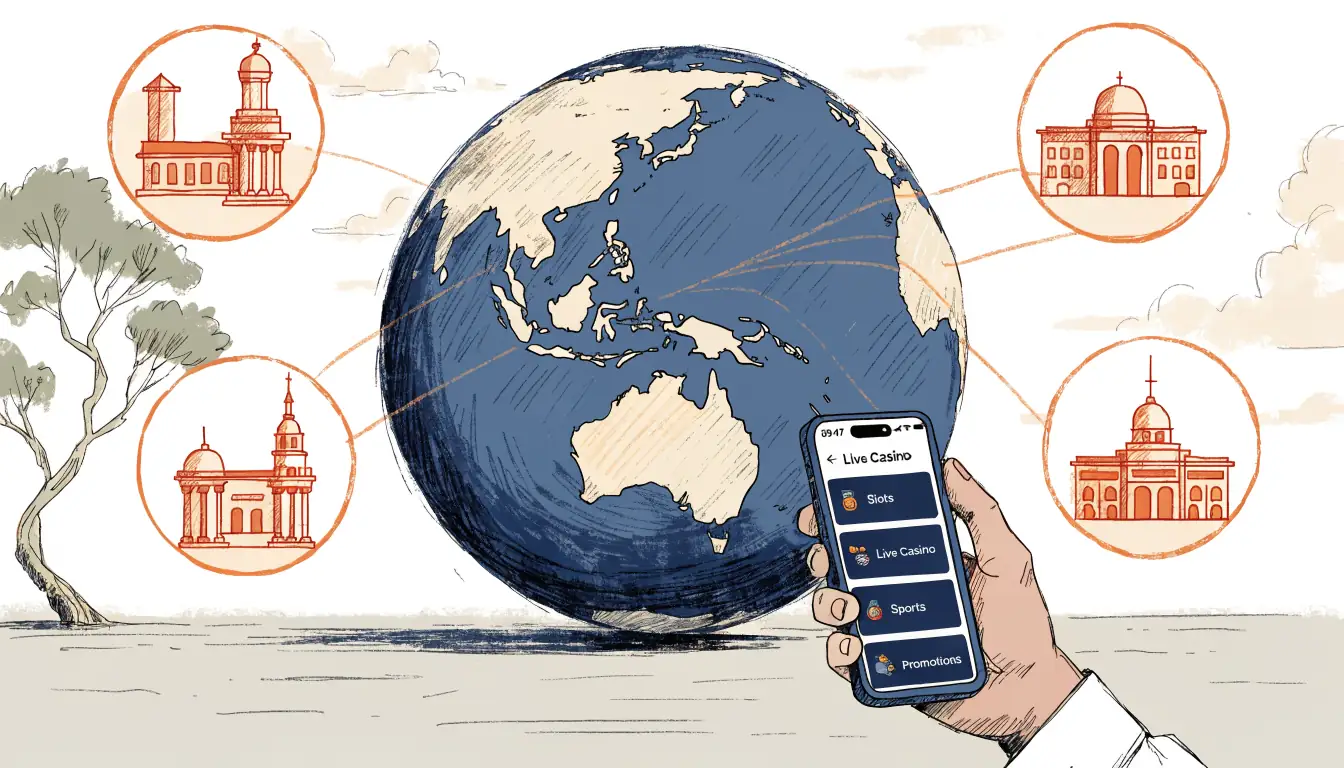
This overview is deliberately the boring, structural part — the legal skeleton everything else in this guide sits on top of. What live dealer blackjack actually looks like, how the game itself plays out, what strategy gets you the best odds, how crypto deposits fit in — that’s all coming. But none of it makes sense without first being straight about the one fact that doesn’t change no matter which operator you’re looking at: there is no domestically licensed real-money blackjack casino in Australia, full stop, and anyone telling you otherwise is either wrong or hoping you won’t check.
Live Dealer Blackjack: What Australian Players Need to Know
The first time I sat down at a live table, I half expected a cartoon dealer and a fake shuffle. It wasn’t that. There’s an actual croupier, an actual table, an actual shoe of cards, streamed to your screen. You place bets through the interface, the croupier deals in real time, and you watch the same hand everyone else at that table is watching. It’s a different animal to the blackjack you get on a phone screen with nobody behind it.
That "nobody behind it" version is what runs on random number games — software that generates outcomes instantly, no camera, no human, no waiting for a shuffle. It’s faster, it’s private, and honestly it’s what most people play most of the time because you can do it at your own pace at two in the morning. Live dealer blackjack trades that speed for something closer to a real casino floor: you’re dealt into a shared game, you can usually see other players’ bets, and the pace is set by the croupier, not by you clicking a button.
Why the difference actually matters
It’s not just cosmetic. With a random number game, you’re trusting that the software behind the scenes is doing what it says. With a live dealer table, you’re watching the mechanism itself — the cards coming off the shoe, the croupier’s hands, the count on the felt. Some players find that reassurance worth a lot. Others don’t care either way and just want to get through hands quickly. I’ve done both. On a good night, live tables feel more like an occasion. On a bad night, they feel a lot slower to lose money at, which I suppose is its own kind of silver lining.
The regulatory picture nobody explains properly
Here’s where it gets genuinely confusing, and I don’t say that to be dramatic — it actually is confusing, even for people who’ve read the legislation.
Offshore operators you’ll find are usually licensed in Malta, the UK, Curaçao or similar jurisdictions, but those licences have no standing with Australian regulators.
Australia doesn’t have one law and one regulator covering all of this. The Interactive Gambling Act 2001 is the main federal law, and it prohibits online casino games — including blackjack, live dealer or otherwise — from being offered to people in Australia. It also prohibits in-play online betting specifically. Live betting placed by phone is treated differently and remains legal, which is the kind of distinction that makes sense to a lawyer and nobody else.

On top of the federal layer, every state and territory runs its own gambling regulator, and there’s no single authority that sits above all of them for gambling generally. The Australian Communications and Media Authority enforces the federal Act — it’s the body that can act against illegal online gambling services under that legislation. Separately, the Northern Territory Racing Commission has become the de-facto authority for a lot of online wagering simply because it licenses most of the national bookmakers, who benefit from a lower tax rate there. None of this, it’s worth saying clearly, touches live dealer blackjack — that licence covers sports and race wagering, not casino table games.
What all of this means in practice is that there’s no domestic licence, from any state, territory, or federal body, that covers offering live dealer blackjack to Australians. The tables you find online are run from operators licensed elsewhere.
Where that leaves the player
This is the bit people actually want to know: am I doing anything wrong by playing? No. The law is aimed squarely at operators, not at individuals placing a bet. Nothing about logging into a live table and playing a few hands puts you on the wrong side of anything. That’s a genuinely different situation to the operator’s position, and it’s worth not conflating the two.
It does mean, though, that the usual advice you’d give in most other countries — "check the operator’s local licence," "confirm they’re registered with your national regulator" — doesn’t apply here, because there isn’t one to check. Nobody local is issuing that licence, and nobody local is going to vouch for the table you’re sitting at. That’s just the reality of the market, not a reason to panic, but it is a reason to stop expecting the kind of official reassurance that exists for something like sports betting through an NT-licensed bookmaker.
I’d treat that as the honest starting point rather than something to gloss over. Live dealer blackjack works, technically, exactly the same way whether you’re in Adelaide or Amsterdam — same cards, same croupier, same stream. What’s different is who’s standing behind the operator, and in Australia’s case, it’s never going to be an Australian regulator. Worth remembering before you get too comfortable at the table.
Live Blackjack in Australia – 2026 Outlook
Before you sit down at a live blackjack table, it pays to know which casinos actually back up the experience with fair licensing and bonuses worth claiming. Here’s a quick rundown to help you weigh your options.
License: Curacao · Bonus: up to A$2,000 Operates under a Curacao licence and offers a bonus worth up to A$2,000, giving you a straightforward starting point for live blackjack play.
License: Curacao Gaming Control Board OGL/2023/176/0095 (Hollycorn N.V.) · Bonus: up to A$5,000 + 300 free spins across 4 deposits Licensed by the Curacao Gaming Control Board under Hollycorn N.V., this casino backs its offering with a generous package of up to A$5,000 plus 300 free spins spread across four deposits.
License: international iGaming licence – jurisdiction not named in the source · Bonus: 100% up to A$1,000 + 100 free spins, 35x wagering · Payout speed: PayID 1-24 hours · Min. deposit: A$30 (PayID from A$10) While its licensing jurisdiction isn’t specified, it stands out for fast PayID withdrawals within 24 hours, a low minimum deposit, and a welcome bonus of 100% up to A$1,000 with 100 free spins at 35x wagering.
License: Curacao Gaming Control Board OGL/2023/174/0082 (Dama N.V.) · Bonus: up to A$5,000 + 300 free spins across 4 deposits Regulated by the Curacao Gaming Control Board through Dama N.V., it offers a substantial bonus of up to A$5,000 with 300 free spins across four deposits.
License: Curacao eGaming OGL/2024/923/0383 (Antillephone N.V.) · Bonus: up to A$2,000 + 100 free spins across 2 deposits · Min. deposit: A$30 Licensed under Curacao eGaming via Antillephone N.V., this casino provides a bonus up to A$2,000 with 100 free spins across two deposits and a low minimum deposit requirement.
License: Curacao eGaming (Dama N.V.) · Bonus: up to A$10,000 + 180 free spins, 40x wagering Holding a Curacao eGaming licence through Dama N.V., it offers one of the more sizeable bonuses on this list, up to A$10,000 plus 180 free spins at 40x wagering.
License: Curacao Gaming Control Board OGL/2023/176/0095 (Hollycorn N.V.) · Bonus: up to A$11,000 + 300 free spins (code NEO100) Licensed by the Curacao Gaming Control Board under Hollycorn N.V., it features a large bonus of up to A$11,000 with 300 free spins available via a bonus code.
Bonus: 240% up to A$4,100 + 300 free spins Offers a notable welcome bonus of 240% up to A$4,100 alongside 300 free spins, making it a bonus-focused pick on this list.
License: Curacao (operating since 2017) · Bonus: 250% up to A$2,000 + 50 free spins on the first of six deposits · Min. deposit: A$20 An established operator running under a Curacao licence since 2017, it offers a 250% bonus up to A$2,000 with 50 free spins on the first of six deposits, plus a low minimum deposit.
Bonus: 100% up to A$750 + 200 free spins, 35x wagering · Payout speed: crypto 30-120 minutes, fiat 24-72 hours · Min. deposit: A$30 Offers a 100% bonus up to A$750 with 200 free spins at 35x wagering, and stands out for quick payouts, especially for crypto users, alongside a low minimum deposit.
Ask ten people where live blackjack for Australians is heading by 2026 and you’ll get ten confident answers. I don’t have one. What I have is a read on what’s actually changed versus what’s just noise, and the honest version is: less has changed than the marketing suggests.
Marketing that promises a “2026 licence” is misleading – there is currently no legislative pathway for a domestic online casino licence in Australia.
Start with what hasn’t moved. Online casino games — slots, poker, roulette, and blackjack included — stay prohibited under the Interactive Gambling Act 2001. That’s the floor everything else sits on, and nothing in the current regulatory conversation points to that floor shifting before 2026. No domestic licence for real-money online casino operation exists now, and there’s no proposal on the table that would create one. If someone tells you a local blackjack licence is "coming soon," they’re guessing, and probably guessing for a reason that benefits them.
What also hasn’t changed: playing at an offshore-licensed site isn’t a crime for the person sitting at the table. The law was built to target operators, not the Australians using them. I mention this again here specifically because when people talk about "outlook," they tend to blur legality-for-you with legality-for-the-site, and those are two different questions with two different answers.
Why there’s no single national verdict coming
Australia doesn’t run gambling through one authority that could hand down a single ruling on live blackjack’s future. Regulation splits between federal and state/territory level, with no overarching statute tying it all together. That structure is part of why nobody can credibly promise you a clean 2026 prediction — there isn’t one body positioned to make that call for the whole country. The federal side, through the Australian Communications and Media Authority, enforces the Interactive Gambling Act and deals with offshore platforms from that angle. The states run their own separate systems for the gambling they do license, which doesn’t include this. Two tracks, not one, and they don’t converge into a single national policy on live dealer blackjack specifically.
That fragmentation is worth sitting with, because it explains why "outlook" pieces on this topic tend to either overpromise clarity or say nothing useful at all. There’s no single roadmap to read.
What’s realistic to expect through 2026
I’m not going to hand you a number or a date, because none exist in anything credible I’ve seen. What I can say plainly: the legal architecture — federal prohibition on offering these games domestically, no path to a local licence, enforcement aimed at operators rather than players — is the same architecture that’s been in place, and I haven’t seen anything suggesting Canberra is rewriting the Interactive Gambling Act on a 2026 timeline. Structural law doesn’t move fast, and gambling law in this country has a long history of staying put while the market around it does whatever it wants.
That’s the boring answer. It’s also the honest one.
Separating the game from the market
Here’s the distinction that matters for anyone thinking about "live blackjack" as a category rather than a strategy exercise: the game itself — a croupier, a live feed, real cards — isn’t going anywhere as a format. It’s popular because it’s the closest thing to a real table you can get without leaving the house. The question for 2026 isn’t whether that format survives. It will, because demand doesn’t care about jurisdiction. The actual question is whether the legal wrapper around it changes, and right now nothing points to that.

I’d treat any site or article promising a "2026 shakeup" in Australian live blackjack regulation with the same suspicion I’d treat a dealer who wins six hands in a row. Not impossible, just worth a second look before you believe it.
What to actually watch for
- Whether federal enforcement activity shifts in scope or intensity — that’s the lever that’s actually moved before.
- Whether any state signals interest in a licensing model that doesn’t currently exist — nothing suggests this is imminent, but it’s the kind of change that would actually alter the landscape.
- Whether the operators themselves change how they position their offshore licensing to Australian players — marketing shifts faster than law does, and it’s not the same thing.
None of that is a prediction. It’s a list of the only places where a real change would show up first, if one’s coming at all.
How to Play Blackjack – Rules and Basics
Before anything else: nobody in Australia can hold a domestic licence to run online blackjack for real money, and that includes offshore-style "casino" games under the Interactive Gambling Act 2001. Doesn’t stop you from playing at an offshore site — that’s on the operator to sort out, not you — but it’s worth knowing before we get into how the game actually works.
Right, the rules themselves. They haven’t changed in decades, and they don’t need to.
The goal
Get closer to 21 than the dealer without going over. That’s it. You’re not trying to hit exactly 21, you’re just trying to beat whatever number the dealer ends up with.
Card values
- Number cards (2–10) are worth face value.
- Jack, Queen, King are all worth 10.
- Ace is worth 1 or 11 — whichever helps your hand more.
Two cards that make 21 — an Ace plus a 10-value card — is a blackjack. Pays better than a normal win, which is the whole appeal of the game and why people bother learning it properly instead of just clicking "deal" and hoping.
The deal
You get two cards face up. The dealer gets two as well, usually one face up and one face down (the "hole card"). You act first, dealer acts last — that order matters more than most beginners realise, because every basic strategy chart out there is built around it.
Your options once you see your hand
- Hit — take another card.
- Stand — keep what you’ve got, move on.
- Double down — double your bet, take exactly one more card, done.
- Split — if your two cards match in value, split them into two separate hands with two separate bets.
- Surrender — not offered everywhere, but where it is, you give up half your bet and bail out of a bad hand early.
None of these are tricks. They’re just the toolbox. What you do with them is a different conversation — that’s basic strategy, and it gets its own space further down.
What the dealer has to do
This is the bit people skip and then wonder why they lost a hand they thought was fine. The dealer doesn’t get to choose. House rules force them to hit on anything 16 or under and stand on 17 or above. No judgment calls, no "feeling lucky" — it’s mechanical, every single hand. Once you know that, you stop reading the dealer’s face for tells (there aren’t any) and start reading the maths instead.
Betting
You place your bet before the deal — that’s your only stake unless you double down or split, which add money to the table mid-hand. Payouts follow the basic pattern: win a normal hand, get your bet back plus roughly the same again; hit a blackjack, get paid at the better rate reserved for it. Beyond that, exact payout structures and side-bet terms vary by table and by operator, and nobody in Australia is required to publish a single standard for it — so check what’s on the table in front of you rather than assuming it matches the last one you played.
That’s the whole skeleton of the game. Everything else — when to hit on a 16, when to split 8s, when to just walk — is strategy, not rules.
Official Blackjack Rules Under Australian Law
Here’s the part that surprises people: there’s no "official" Australian blackjack rulebook. No regulator sat down and defined how many decks, when the dealer stands, any of that. The rules you play by are whatever the platform sets — same 17-and-stand, same double-down conventions you’d find anywhere else in the world.
What Australian law actually regulates isn’t the game mechanics. It’s whether the game can be offered at all. Under the Interactive Gambling Act 2001, online casino-style games — slots, poker, roulette, and blackjack included — are prohibited from being provided to people in Australia. That’s the legal hook blackjack falls under, not some local rulebook governing hand values or splits.
Doesn’t mean you’re breaking the law by sitting down at a table, though. The Act targets the businesses offering these games, not the individual punter clicking "deal." Playing at an offshore site isn’t illegal for you personally — it’s the operator taking the legal risk, not the player.
So "legal blackjack rules in Australia" really means one thing: the law about who’s allowed to offer the game, not how the game is played.
Blackjack Basic Strategy for Australian Players
Basic strategy isn’t a system for beating the house edge. It’s the mathematically correct move for every hand you’ll ever be dealt, worked out from millions of simulated rounds. I learned it off a laminated card before I ever sat at a table, and the first thing it taught me was how much I’d been guessing before that.
The logic is simple once it clicks: every decision depends on your hand total against the dealer’s upcard, nothing else. No hunches, no "feeling lucky", no chasing a loss with a bigger bet on the next hand.
The basics that matter most
- Hard totals 17+: always stand.
- Hard totals 12–16: stand if the dealer shows 2–6, hit if they show 7 or higher.
- Hard totals 8 or below: hit, no exceptions.
- Soft hands (an Ace counted as 11): more flexible — often worth doubling when the dealer looks weak.
- Pairs: always split Aces and 8s; never split 10s or 5s.
- Doubling down: strongest on totals of 10 or 11 against a low dealer card, where you’ve got real odds of landing a strong hand off one card.
None of this changes because you’re playing from Brisbane instead of Berlin. The math behind the cards doesn’t know what country you’re in — house edge is house edge everywhere. What does change, a bit, is the layer around the table: the games available to you, and who’s meant to be keeping an eye on the operator running them.
Where the rulebook stops and the regulator starts
Here’s the thing that took me a while to get straight: Australia doesn’t have one gambling authority you can point to and say "that’s who’s in charge." Regulation is split between the states and territories, plus the federal level. The Australian Communications and Media Authority (ACMA) enforces the Interactive Gambling Act 2001, but that’s a federal law about offering certain services — it has nothing to do with whether you’re splitting 8s correctly.
The Northern Territory Racing Commission has become something like Australia’s de-facto online gambling regulator, mostly because it licenses the bulk of the national bookmakers who benefit from lower tax there. But that licensing structure is built around sports betting operators, not table game rules. Every state and territory runs its own separate regulator on top of that, each with its own remit.
None of these bodies publish or endorse a "basic strategy" — that’s not their job, and it’s not really a legal question at all. It’s pure probability, same chart whether you’re playing a physical shoe or a digital one. What the regulatory patchwork actually affects is covered in the section on where and how these games are offered — not in whether you should hit on a 16.
Print the chart, or keep it open on your phone the first few sessions. Nobody at the table cares that you’re checking it — the ones who don’t are the reason the house edge stays as friendly to the casino as it does.
Understanding Blackjack Switch and Other Variants

The first time I sat down at a Blackjack Switch table I thought it was a typo in the lobby menu. Turns out it’s a real variant, and once you know the twist it’s not complicated at all.
Here’s the idea: you play two hands side by side, and you’re allowed to swap the second card dealt to each hand. So if one hand gets a rubbish start and the other looks decent, you can trade cards between them to build one strong hand instead of two average ones. It changes the maths of the game completely — you’re no longer stuck with whatever the shoe gives you, which is exactly why the payout structure and dealer rules around it are stricter than classic blackjack. Nothing comes for free.
Beyond Switch, you’ll run into a handful of other spins on the same core game — Perfect Pairs side bets, Spanish 21 with the tens pulled from the deck, multi-hand tables where you’re playing several boxes at once. Each one tweaks a rule or two: how splits pay, whether the dealer peeks, what counts as a natural. None of them change the basic fact that you’re still trying to beat the dealer’s hand without going over 21.
What doesn’t change, no matter which variant you’re looking at, is the legal picture. Online casino-style games — and that covers blackjack in every form it comes in, Switch included — fall under the Interactive Gambling Act 2001, which prohibits Australian-facing operators from offering them. That’s not a grey area specific to side-games; it applies just as much to a Switch table as it does to standard blackjack or roulette.
What it doesn’t do is make it illegal for you, personally, to sit down and play at an offshore site. The law is written to go after the operators, not the punters. I’ve mentioned this before and I’ll say it again here because people assume "prohibited" means "you’ll get in trouble" — it doesn’t work that way in Australia. There’s also no single national gambling authority tying all this together; rules and enforcement sit across both state and federal levels, which is part of why variant games like Switch aren’t specifically called out anywhere — they just get swept into the same broad category as everything else.
Blackjack Game Types Available Online
Once you start clicking through blackjack lobbies, the sheer number of formats gets confusing fast. Same core game, different rules baked into each table, and the differences matter more than they look at first glance.
Single-deck blackjack is the version most people picture when they think of the game. Fewer cards in play means the odds shift slightly compared to multi-deck tables, and card counting (for whatever that’s worth online) is theoretically simpler. In practice, most tables you’ll find aren’t single-deck at all.

Multi-deck blackjack is the default on most platforms. Six or eight decks shuffled together, which flattens out the swings you’d get with a single deck and makes the house edge more predictable over a long session.
European blackjack drops the "hole card" — the dealer doesn’t take a second card until you’ve finished acting on your hand. Small rule, but it changes how you play certain hands, particularly when the dealer’s showing a strong upcard.
American blackjack keeps the hole card and usually allows late surrender, letting you fold a bad hand for half your stake instead of playing it out.
There are other spins on the formula too — versions with different splitting rules, different payout structures for a natural blackjack, or extra side bets bolted on. None of them change what the game fundamentally is.
Worth repeating here: blackjack, along with other online casino games, sits under the games prohibited by the Interactive Gambling Act 2001. That’s a rule aimed at the operators offering the game, not at you for playing it — but it’s why you won’t find any of these formats on a locally licensed Australian site.
Bitcoin and Bonus Options for Australian Blackjack Players
I get asked about crypto more than almost anything else. People assume Bitcoin makes offshore blackjack "legit" somehow, like the currency changes the legal picture. It doesn’t.
Here’s the confusion I ran into myself: Australia doesn’t have one gambling law and one regulator you can check against. It’s split — federal rules sit alongside separate state and territory regulators, and then there’s the Northern Territory Racing Commission, which ended up becoming the de-facto authority for online bookmakers simply because it licenses most of the national ones and they like the lower tax. None of that structure has anything to do with blackjack sites accepting crypto. The IGA framework that makes online casino games illegal to offer to Australians doesn’t carve out an exception for Bitcoin or Ethereum. Paying in crypto doesn’t put a site inside any Australian licensing regime — there isn’t one it could fit into, because you can’t licence an online casino domestically at all, crypto or not.
So when a site pitches itself as a "Bitcoin casino" and implies that’s some kind of regulatory workaround, that’s marketing, not law. What it actually is: an offshore operator that happens to accept a payment method most banks can’t easily flag or block. That’s the real appeal for a lot of players — not decentralisation, just fewer awkward conversations with your bank about why money’s leaving your account for a gambling site.
Bonuses — same caution applies

"No deposit bonus" is a phrase I used to get genuinely excited about, before I understood what I was reading. The offer itself isn’t illegal for you to accept — again, the law targets operators, not players — but that’s a low bar. It doesn’t tell you anything about whether the terms attached to it are fair.
What I can’t tell you, because nobody publishes it in any standardised, checkable way for Australian players specifically, is what a "typical" bonus looks like in terms of wagering conditions or expiry. Every operator writes its own terms, and there’s no Australian regulator collecting or comparing them — because there’s no Australian regulator that licenses these operators in the first place. Anyone quoting you a "usual" wagering multiplier for blackjack bonuses is guessing, or copying another site’s guess.
The one thing worth checking yourself, every time, before you touch a bonus:
- Whether blackjack even counts toward the wagering requirement — a lot of table games are excluded or contribute less than pokies.
- Whether the terms are shown to you before you opt in, not buried in a help article you find after.
- Whether there’s a maximum withdrawal tied to bonus winnings.
If a site can’t or won’t show you those terms clearly before you deposit, crypto or card, that’s your answer regardless of what regulator’s name (if any) is sitting in the footer.
None of this is about strategy or odds — that’s its own conversation. This is just: the payment method doesn’t change your legal exposure, and a flashy bonus banner doesn’t change the terms underneath it. Read the terms first. Ask questions second. Deposit last.
Choosing a Good Online Blackjack Casino for Australian Players
Here’s the awkward bit nobody likes admitting: there’s no "check the licence register" trick that works here, because there’s no domestic register to check. No Australian body licenses real-money blackjack sites, so the usual advice — "only play at licensed operators" — needs a rewrite. What you’re actually checking is whether an offshore operator looks like it takes its own licence seriously, not whether it’s cleared by anyone at home.
I used to think regulation was one big switchboard somewhere in Canberra. It isn’t. Gambling in Australia gets handled state by state and federally, with no single body running the whole show. The ACMA polices the Interactive Gambling Act at the federal level — blocking sites, sending warnings — but it doesn’t licence casinos, because it can’t. Meanwhile the Northern Territory Racing Commission ended up as the default licensing body for online bookmakers simply because the tax was lower there, not because it was built to regulate blackjack sites. None of that infrastructure applies to the offshore casino you’re about to sign up with.
So what do you actually look at?
Licensing, elsewhere. The site itself will be licensed somewhere — Malta, the UK, Curaçao, wherever. It won’t be Australia. Read the footer. If there’s no licence mentioned at all, that’s your answer already.
ID checks that actually happen. A site that asks for identification before you withdraw, not after you’ve deposited five times, is doing the boring legal thing correctly. If verification only shows up when you try to cash out and suddenly gets complicated, that’s a pattern worth noticing.
Responsible-gambling tools you can actually use. Deposit limits, time-outs, self-exclusion — not buried three menus deep. If the site can’t tell you where to set a bankroll limit, it hasn’t built for that.
Payment clarity, not payment hype. How money moves in and out matters more than how many logos are on the deposit page.
Bonus terms printed before you claim them. If the wagering conditions are vague or missing until after you’ve opted in, don’t opt in.
A support channel that resolves things, not just a live chat window that closes at odd hours.
None of this guarantees a smooth run — I’ve had withdrawals stall at sites that checked every box above. But the boxes still matter, because a site that skips them upfront rarely gets better once you’re annoyed and asking questions. Slow and boring beats fast and vague, every time money’s involved.
If something goes properly wrong, Casino Payments Guide isn’t a dispute resolution service — for that, look at the operator’s own complaints process, or an independent body if the licence actually offers one.
How can a player verify that an online casino holds a valid licence in Australia?
You can’t, because no such licence exists. It is illegal to offer online casino games in Australia and there is no legal path for any operator to obtain a domestic casino licence.
What does the future outlook look like for the Australian online casino market?
There is no domestic market on the horizon — the Interactive Gambling Act 2001 prohibits online casino gambling outright, and nothing in the law or the regulatory landscape indicates a licensing path will open in 2026 or beyond.
Are my personal and financial details safe?
Since every site accepting Australian players is an offshore operator licensed abroad, your safety depends entirely on the foreign regulator overseeing that site. There is no Australian consumer protection body that can recover funds or settle disputes with these casinos.
What are the best online casinos in Australia for 2026?
Any casino accepting Australian players is an offshore-licensed operator, not an Australian-approved one, so quality and trustworthiness depend on whichever foreign regulator oversees the site.
How to recognise problem signs and where to get help?
The Interactive Gambling Act 2001 was introduced with a focus on harm minimisation, and the National Consumer Protection Framework governs wagering operators; if you’re concerned, start with state-level support services and national problem-gambling helplines.
Created by the ”Casino Payments Guide” editorial team.