
Online Pokies Australia Real Money No Deposit: The Truth
Before you deposit at any pokies site, it helps to see how each operator’s licensing, bonus terms, and payout speed actually stack up so you can pick one that fits how you want to play.
License: Curacao · Bonus: up to A$2,000 Golden Pokies operates under a Curacao licence and offers a welcome bonus worth up to A$2,000, giving new players a solid starting boost.
License: Curacao Gaming Control Board OGL/2023/176/0095 (Hollycorn N.V.) · Bonus: up to A$5,000 + 300 free spins across 4 deposits Rollero Casino holds a Curacao Gaming Control Board licence issued to Hollycorn N.V., and backs it with a substantial welcome package of up to A$5,000 plus 300 free spins spread across four deposits.
License: international iGaming licence – jurisdiction not named in the source · Bonus: 100% up to A$1,000 + 100 free spins, 35x wagering · Payout speed: PayID 1-24 hours · Min. deposit: A$30 (PayID from A$10) House of Pokies runs on an international iGaming licence and pairs a 100% match bonus up to A$1,000 with 100 free spins under 35x wagering; PayID withdrawals typically clear within 1-24 hours, and deposits start from A$30 (or A$10 via PayID).
License: Curacao Gaming Control Board OGL/2023/174/0082 (Dama N.V.) · Bonus: up to A$5,000 + 300 free spins across 4 deposits SpinsUp is licensed by the Curacao Gaming Control Board under Dama N.V. and offers up to A$5,000 plus 300 free spins across four deposits, making it a strong pick for players who deposit multiple times.
License: Curacao eGaming OGL/2024/923/0383 (Antillephone N.V.) · Bonus: up to A$2,000 + 100 free spins across 2 deposits · Min. deposit: A$30 WinSpirit Casino holds a Curacao eGaming licence via Antillephone N.V. and provides up to A$2,000 plus 100 free spins over two deposits, with a low minimum deposit of A$30.
License: Curacao eGaming (Dama N.V.) · Bonus: up to A$10,000 + 180 free spins, 40x wagering JeetCity Casino is licensed under Curacao eGaming through Dama N.V. and offers one of the larger bonuses on this list, up to A$10,000 plus 180 free spins under 40x wagering.
License: Curacao Gaming Control Board OGL/2023/176/0095 (Hollycorn N.V.) · Bonus: up to A$11,000 + 300 free spins (code NEO100) Neospin carries a Curacao Gaming Control Board licence via Hollycorn N.V. and features a sizeable bonus of up to A$11,000 plus 300 free spins, redeemable with a specific promo code.
Bonus: 240% up to A$4,100 + 300 free spins WinShark stands out for its bonus structure, offering 240% up to A$4,100 plus 300 free spins for new players.
License: Curacao (operating since 2017) · Bonus: 250% up to A$2,000 + 50 free spins on the first of six deposits · Min. deposit: A$20 Uptown Pokies has been operating under a Curacao licence since 2017 and offers 250% up to A$2,000 plus 50 free spins on the first of six deposits, with a minimum deposit of just A$20.
Bonus: 100% up to A$750 + 200 free spins, 35x wagering · Payout speed: crypto 30-120 minutes, fiat 24-72 hours · Min. deposit: A$30 MrPacho offers a 100% bonus up to A$750 plus 200 free spins under 35x wagering, with fast crypto payouts of 30-120 minutes or fiat withdrawals within 24-72 hours, and a minimum deposit of A$30.
Free Real‑Money No‑Deposit Pokies in Australia – What You Need to Know
I typed a version of that search myself a while back — something like "free online pokies real money no deposit" — sitting on the couch, half-watching the cricket, thinking there had to be a legit way to spin reels without risking a cent and still walk away with actual cash. There isn’t. Not the way the ads make it sound. I want to walk you through why, because the answer isn’t as simple as "it’s a scam" — it’s more tangled than that, and understanding the tangle is what actually protects your money.
The short version, before the long one
If a site is offering you real-money pokies with no deposit and it’s aimed at an Australian audience, one of two things is true. Either it’s not really offering real-money play to you (it’s a demo dressed up as something else), or it’s operating outside the law. There isn’t a third option where a properly licensed local operator hands you real cash for nothing. That operator doesn’t exist, because the licence itself doesn’t exist.
The Interactive Gambling Act 2001 is the piece of law that matters here. It makes it an offence for online operators to offer real-money gambling — and that includes pokies, blackjack, roulette, the whole casino-style catalogue — to people living in Australia. Not "regulated differently." Not "needs a special permit." Prohibited, full stop, for the operator. There’s no licence you can check for, no register you can search, because nobody issues one. I learned this after wasting an evening trying to find where these offshore sites were supposedly registered — turns out you can’t verify something that was never real in the first place.
Legal risk
Offering real‑money no‑deposit pokies to Australian players is illegal under the Interactive Gambling Act 2001.

What is legal, and worth separating out clearly, is playing at an offshore-licensed online casino as an individual. The law targets the businesses offering the service to Australians, not the Australians playing. That’s a genuine legal nuance and I don’t want to pretend it away — you personally spinning reels on an offshore site isn’t a crime. But that doesn’t make the site’s marketing honest, and it doesn’t give you any of the protections you’d assume come with "real money gambling." No local dispute process. No local regulator who’ll take your complaint. No licence display in a footer because there’s no register for that footer claim to point to.
Why "no deposit real money" is the phrase that should slow you down
Here’s the thing about a no-deposit bonus: somebody’s paying for it. In markets where this is a real, licensed product — say, UK-regulated casinos under the UK Gambling Commission, or Malta Gaming Authority-licensed sites — the operator can legally hand out small amounts of free-play credit because they’re licensed to handle real money in the first place, and the wagering requirements are disclosed up front by law. The mechanic itself isn’t fictional. It exists. It’s just not something any operator can legally extend to an Australian resident for casino-style pokies, because that operator would need to be licensed for the Australian market to do it properly, and that licence category doesn’t exist here.
A purely practice mode that lets you play without any chance of winning real cash.
You play with virtual credits; any “wins” are redeemable as prizes or coupons, not cash.
The site accepts real deposits and promises cash payouts, but operates outside Australian law and offers no consumer protection.
So when a site is specifically flagging Australia in its landing page copy and pushing "no deposit real money pokies" at you, what you’re actually looking at is one of:
- A social-casino or “sweepstakes” model, where the spins are free but any winnings are paid out in some substitute currency, redeemable coins, or prize structure that’s been engineered to sit outside the definition of a wagering product — legally grey, and not the same thing as cash in your bank account.
- A demo/practice-play front end with a real-money pitch bolted onto the marketing, aimed at capturing your email or phone number for a funnel that leads somewhere else.
- An unlicensed operator taking real deposits under the “no deposit bonus” banner, breaking the Interactive Gambling Act outright, with zero recourse if they don’t pay out.
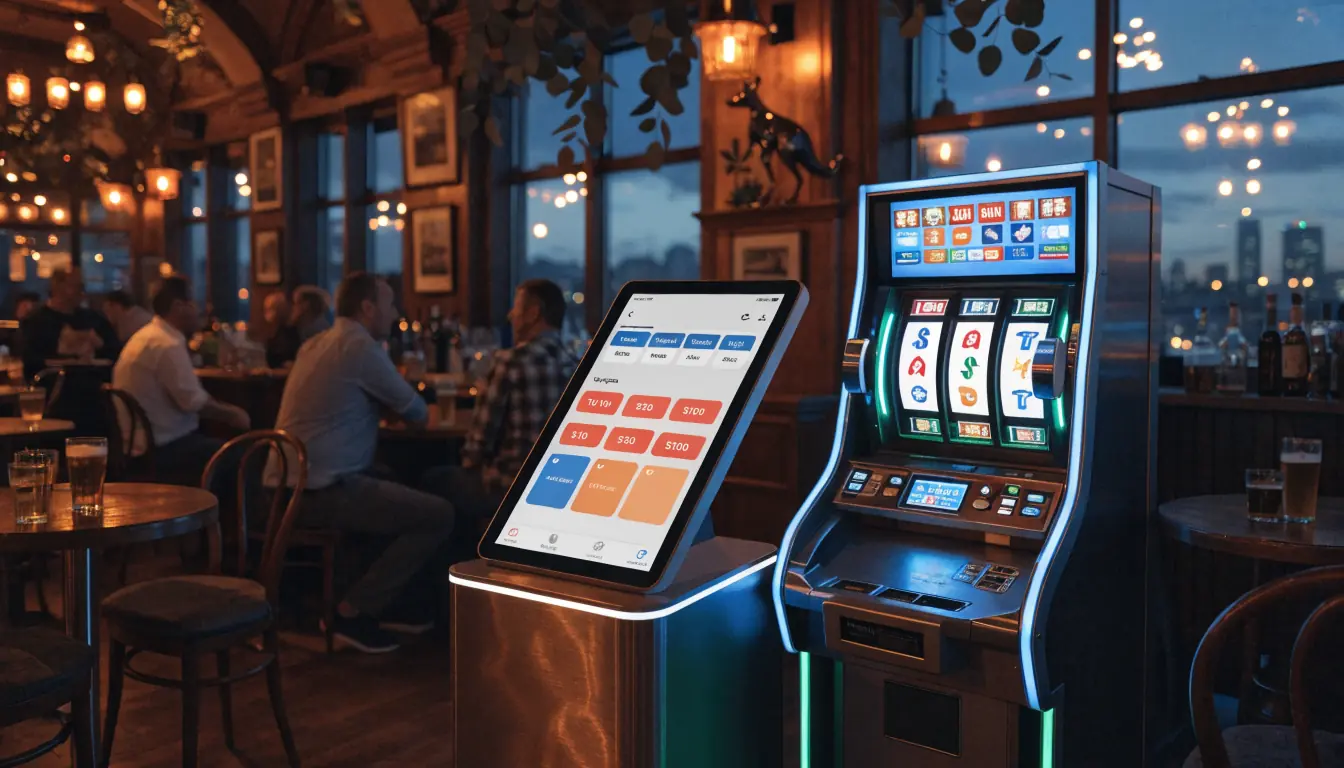
None of these is the tidy "play free, win real cash" story the headline promises. I’ve clicked through enough of these funnels to tell you the pattern repeats: flashy landing page, a countdown timer that resets every time you refresh, a "claim now" button that wants your phone number before it wants anything else.
What pokies actually are, and why they’re everywhere here
Worth stepping back for context, because a lot of the confusion around online pokies comes from how normal physical pokies are in Australian life. Electronic gaming machines — EGMs, if you want the formal term — are operated in every state, plus the ACT and the Northern Territory. You’ve seen them. Pub, club, casino floor, doesn’t matter which city. They’re part of the furniture in a way that surprises a lot of visitors and, honestly, a lot of locals stop noticing until they add up what they’ve spent.

And the numbers are big enough that they’re worth sitting with for a second. In the 2020–2021 financial year, Australians placed bets worth almost AUD 150 billion on electronic gaming machines. That’s turnover — the total amount wagered, not the amount lost, since money gets bet, won back, rebet, and so on. But the loss side is still enormous: about AUD 12 billion was lost by players across the country that same financial year. Break that down per person and you get AUD 608 in per-capita losses for FY 2020–2021 — and that’s spread across the whole population, not just people who gamble.
Turnover figures vary between sources: the 2020‑21 financial year saw AUD 150 billion in wagers, while a 2023 report cites AUD 191.2 billion.
On the global share of machines, I’ll be straight with you: the sources don’t agree, and I’m not going to quietly pick one and pretend there’s no argument. One figure puts Australia at 3% of the world’s pub and club poker machines. Another puts it at roughly 18%. That’s not a rounding difference — it’s a completely different picture of how significant Australia’s machine count is on the world stage, and I haven’t seen a clean explanation for the gap. Take both numbers as claims, not settled fact, until someone reconciles the methodology.

More recently, one source — complyadvantage.com — reported that pokies generated AUD 191.2 billion in gambling turnover in 2023. I’m flagging that as a single source’s figure rather than an agreed industry benchmark, because the FY2020-21 numbers above come from different reporting and cover a different period, and I don’t want to mash them together into a false trend line for you.
None of this is about scaring you off pokies generally — plenty of people play physical machines in a pub for an hour and walk away having spent what they meant to spend. It’s about giving you the actual scale of the thing before you go looking for a "free" version of it online, because the industry built around pokies is not small, and the marketing budget behind it isn’t either.
Where the money actually goes when you "win" on a no-deposit spin
Let’s say you do land on one of these sites and it lets you spin, and you hit something that looks like a win. What happens next tends to follow a script, and if you’ve been through it you’ll recognise it:
- The win shows up as a balance in the platform’s own internal currency, not as cash.
- To convert that balance into anything withdrawable, you’re told you need to verify your identity, which is reasonable on its face, but often the verification step itself becomes the point where new requirements appear — a minimum deposit “to activate withdrawals,” a requirement to “unlock” the balance with a real-money top-up, or simply a support queue that never resolves.
- If the site is genuinely unlicensed and taking real money under the table, there’s no ombudsman, no ADR (alternative dispute resolution) body, no regulator with jurisdiction over the transaction, because it was never supposed to be happening in Australia in the first place.

Compare that with what a properly regulated product looks like elsewhere: operators under something like the UK Gambling Commission are required to show wagering requirements clearly before you accept any bonus, and there are complaint procedures with actual teeth behind them. That structure is precisely what’s missing when an offshore, Australia-facing site pitches you a no-deposit pokies bonus. The absence isn’t an accident — it’s the whole reason the promise sounds too good.
Tax, and the one place the news is genuinely good
Here’s a fact that’s actually in your favour, so I’ll give it its own space: winnings from gambling in Australia are not taxed. If you play at a licensed offshore casino as an individual, or bet on sport through a properly licensed local operator, and you win, the ATO isn’t coming for a cut. That’s not a myth — it’s a real, consistent feature of how Australia treats gambling income for individuals.
What does get taxed, and taxed differently depending on where you are, is the operator side. Taxation of gambling operators varies by state and by type of gambling service — a pub with a handful of machines in NSW isn’t taxed the same way as a large casino operator, and betting operators face a different structure again. This matters for the no-deposit pokies conversation because it’s one more piece of evidence that Australia’s gambling law is built entirely around licensed, accountable, physically-located operators. The whole tax architecture assumes there’s a real business you can point to, register, and audit. Offshore sites offering casino-style pokies sit completely outside that architecture — no state taxes them, because no state licenses them, because federal law doesn’t let a licence like that exist.
The compliance machinery behind legitimate pokies operators
If you want to understand why the legitimate pokies industry looks the way it does — venue-based, cash-heavy but increasingly monitored, tightly bound to identification requirements — it helps to know what’s actually required of operators who run machines legally in pubs and clubs.
AUSTRAC, the federal regulator responsible for financial crime, issued a guide in 2024 specifically to help venues and other reporting entities recognise money-laundering red flags tied to gaming machines. The obligations scale with size:
- Operators running up to 15 pokies must register with AUSTRAC, keep identification records on relevant transactions, and submit suspicious matter reports when something looks off.
- Operators running more than 15 machines carry a heavier load: appointing a compliance officer, conducting risk assessments, running full AML/CFT programs, performing customer due diligence, and reporting any cash transaction over AUD 10,000.
Miss those obligations and the consequences aren’t symbolic. Non-compliant operators can face remedial directions, infringement notices, civil fines, and the kind of reputational damage that actually costs a licensed venue its customers. In NSW specifically, an amendment to the Casino Control Act 1992 lets regulators fine casino operators up to AUD 100 million for compliance failures — a number large enough to signal this isn’t a box-ticking exercise.
Why does this matter to you, sitting there looking for a free-spin bonus? Because it draws the contrast sharply. A licensed pub pokie in NSW operates inside a system with registration, identification, reporting thresholds, and fines up to nine figures hanging over the operator. An offshore site offering you "no deposit real money pokies" sits inside none of that. Same activity on the surface — spinning reels for money — completely different accountability underneath, or in the offshore case, none at all.
Why pokies specifically attract this kind of scrutiny

It’s worth understanding why regulators focus so hard on pokies rather than gambling generally, because it explains the direction the whole market is heading — including why cashless, account-based machines keep coming up in every regulatory report.
Pokies are used constantly, across pubs, clubs, and casinos, and they involve a high volume of cash moving through a system with limited traceability. That combination — heavy cash flow, weak paper trail — is exactly what makes them attractive for money laundering, and it’s not a hypothetical concern dreamed up by a regulator with too much time. The mechanics are specific and documented:
Money‑laundering risk
Large cash insertions followed by immediate cash‑out are classic red flags for illicit activity.
- Someone inserts a large sum of cash into a machine, plays minimally, and cashes out — creating what looks like a legitimate win, when really it’s just their own dirty money coming back out the other end with a receipt attached.
- Some offenders go further and buy winning tickets off other players outright, effectively purchasing a clean paper trail for money that didn’t start clean.
- There’s also structuring: spreading smaller cash deposits across multiple venues so no single transaction trips the reporting thresholds that would otherwise flag it.
One source — complyadvantage.com again — describes money mules being recruited specifically to move funds through pokies this way. I’d treat that as a reported pattern from that source rather than a confirmed, universal practice, but it lines up with the structuring and cash-insertion behaviours AUSTRAC’s own guidance flags.

The red flags regulators train venue staff to watch for include: unusually high cash access relative to a person’s apparent means, large or repeated cash insertions followed by almost no actual play and an immediate cash-out, frequent small redemptions spread across different venues in a short window, and customers who refuse identification or who show up using multiple player cards. Certain occupations, large deposits, cash transfers, and casino disbursement cheques are also on AUSTRAC’s list of indicators worth a second look.
None of this is about accusing the average pokies player of anything — it’s about explaining why the legitimate side of this industry is moving toward account-based, cashless machines. One source, facctum.com, frames the shift this way: adopting cashless, account-based pokies improves traceability and cuts down the anonymity that makes the laundering patterns above possible. Whether or not you weight that claim as strongly as an official regulatory statement, the direction of travel matches what regulators themselves are recommending — tighter customer due diligence, better transaction monitoring, and a push toward gaming systems where deposits, gameplay, and withdrawals are all tied to a traceable account rather than loose cash.
The clearest regulatory example of this push is in NSW. The 2022 Islington Report — a single, named report, not a general industry consensus — recommended making all NSW pokies cashless by the end of 2028. It’s a recommendation, not yet a universal mandate across the country, so I won’t dress it up as more settled than it is. But it tells you where policy attention is pointed, and it’s not toward loosening things up for online, no-deposit versions of the same product.
So what does "free" actually mean when you see it attached to pokies?
Strip away the marketing and there are really only a few honest categories a "free" pokies offer can fall into for someone browsing from Australia:

Genuine demo play. Plenty of legitimate game providers — Pragmatic Play, Microgaming, NetEnt, Evolution Gaming among them — let you try pokie titles in demo mode with no real money involved at all, win or lose. This is free in the literal sense: you’re not risking anything, and you’re not winning anything real either. It’s a way to see how a game feels before deciding whether you’d play it for money somewhere that legally allows you to. This is the only version of "free pokies" that’s exactly what it says on the label.
Social casino / sweepstakes-style credits. You play with virtual currency, sometimes purchased, sometimes given as a bonus, and any "winnings" convert into redeemable prizes or coins rather than direct cash withdrawals. The legal footing for these varies and gets complicated fast — it’s the structure some operators use specifically to argue they’re not offering "real money gambling" in the sense the Interactive Gambling Act targets. Whether that argument holds up is a matter for lawyers, not marketing copy, and I wouldn’t take the site’s word for its own legality.
Free, non‑real‑money mode that lets you test a game without any payout.
Play with virtual credits; winnings are redeemable as non‑cash prizes.
You can bet real money on an offshore‑licensed casino, which is legal for you as an individual but the operator has no Australian licence.
Sites that accept real deposits and promise cash payouts without any licence expose you to loss and no recourse.
Actual real-money offshore casino play. As covered above — legal for you to participate in as an individual, illegal for the operator to offer to you, no domestic licence involved, no domestic protection if it goes wrong.
Straight-up unlicensed operators running a real-money product and calling it "free" or "no deposit" as a hook. This is the one to actually worry about, because there’s no regulatory body chasing them on your behalf, no ADR scheme, no complaints process with any actual authority behind it.
If a page doesn’t tell you clearly which of these four you’re looking at — and most don’t, because ambiguity is the whole selling point — that ambiguity is itself the answer. A legitimate demo says "demo" or "free play" plainly. A site that dangles "real money" and "no deposit" in the same sentence, aimed at an Australian visitor, is banking on you not asking which category it falls into.
The age gate, because it matters more than people admit

One more piece of context worth sitting with: the minimum legal gambling age in Australia is 18, and it’s not treated as a formality. Australian data shows nearly one in three people aged 12 to 17 gamble in some form, and that figure jumps to 46% by age 18. Whatever platform you’re looking at, it should be verifying age before letting you anywhere near real spins — that’s not optional caution, it’s a baseline requirement, and any site that skips it or treats it as an afterthought is telling you something about how seriously it takes every other rule too.
If gambling — pokies or otherwise — has stopped feeling like entertainment and started feeling like something you can’t put down, Gambling Help Online and BetStop are there, and using them isn’t an admission of failure. It’s the same kind of practical step as checking a lock before you leave the house.
Setting up the rest of this guide
Everything above is the frame the rest of this guide sits inside. When you see specific brands, specific "bonuses," specific promises attached to pokies — including the Lightning Link-style offers covered next — measure them against what’s actually true here: no domestic licence for online casino-style pokies exists, no register exists to check one against, and "free real money no deposit" is a phrase doing a lot of marketing work to paper over a legal reality that’s a lot less generous than it sounds.
Lightning Link Pokies – No‑Deposit Bonus Myths and Legal Risks

Lightning Link is one of those names everyone throws around when they promise a "no deposit bonus" for real-money pokies in Australia. I searched for it plenty of times myself, hoping some site had cracked a legal loophole. It hasn’t.

Here’s the actual problem. Any operator offering real-money Lightning Link play to Australian residents online is doing something the Interactive Gambling Act 2001 doesn’t allow, full stop. There’s no version of that bonus that’s both real-money and legitimate here. So when a page dangles free spins on Lightning Link "no deposit required" — that’s not a perk, it’s a red flag about who’s running the show.
What happens to operators caught doing this? Remedial directions first, then infringement notices, then civil fines. Add reputational damage on top.
You’re not the one facing fines. But you’re the one whose money and ID sit with an operator who ignored the law from the start.
How do I file a complaint against a casino?
You cannot file a complaint through a local regulator, because the Interactive Gambling Act 2001 prohibits licensed real-money online casino operators from offering services to Australians, meaning there is no local dispute process available.
What should a valid complaint include?
Since no local regulator or dispute process exists for online casino services offered to Australians, there is no specified local format for what a valid complaint must include.
What is the impact of gambling advertising on young Australians?
The provided text does not discuss the specific impact of gambling advertising on young Australians.