
Gambling Casino Sites Australia: Slots Explained for 2026
With so many slot sites launching ahead of 2026, it helps to see how each casino’s licensing, bonus structure, and payout terms actually stack up before you sign up.
License: Curacao · Bonus: up to A$2,000 Operates under a Curacao licence and offers a welcome bonus of up to A$2,000, giving you a straightforward entry point into its slots library.
License: Curacao Gaming Control Board OGL/2023/176/0095 (Hollycorn N.V.) · Bonus: up to A$5,000 + 300 free spins across 4 deposits Licensed by the Curacao Gaming Control Board under Hollycorn N.V., it backs a sizeable welcome package of up to A$5,000 plus 300 free spins spread across four deposits.
License: international iGaming licence – jurisdiction not named in the source · Bonus: 100% up to A$1,000 + 100 free spins, 35x wagering · Payout speed: PayID 1-24 hours · Min. deposit: A$30 (PayID from A$10) Holds an international iGaming licence and pairs a 100% match up to A$1,000 with 100 free spins at 35x wagering; PayID withdrawals land within 1-24 hours, with deposits starting from A$10-30.
License: Curacao Gaming Control Board OGL/2023/174/0082 (Dama N.V.) · Bonus: up to A$5,000 + 300 free spins across 4 deposits Licensed by the Curacao Gaming Control Board under Dama N.V., it offers up to A$5,000 plus 300 free spins across four deposits for new players.
License: Curacao eGaming OGL/2024/923/0383 (Antillephone N.V.) · Bonus: up to A$2,000 + 100 free spins across 2 deposits · Min. deposit: A$30 Regulated under Curacao eGaming via Antillephone N.V., its welcome offer runs up to A$2,000 plus 100 free spins over two deposits, with a A$30 minimum deposit.
License: Curacao eGaming (Dama N.V.) · Bonus: up to A$10,000 + 180 free spins, 40x wagering Licensed through Curacao eGaming under Dama N.V., it stands out for a large welcome bonus of up to A$10,000 plus 180 free spins at 40x wagering.
License: Curacao Gaming Control Board OGL/2023/176/0095 (Hollycorn N.V.) · Bonus: up to A$11,000 + 300 free spins (code NEO100) Holding a Curacao Gaming Control Board licence via Hollycorn N.V., it offers one of the larger bonuses on this list at up to A$11,000 plus 300 free spins using a bonus code.
Bonus: 240% up to A$4,100 + 300 free spins Notable for a high-percentage 240% match bonus up to A$4,100 alongside 300 free spins.
License: Curacao (operating since 2017) · Bonus: 250% up to A$2,000 + 50 free spins on the first of six deposits · Min. deposit: A$20 A Curacao-licensed casino operating since 2017, offering a 250% bonus up to A$2,000 with 50 free spins on the first of six deposits and a A$20 minimum deposit.
Bonus: 100% up to A$750 + 200 free spins, 35x wagering · Payout speed: crypto 30-120 minutes, fiat 24-72 hours · Min. deposit: A$30 Combines a 100% bonus up to A$750 with 200 free spins at 35x wagering, plus fast crypto payouts of 30-120 minutes or 24-72 hours for fiat, from a A$30 minimum deposit.
Table of Contents
- Understanding Slots in Australian Online Casinos
- How Slot Gambling Works Online in Australia
- Slot Machines and Their Role in Australian Casinos
- Popular Slot Game Types and What Players Should Know
- Pokies in Australia: Scale and Impact
- Crypto and Bitcoin Gambling: What Australian Players Need to Know
- Playing for Real Money: Taxes and Payouts in Australia
- Ethereum and Internet Gambling: Emerging Trends
- Online Casino Landscape in Australia
- How to Choose a Top Online Casino for Slots in 2026
Understanding Slots in Australian Online Casinos
The first time someone tells you they’re chasing "gambling casino sites Australia slots 2026" style deals, ask them where exactly they think they’re playing. Because here’s the thing nobody explains up front: there’s no legal online slots product in this country. Not one. What you’re picturing when you think "online slots gambling" — the spinning reels, the bonus rounds, the little jackpot counter ticking up in the corner — that’s not something any Australian-licensed site can offer you. It doesn’t exist domestically. I learned this the slow way, by assuming a slick-looking site with an Australian flag on it meant something. It didn’t.
So let’s separate what actually exists from what people mean when they say "slots" in this market, because those are two very different conversations.
What Australians actually call slots
Walk into any pub or club in this country and you won’t hear anyone say "slot machine." You’ll hear "pokies." That’s the word, full stop. It’s not slang for something fancier — it’s the term, and if you use "slot machine" around a local you’ll get a look like you just called a ute a "light truck." Pokies are formally known as electronic gaming machines, or EGMs, and they’re everywhere. Pubs, clubs, licensed venues in every state — these machines are part of the furniture in a way that surprises visitors from other countries.
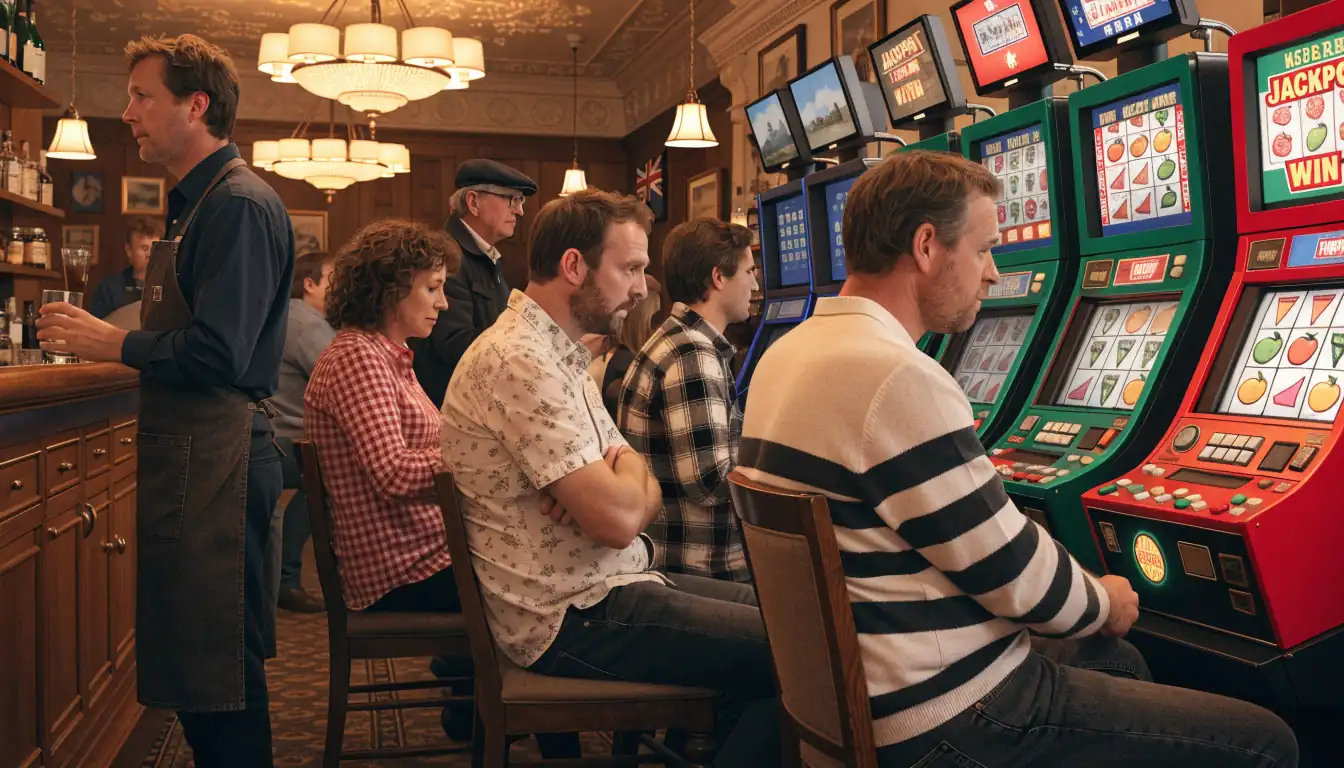
And the scale is genuinely strange when you sit with the numbers. Australia has roughly 0.3% of the world’s population. Yet somewhere between 3% and 18% of the planet’s pub and club poker machines sit inside this country’s borders — the lower figure comes from broader industry estimates, the higher one from a single source, complyadvantage.com, so I’d treat that 18% as one analyst’s read rather than a settled fact. Even taking the conservative end, that’s a ten-times overrepresentation. I remember doing that math on a napkin after a mate mentioned it and thinking I’d got the decimal point wrong. I hadn’t.
That density is the actual "slots" story in Australia. It’s not an online story — it’s a pub-carpet-and-flashing-lights story. Every suburb has a club with a room full of these machines, and that room is doing more financial business than most people would guess.
The money behind the machines
Numbers help here more than adjectives do. In the 2020–2021 financial year, Australians bet almost AUD$150 billion on electronic gaming machines. Not spent — bet, meaning turnover, the total amount pushed through the machines including money that gets recycled through repeated small wins before it’s lost again. Strip that back to what people actually lost, and the figure was still enormous: AUD$12 billion in player losses for that single year.
More recently, one industry source (again, complyadvantage.com) put pokies turnover at $191.2 billion for 2023. I’m flagging the source deliberately rather than presenting it as an agreed industry figure, because turnover numbers like this get reported differently depending on who’s counting and what they’re counting as "turnover" versus "revenue." What doesn’t need a caveat is the general shape of it: this is one of the largest gambling economies per person anywhere in the world, and almost all of it runs through physical machines in licensed venues, not through anything you’d load on a phone from an offshore casino site.
Why "online slots" and "pokies" aren’t the same product
This is where I want to be blunt, because the marketing around "real money gambling slots online" leans hard into blurring this line, and blurring it costs people money and worse.
A pokie in a club is a regulated, physical machine sitting in a venue that’s been through a licensing and compliance process. An "online slot" advertised to Australian players is, by definition, being offered by an operator with no domestic licence to do so, because no domestic licence for that product exists. The Interactive Gambling Act specifically rules out online casino-style games — slots very much included — for Australian residents. That’s not a grey area or an outdated technicality; it’s the actual line the law draws.
Illegal Online Slots
Offering online slot games to Australian residents is illegal under the Interactive Gambling Act. Operators violating this can face prosecution and hefty fines.
What’s legal online, and licensed properly at state and territory level, is sports and racing wagering. That’s a completely separate product with a completely separate legal footing. If you’re comparing "online slots gambling" to putting money on the horses through a licensed wagering operator, you’re not comparing two flavours of the same thing — you’re comparing a permitted activity to one that has no domestic permission structure at all. Table games sit outside this section’s scope too, but the same split applies: wagering is licensed, casino-style products aren’t.
I bring this up not to lecture — I’ve clicked into sites I shouldn’t have, back before I understood any of this — but because "slots" as a search term and "slots" as an actual regulated Australian product point in two different directions, and only one of those directions has a real venue, a real licence, and real oversight behind it.
Why this distinction actually matters to you
Here’s the practical version of all this. When people search for slots in the context of this market, they’re usually picturing one of two things: a night at the local club feeding coins (or these days, a card) into a machine, or an app on their phone promising the same experience for real money. Only the first one is a domestically regulated product with actual licensing behind it. The second is being offered from outside the country’s legal framework, full stop, regardless of how professional the website looks or how many Australian dollar signs it throws at you.
That doesn’t mean nobody plays the second kind — plenty of people do, and the law itself doesn’t criminalise the individual player for doing so. But "legal to do without being prosecuted for it" and "backed by consumer protection, licensing, and oversight" are not the same sentence, and treating them as interchangeable is how people end up disappointed, or worse, out of pocket with nowhere to complain to.
The pokies numbers above — the turnover, the losses, the sheer density of machines per person — describe a physical, licensed, heavily analysed slice of Australian gambling. It’s the honest answer to "what are slots in this market." The online version people search for is a different animal entirely, and the rest of this guide treats it that way rather than pretending the two sit on the same shelf.
How Slot Gambling Works Online in Australia
Here’s the part that surprises most people when they first look into it: there’s no such thing as a "licensed Australian online casino." Not one. The Interactive Gambling Act, passed on 28 June 2001, made it illegal for anyone to offer online casino games — slots included — to people living in Australia. No local regulator hands out a licence for this. No compliance stamp exists to check for, because the thing it would certify doesn’t exist here.
That surprised me too, because every site I ever opened had a licence logo sitting in the footer. Malta. Curaçao. Somewhere else entirely. What that logo actually means is that the site is licensed to operate from that jurisdiction, not that it’s allowed to operate in Australia. The law aims at the operator, not at you. Playing at one of these offshore sites isn’t illegal for an individual — it’s the business offering the game to Australian residents that’s breaking the law. That’s a strange legal position to be in as a player: doing something the government hasn’t banned you personally from doing, on a site the government has banned from existing.
What actually happens technically
Slot gambling online works the same way regardless of where the operator is based: a random number generator decides the outcome, the site processes your deposit and withdrawal, and results get logged server-side rather than on a physical machine in front of you. That part isn’t unique to Australia. What’s unique is who’s allowed to run that operation for an Australian audience — and the answer, legally, is nobody domestically.
Land-based slot play sits in completely different territory. Pubs, clubs and casinos with physical machines answer to state and territory regulators, and that whole side of the industry is legal and heavily woven into local licensing systems. Online slots never got that treatment. The 2001 Act drew a hard line between the two, and that line hasn’t moved.
Tax treatment
One thing that hasn’t changed, whatever platform you’re playing on: gambling winnings aren’t taxed in Australia. If a spin pays out, the payout is yours, full stop — the tax office doesn’t come knocking on gambling wins the way it might on other income. That’s a personal-level fact, though. It doesn’t mean gambling is tax-free for the industry as a whole. Gambling revenue made up 7.7% of state and territory taxation revenue back in 2015‑16, which tells you how much government funding leans on this sector even while individual winnings stay untouched. Two different tax stories running side by side — one for the player, one for the state.
Self-exclusion tools
The part of "how it works" that actually protects you sits outside the game itself. BetStop, the national self-exclusion registry, launched in August 2023 and had 18,000 people registered within its first six months. That’s not a small number for a tool most people have never heard of until they go looking for it — or until someone close to them suggests it.
BetStop works across licensed wagering services, letting you shut yourself out of gambling activity rather than relying on willpower alone at 2am. The catch, and it’s a real one, is that it applies to the legal, regulated side of Australian gambling — sports betting, racing, lotteries. Offshore casino sites running slots outside the Australian licensing system aren’t part of that same enforcement network. Self-exclusion tools work best where there’s a licence to attach the exclusion to. Where there isn’t one, as with offshore slots, that safety net gets a lot thinner.
Limited Self‑Exclusion
BetStop only applies to licensed Australian wagering services. Offshore online slots are outside its protection, so you remain vulnerable to problem gambling.
I registered with BetStop after a stretch I’m not proud of. It did what it promised for the accounts it covered. It didn’t stop me opening a browser tab for an offshore site the next day, because that site was never inside the system to begin with. Worth knowing before you lean on it as your only guardrail.
The practical gap
Put those three things together — no domestic licence, tax-free winnings, and a self-exclusion tool that only reaches part of the market — and you get an odd picture. The government taxes the legal gambling sector heavily enough that it funds a real slice of state budgets, protects players through tools like BetStop, and yet has no licensing pathway for the exact product — online slots — that a huge number of Australians are actually playing. That gap doesn’t get talked about much on the sites hosting the games. It’s the first thing worth understanding before anything else about how this actually works.
Slot Machines and Their Role in Australian Casinos
Walk into any club in New South Wales on a Friday night and you’ll hear it before you see it — that constant electronic chatter of poker machines lined up along the wall. This is a different animal from the online slot you spin on your phone. Physical machines are a fixture of pubs, clubs and casinos, and they’re not a small side business. NSW alone has around 95,800 of these machines sitting in venues, more than most countries have in total.
I used to think of them as harmless furniture — the thing your uncle plays while waiting for the footy to start. Then I saw the profit numbers. NSW clubs pulled in $1.945 billion in net profit from pokies in the space of about six months, from December 2017 to May 2018. That’s not pocket change from a "bit of fun." That’s a core revenue line for the club industry, and it explains why you’ll never find a pub trying too hard to get rid of them.
Why cash-heavy machines attract more than just punters
Here’s the part nobody tells you when you’re feeding coins into a machine at the local RSL: these things are considered a serious money laundering risk. Public inquiries and sector guidance have flagged pokies as one of the higher-risk areas in the whole gambling sector, and it’s not hard to see why once you think about how they operate.
A pokie takes cash, spits out cash, and doesn’t ask many questions in between. High volumes of cash moving through a machine with limited traceability is exactly the kind of environment criminals look for. The typical pattern — feed a machine a large amount of cash, play little or nothing, then cash out — lets someone turn "dirty" money into a payout ticket that looks like ordinary gambling winnings. No online slot works this way, because digital platforms leave a data trail from the first click. A physical machine in a smoky corner of a club doesn’t care where the cash came from, only that it went in.
This is the split worth understanding:
- Digital slots run through an account, a login, and a payment record — every session is logged somewhere.
- Physical pokies run on cash and tickets, often with nothing tying the money to a verified identity beyond a loyalty card that’s easy to swap or ignore.
That gap is the whole reason regulators keep circling back to venue-based machines specifically, rather than treating all "slots" as one category.
What this means if you’re just there to play
None of this makes a night at the pokies dangerous for the average person putting through a modest amount before dinner. But it does mean the machine you’re standing at is part of an industry the government watches closely for exactly the reasons above — not because of the game itself, but because of what the cash flow around it makes possible.
If you’re comparing physical pokies to the slots you’d find through an app or a browser, the game math might look similar. The money trail behind them doesn’t. One leaves a digital footprint by design. The other, historically, hasn’t had to — and that’s precisely why it keeps showing up in AML risk assessments rather than in ordinary consumer complaints about losing streaks.
Next up: the actual game types you’ll run into, on a screen or on a machine, and the myths that come bundled with them.
Popular Slot Game Types and What Players Should Know
Ask ten people what separates one slot from another and you’ll get ten different answers, mostly wrong. I used to think it was just the theme — pirates versus fruit versus Egyptian gods, whatever skin they’d slapped on the same machine. Took me longer than I’d like to admit to realise the actual differences are structural, not cosmetic.
Classic three-reel games are the simplest version: a handful of symbols, straightforward lines, nothing dressed up. Video slots are what you’ll mostly run into now — more reels, more paylines, bonus rounds stacked on top of bonus rounds. Then there’s the progressive style, where a jackpot pool grows across a network of machines or games instead of resetting after every spin. Different mechanics, different pacing, but the same basic promise underneath: put money in, hope for more back.
The myths that don’t hold up
The one I fell for hardest was the "it’s due" idea — that a machine which hasn’t paid out in a while is somehow closer to paying out now. It’s a comforting thought when you’re a few hours and a few hundred dollars deep, and it’s nonsense. Nothing about a spin "remembers" the last one. I also believed for years that playing at certain times of day changed my odds. It didn’t. The belief just made losing feel like a strategy problem instead of what it actually was.
None of that is unique to Australia, but it’s worth saying because these myths are exactly what keeps people chasing losses instead of walking away.
Why this connects to harm, not just entertainment
Poker machines are considered the most harmful form of gambling in New South Wales, and having played enough of them myself, that tracks with what I saw — not in other people, in my own behaviour. The speed of play, the short gap between bet and result, the way a near-miss feels like almost-winning even though it isn’t. Table games make you wait. Slots don’t. That difference matters more than people give it credit for.
Where the game mechanics brush up against something darker
It’s worth knowing that the same features which make slots and pokies appealing to players — fast cash in, fast cash out, high transaction volume — are exactly what makes them useful to people laundering money. Purchasing winning tickets from another patron is a known typology. So is structuring, where cash gets spread across multiple venues to avoid drawing attention at any single one. Neither of these has anything to do with the game type itself; they’re about exploiting the machine as a conduit.
The behaviour pattern regulators flag looks distinct from normal play: someone puts a large amount of cash into a machine, plays barely at all, then cashes out almost immediately. On its own that’s a red flag. It gets worse where there’s collusion between patrons or weak oversight from venue staff, because that’s when the "minimal play, quick cash-out" pattern turns from suspicious into functional.
I’m not saying every quiet cash-out is a laundering operation — most of the time it’s just someone who changed their mind after one spin. But the game types that feel the most "instant" are the same ones that create the most room for this kind of misuse, and that’s not a coincidence worth ignoring.
Pokies in Australia: Scale and Impact

Pokies is what Australians actually call them, not "slot machines" — and the scale of the thing is hard to get your head around until you sit with the numbers for a minute.
In FY 2020‑2021 Australian players lost AUD $12 billion on electronic gaming machines, which works out to roughly AUD $608 per adult.
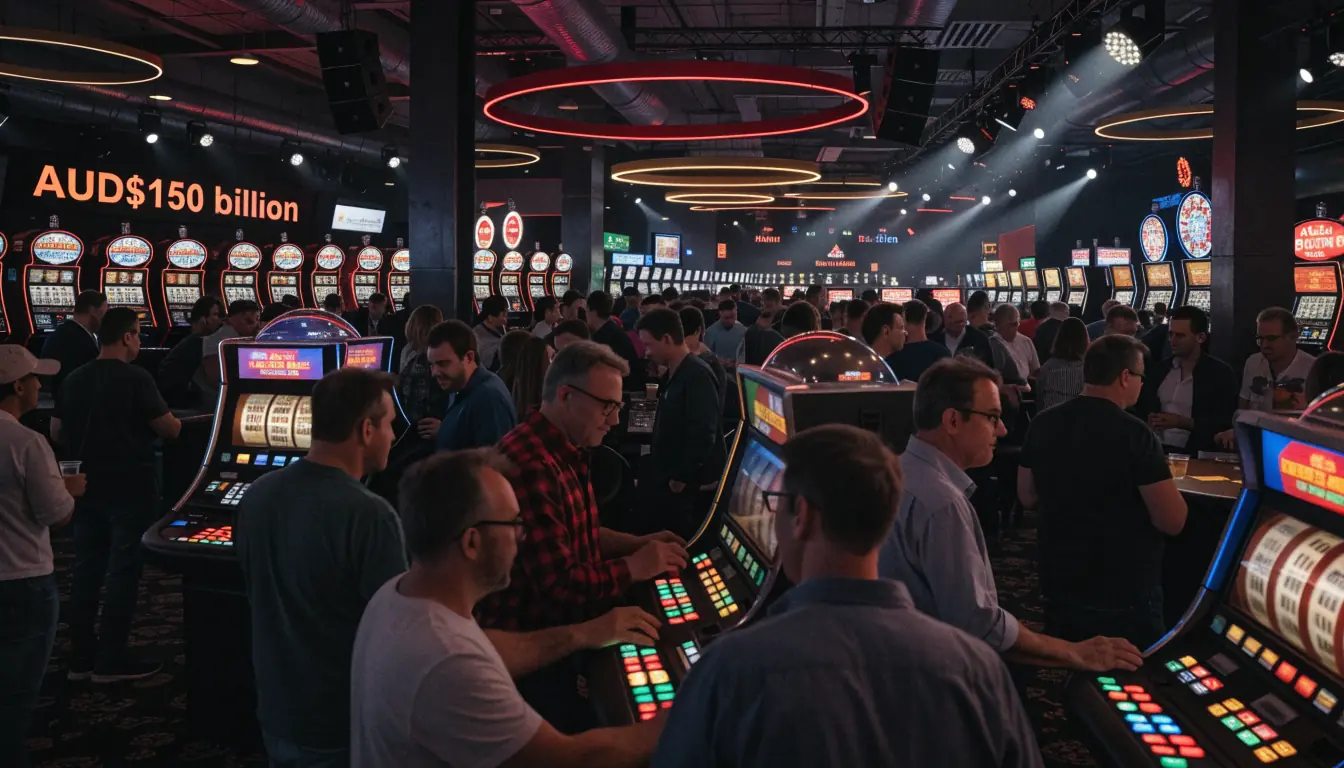
In FY 2020-2021, Australians bet almost AUD$150 billion on electronic gaming machines. Not turnover in some abstract industry sense — that’s money physically fed into machines, spun through, and mostly fed back in again. Out of that, players lost AUD$12 billion. That’s the actual damage: money that didn’t come back. Split across the population, that works out to a per-capita loss of AUD$608 for that financial year alone. Doesn’t matter if you never touched a pokie in your life — that’s the average across everyone.
I used to think of that turnover figure as basically meaningless, because most of it is the same money cycling through a machine dozens of times before it’s gone. And that’s true, technically. But the loss figure is the one that matters, because that’s what actually left people’s pockets and didn’t come back. Turnover tells you how big the machine is. Loss tells you what it cost.
More recently, one industry source — comparethemarket.com.au — put pokies turnover at $191.2 billion for 2023, which gives you a sense of where the trend is heading, though I’d treat that as one data point rather than an official benchmark, since the way turnover gets measured and reported shifts depending on who’s doing the counting.
Why pokies sit apart from other slot formats
Everything else in this space — the online slot games, the crypto-based versions, the international platforms — gets talked about like it’s the same product wearing different clothes. It isn’t. Pokies are a physical, land-based fixture of pubs and clubs, embedded in the social furniture in a way that online slots never will be for most people. You don’t stumble into an online casino site on your way to grab a beer with a mate. You do stumble past a bank of pokies.
That’s part of why the loss numbers look the way they do. It’s not a niche hobby generating that AUD$12 billion — it’s a habit built into ordinary Tuesday nights out.
The number that actually sticks with me
Per-capita loss is the stat I keep coming back to. AUD$608 a head, for everyone — kids, non-gamblers, the works — isn’t a figure about "some people who gamble too much." It’s a figure about a market that’s built losses into its baseline economics. Broader casino offerings — table games, sports betting, whatever else falls under the wider gambling umbrella — don’t come close to generating that kind of per-person drain, because pokies are simply more available, more repetitive, and more embedded than anything else in the mix.
None of this tells you whether a particular machine, a particular venue, or a particular night is going to go well or badly for you. It just tells you the size of the pool everyone’s swimming in, and why the scale of pokies gets treated as its own category rather than folded into "slots" generally.
Crypto and Bitcoin Gambling: What Australian Players Need to Know
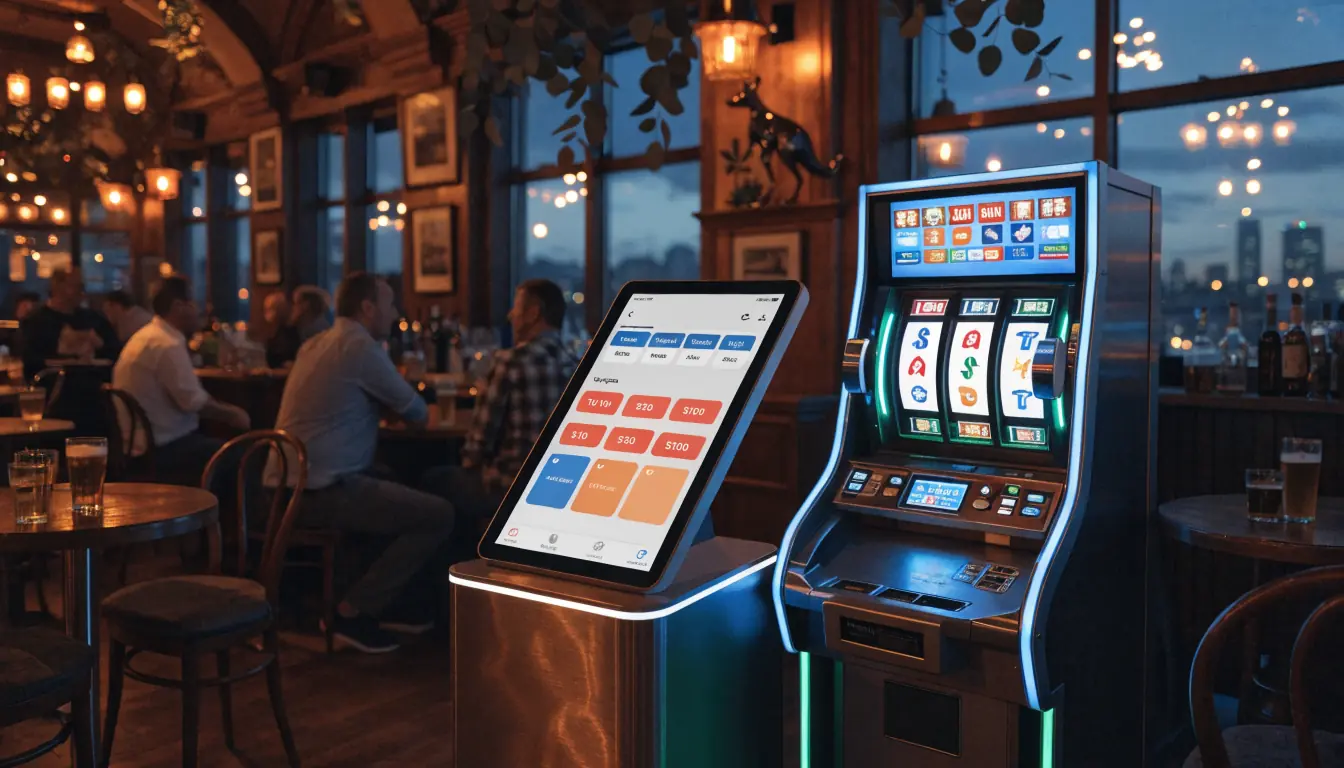
I remember the first time a "Bitcoin casino" ad promised instant, anonymous withdrawals. Anonymous was the word that got me. No ID checks, no waiting, just crypto in and crypto out. That’s exactly the pitch that should make you pause, not click through.
Here’s the thing nobody selling you on Bitcoin gambling mentions: online casino games, including slots, are prohibited under Australian law regardless of what currency you’re using to fund the account. Bitcoin doesn’t change the legal status of the game. It just changes how the money moves — and how hard it is to trace.
That second part matters more than people think. Fiat gambling, for all its faults, runs through banks and payment processors that already do customer verification. Crypto strips a lot of that out by design. No bank asking where the funds came from. No easy paper trail if something goes wrong.
Why crypto gets flagged
AML controls that apply to cash‑heavy gambling — customer verification and patron profiling — are exactly the tools regulators point to when crypto enters the picture. The reasoning is straightforward: if a payment method makes it easier to move money without anyone checking who’s moving it or why, it gets treated as higher risk, not lower.
A few patterns show up again and again when crypto and gambling mix, and they’re worth knowing even if you’re just a player watching your own behaviour:
- Access to more cash than expected for the customer profile — someone funding large crypto deposits that don’t match their known financial situation.
- Depositing higher values and larger amounts than usual, particularly in bursts rather than gradually.
These aren’t abstract compliance jargon. They’re the same red flags used to police cash‑based pokies, just applied to a digital rail instead of a note acceptor.
The traceability problem
One reason cashless, account‑based pokies get held up as an improvement over old‑school machines is traceability — every transaction ties back to an identified account. Crypto can go the opposite direction if the platform doesn’t build in the same verification. A wallet address isn’t a person. Without proper checks, it’s harder to know who’s actually behind the funds, which is precisely why AML frameworks lean so heavily on identity verification wherever real money — or its digital equivalent — is changing hands.
If you’re an Australian player and you come across a site pushing Bitcoin deposits as a selling point, ask yourself why "no questions asked" is being marketed as a feature. In a properly run operation, verification isn’t the annoying part you route around. It’s the part that tells you the platform isn’t just a pipe for moving money nobody wants traced.

Crypto isn’t inherently shady. But in gambling, it removes friction that exists for a reason, and that’s worth remembering before you convert anything into coins for a spin.
Playing for Real Money: Taxes and Payouts in Australia
Here’s the part that surprised me when I first cashed out a win: nobody took a cut. Gambling winnings are not taxed in Australia. Whatever hits your account stays there — no line item, no form to fill out, no percentage handed over. Coming from someone who half-expected the tax office to come knocking, that was a genuine relief.
That doesn’t mean gambling is untaxed as an activity — far from it. The money just gets taken from the other end. Operators pay the tax, not players, and it shows up in government budgets rather than on your payslip. In 2015-16, gambling revenue made up 7.7% of state and territory taxation revenue. That’s not pocket change for state budgets — it’s a meaningful slice of how things get funded, collected long before any payout reaches a player’s account.
So when people search for ways to play real casino games online for actual money, the tax question usually isn’t the complicated part — it’s everything around it. Real money gambling online through offshore sites isn’t something Australia licenses or regulates domestically, and that gap matters more than whether your winnings get taxed. "Tax-free winnings" sounds like good news, and it is, but it’s a separate question from whether an operator is even legally allowed to take your bet in the first place.
I’d treat the tax-free part as the least of your worries. It’s the one piece of this that actually works in your favour without conditions attached — everything else about where that money comes from and who’s holding it deserves more scrutiny than a headline about untaxed winnings gives you.
Ethereum and Internet Gambling: Emerging Trends
Ethereum gets talked about like it’s the next big shift in internet gambling — smart contracts, "provably fair" outcomes, all that. I’ve poked around a few sites that took it. Same story as Bitcoin underneath: still offshore, still outside anything the Interactive Gambling Act allows for Australian residents, still nobody local to complain to if it goes wrong.
What’s different with Ethereum is the layer of complexity it adds on top of the usual crypto problem. Transactions can be split, routed through contracts, moved between wallets fast enough that tracing who actually owns the funds gets messy. That matters because the same laundering patterns AUSTRAC and compliance teams watch for on cash-heavy pokies floors show up here in digital form.
Two patterns worth knowing:
- Frequent small redemptions across venues or platforms — instead of one big cash-out, funds get pulled in smaller amounts, spread across sites or wallets, so nothing on its own looks big enough to flag.
- Multiple accounts working together to move funds — coordinated deposits and withdrawals designed to look like separate players rather than one operation.
Neither of these is unique to Ethereum, but the speed and anonymity of the chain make them easier to run and harder to catch than the pub-floor version. There’s no BetStop for a wallet address. There’s no ID check that means anything if the site itself isn’t licensed here. Whatever "emerging" means for Ethereum gambling, none of it changes that basic fact.
Online Casino Landscape in Australia

Here’s the thing that trips people up when they search for gambling casino online options in Australia: there isn’t a licensed local version to find. The Interactive Gambling Act, passed on 28 June 2001, banned operators from offering online casino games — slots, roulette, blackjack, poker — to anyone living here. Not the players. The operators. That distinction matters, but it doesn’t change the practical reality: every "Australian" online casino you’ll stumble across is actually running on a licence from somewhere else entirely.
So what you’re really looking at, when you look at online casino gambling in Australia, is a market split in two. On one side, sports betting and lotteries — properly licensed, state by state, taxed, regulated. On the other, offshore casino sites that Australians access anyway, sitting in a legal grey zone the law never quite closes.
That split isn’t just a legal footnote. Gambling revenue made up 7.7% of state and territory taxation revenue back in 2015-16 — real money for state budgets, almost entirely from the legal side of the ledger. Casino-style slots offshore don’t feed that number. They sit outside it.
I mention this now because everything after this section — the slot mechanics, the pokies numbers, the crypto stuff — only makes sense once you’ve got that split straight in your head.
How to Choose a Top Online Casino for Slots in 2026
Here’s the thing nobody tells you upfront: there’s no such thing as a "top licensed Australian online casino" for pokies, because that licence doesn’t exist. The Interactive Gambling Act 2001 bans anyone from offering online slots to people here, full stop. So the moment a site brags about being "Australia’s best-rated casino," ask yourself who’s actually regulating that claim. Nobody local is.
What you can actually check is where the operator is licensed — Malta, the UK, somewhere else — and whether that licensor has any real teeth. A licence number in the footer means something only if it points to an actual regulator, not a logo someone copy-pasted.
Beyond that, look at how seriously the site treats AML compliance. Real operators run customer verification, monitor for structuring and unusual cash patterns, and don’t wave through withdrawals without ID checks. If a site skips identity verification entirely, that’s not "convenient," that’s a warning sign.
Market share numbers get thrown around a lot — Australia’s pokies turned over $191.2 billion in 2023 by one source’s count, and the country reportedly holds around 18% of the world’s poker machines according to that same reporting. Big numbers, sure. But size doesn’t equal safety, and it definitely doesn’t equal legality for what you’re being offered online.
Judge the operator, not the marketing.
Are online slots legal in Australia?
No. The Interactive Gambling Act, passed on 28 June 2001, specifically rules out online casino-style games, including slots, for Australian residents. Only sports and racing wagering are legally permitted and licensed at the state and territory level.
What payment methods are available for Australian players at online casinos?
You cannot legally play online slots or casino games domestically, so no local payment methods are offered for them. For licensed wagering on sports and racing, you use standard regulated payment options through state-approved operators.
What should a valid complaint include?
You should include specific red-flag transaction details if you suspect money laundering, such as large cash insertions followed by minimal play, frequent small redemptions across multiple venues, or instances of patrons refusing identification.
How can a player verify that an online casino holds a valid licence in Australia?
You cannot verify an online slots or casino licence because no domestic licence for these products exists. You can only verify a state-issued licence for legal sports and racing wagering operators, which are the only permitted online gambling services.