
Pocket Pokies Casino Australia: What to Know for 2026

Table of Contents
Pocket Pokies in Australian Casinos – What You Need to Know for 2026
Before you commit real money to any pokies site in 2026, it helps to know how each casino stacks up on licensing, bonus terms, and payout speed. Here’s a quick, factual look at each operator so you can see what actually matters before signing up.
License: Curacao · Bonus: up to A$2,000 Golden Pokies holds a Curacao license and offers a welcome bonus of up to A$2,000, giving new players a solid starting incentive.
License: Curacao Gaming Control Board OGL/2023/176/0095 (Hollycorn N.V.) · Bonus: up to A$5,000 + 300 free spins across 4 deposits Rollero Casino operates under a Curacao Gaming Control Board license held by Hollycorn N.V., with a generous multi-deposit welcome package of up to A$5,000 plus 300 free spins spread across four deposits.
License: international iGaming licence – jurisdiction not named in the source · Bonus: 100% up to A$1,000 + 100 free spins, 35x wagering · Payout speed: PayID 1-24 hours · Min. deposit: A$30 (PayID from A$10) House of Pokies runs on an international iGaming licence and pairs a 100% match bonus up to A$1,000 with 100 free spins under 35x wagering; PayID withdrawals are processed within 1-24 hours, and deposits start from as low as A$10 via PayID.
License: Curacao Gaming Control Board OGL/2023/174/0082 (Dama N.V.) · Bonus: up to A$5,000 + 300 free spins across 4 deposits SpinsUp is licensed by the Curacao Gaming Control Board through Dama N.V. and matches Rollero’s structure with a welcome offer of up to A$5,000 and 300 free spins across four deposits.
License: Curacao eGaming OGL/2024/923/0383 (Antillephone N.V.) · Bonus: up to A$2,000 + 100 free spins across 2 deposits · Min. deposit: A$30 WinSpirit Casino is licensed under Curacao eGaming via Antillephone N.V., offering up to A$2,000 plus 100 free spins across two deposits, with a low minimum deposit of A$30.
License: Curacao eGaming (Dama N.V.) · Bonus: up to A$10,000 + 180 free spins, 40x wagering JeetCity Casino operates under a Curacao eGaming license held by Dama N.V. and stands out with a large bonus of up to A$10,000 plus 180 free spins, subject to 40x wagering.
License: Curacao Gaming Control Board OGL/2023/176/0095 (Hollycorn N.V.) · Bonus: up to A$11,000 + 300 free spins (code NEO100) Neospin holds a Curacao Gaming Control Board license via Hollycorn N.V. and offers one of the bigger bonus packages on this list, up to A$11,000 plus 300 free spins, unlocked with the code NEO100.
Bonus: 240% up to A$4,100 + 300 free spins WinShark features a notably high match percentage bonus of 240% up to A$4,100, plus 300 free spins for new players.
License: Curacao (operating since 2017) · Bonus: 250% up to A$2,000 + 50 free spins on the first of six deposits · Min. deposit: A$20 Uptown Pokies has been operating under a Curacao license since 2017 and offers a 250% bonus up to A$2,000 with 50 free spins on the first of six deposits, with a minimum deposit of A$20.
Bonus: 100% up to A$750 + 200 free spins, 35x wagering · Payout speed: crypto 30-120 minutes, fiat 24-72 hours · Min. deposit: A$30 MrPacho offers a 100% bonus up to A$750 plus 200 free spins under 35x wagering, with fast crypto payouts processed in 30-120 minutes and fiat withdrawals within 24-72 hours; minimum deposit is A$30.
I’ll be upfront about something before we get into numbers: "pocket pokies" isn’t a special category of machine or a licensed app you can legally use for real-money online play in Australia. If you’ve searched for it hoping to find a downloadable casino app that pays out cash on your phone, I need to correct the assumption right away, because getting this wrong costs people money and, sometimes, a lot worse. What actually exists is a legal, heavily regulated pokies industry running in pubs, clubs and casinos across the country — and a parallel offshore world of apps and sites that are not licensed here and that no Australian regulator will ever vouch for. Both use the word "pokies." Only one of them is legal to offer to you.
I spent a chunk of my twenties feeding twenty-dollar notes into machines in RSL clubs, so this isn’t theory for me. What follows is what I’ve verified, what I’ve experienced, and — just as importantly — where I’m going to tell you straight that nobody has a clean answer.
What "pocket pokies" actually means on this market

There are two very different things people mean when they type this phrase in:
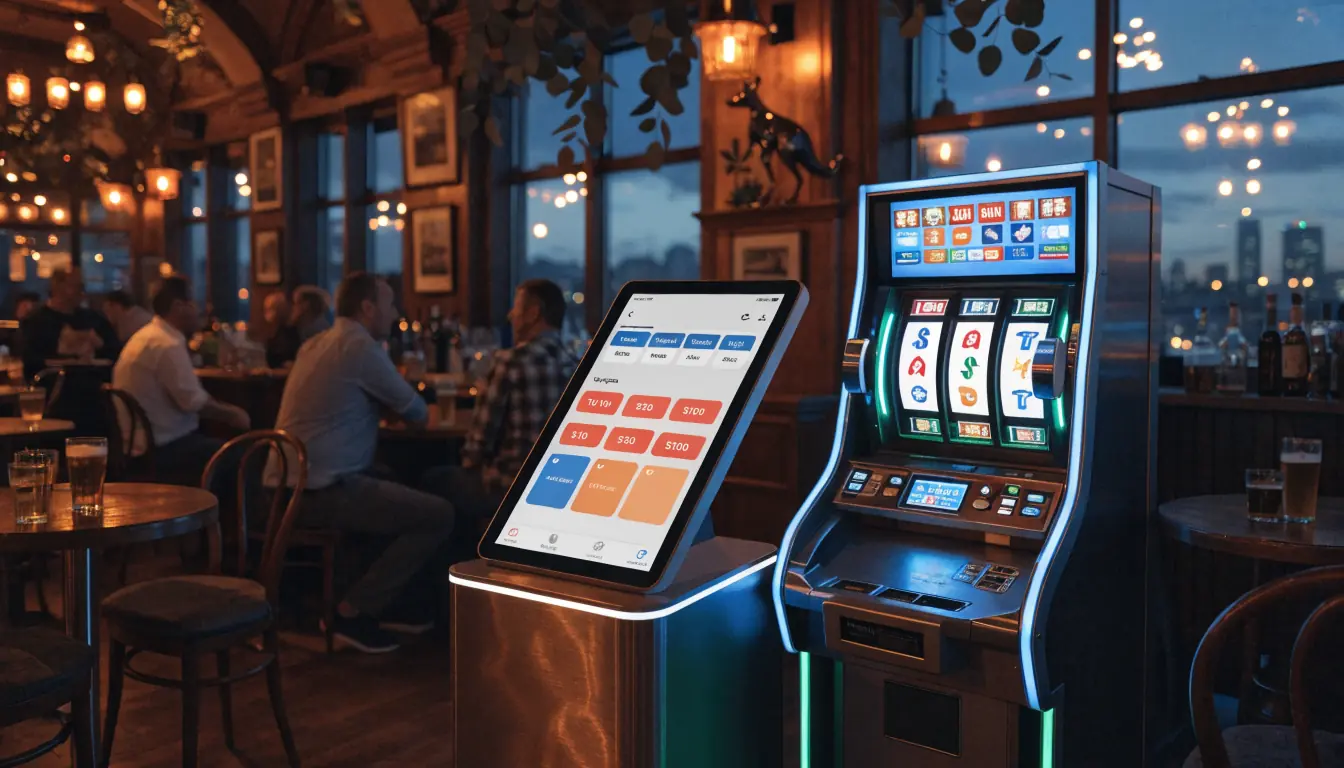
A mobile companion that lets you check loyalty points, see machine availability and top‑up a cashless account while you are in a licensed venue.
An offshore “Pocket Pokies” casino app that claims to let you play slots for cash from anywhere, which is not covered by an Australian licence.
- Physical pokies you access “in your pocket” via a club or casino’s own mobile companion app — things like checking your loyalty points, seeing which machines are free, or topping up a cashless account card from your phone while you’re sitting in the gaming room. This is real, it’s growing, and it’s tied to the licensed venue you’re physically in.
- A standalone “Pocket Pokies” real-money casino app or website that lets you play slots for cash from anywhere. This is the version that shows up when people search “is Pocket Pokies legit” or “Pocket Pokies no deposit” — and this is the version that runs straight into the Interactive Gambling Act.

The Interactive Gambling Act 2001 makes it an offence for online operators to offer real-money gambling — including online casino games like slots — to Australian residents. That’s not a grey area and it’s not a "check the licence" situation, because there is no Australian licence for this. No state or territory issues one. If an app or site is marketing itself to you as an online pokies casino you can play from your phone for real money, it is not operating under an Australian licence, full stop — the law prohibits the offering itself, not just unlicensed versions of it.

I want to flag something else clearly, because a lot of gambling content tries to soften this with "always check the licence" advice, which is genuinely good guidance in markets where a real regulator issues real licences. Here, for online casino-style pokies, that advice is misleading — there’s nothing to check. The law targets the operator, not you personally, so playing at an offshore site isn’t something you’ll be prosecuted for. But "not illegal for you" and "safe" are two completely different claims, and nobody regulating this market is going to help you if an offshore operator delays your withdrawal, changes its terms, or disappears.
Illegal online real‑money pokies
Offering real‑money online pokies to Australian residents breaches the Interactive Gambling Act 2001 and can result in enforcement action against the operator.
So when I talk about "pocket pokies" for the rest of this section, I’m talking about the legal landscape — the actual, licensed EGM industry Australia runs, how it’s shifting toward mobile and cashless features, and what that means for you walking into 2026.
The scale of the pokies industry — and where the numbers get shaky
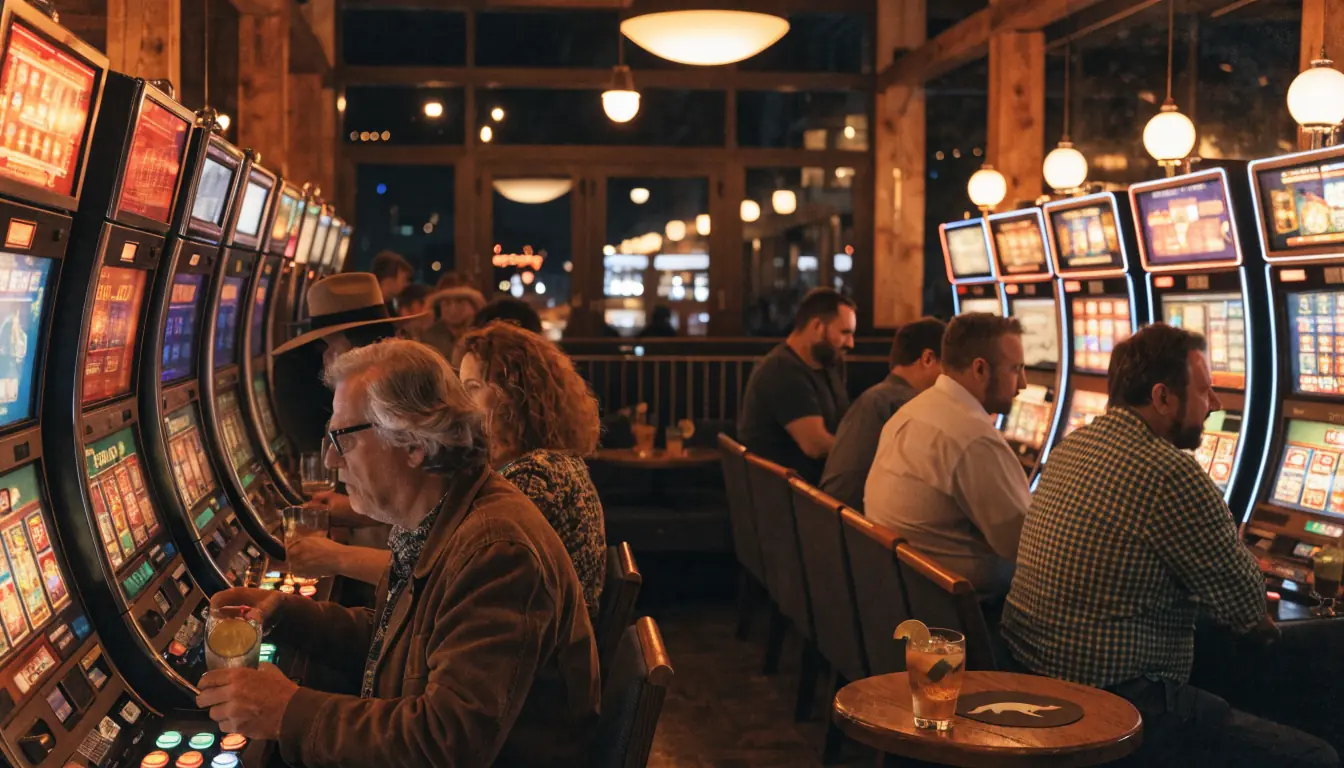
Electronic gaming machines operate in every Australian state, plus the ACT and the Northern Territory. There’s no jurisdiction where pokies simply don’t exist — the differences are in density, machine caps and house rules, not in whether they’re there.
The most recent full-year figures I trust cover FY 2020-2021. In that year, Australians placed bets worth almost AUD 150 billion on electronic gaming machines. That figure is turnover — money cycled through the machines, not money lost — and it’s worth sitting with for a second, because it’s easy to confuse the two and think the country lost $150 billion. It didn’t. The actual player loss for that same year was about AUD 12 billion. That’s the number that matters if you’re trying to understand what pokies actually cost players: turnover measures how much passes through the machine as bets are placed and re-placed, loss measures what’s left in the machine’s favour at the end.
Break that AUD 12 billion down per person and you get AUD 608 in per-capita losses for FY 2020-2021 — meaning, roughly, every adult in the country lost that much to EGMs that year, spread across everyone whether they gambled or not.

There’s a more recent figure floating around too: pokies generated AUD 191.2 billion in gambling turnover in 2023, according to complyadvantage.com. I’m naming the source deliberately, because that number comes from a single compliance-industry report, and turnover figures like this tend to be quoted differently by different outlets depending on what exactly they’re measuring and over what period. I can’t tell you this is "the" official market size for 2023 — I can tell you one source reported it, and it’s a large enough jump from the FY 2020-2021 figure that it should be read as a data point, not a trend line.
Now here’s a genuine contradiction I’m not going to paper over. You’ll see it claimed that Australia accounts for 3% of the world’s pub and club poker machines. You’ll also see it claimed, elsewhere, that the figure is closer to 18%. These numbers aren’t close enough to be rounding differences — they’re describing very different pictures of how concentrated pokies are here relative to the rest of the world. I don’t know which is right, and I’m not going to pretend I do by picking whichever one sounds more dramatic. What I can tell you with confidence is the thing both figures agree on: pokies are everywhere in Australian pubs, clubs, and casinos, and the density of machines per person here is unusually high by any measure you use. If you want the exact percentage for a report or an argument down the pub, go to the primary source and check which measurement basis they used — I’m not going to hand you a number I can’t stand behind.
Winnings, tax, and who actually pays
One thing that surprises people who’ve gambled overseas: gamblers’ winnings in Australia are not taxed. If you hit a jackpot on a pokie in a licensed venue, what you walk away with is yours — the ATO doesn’t take a slice.
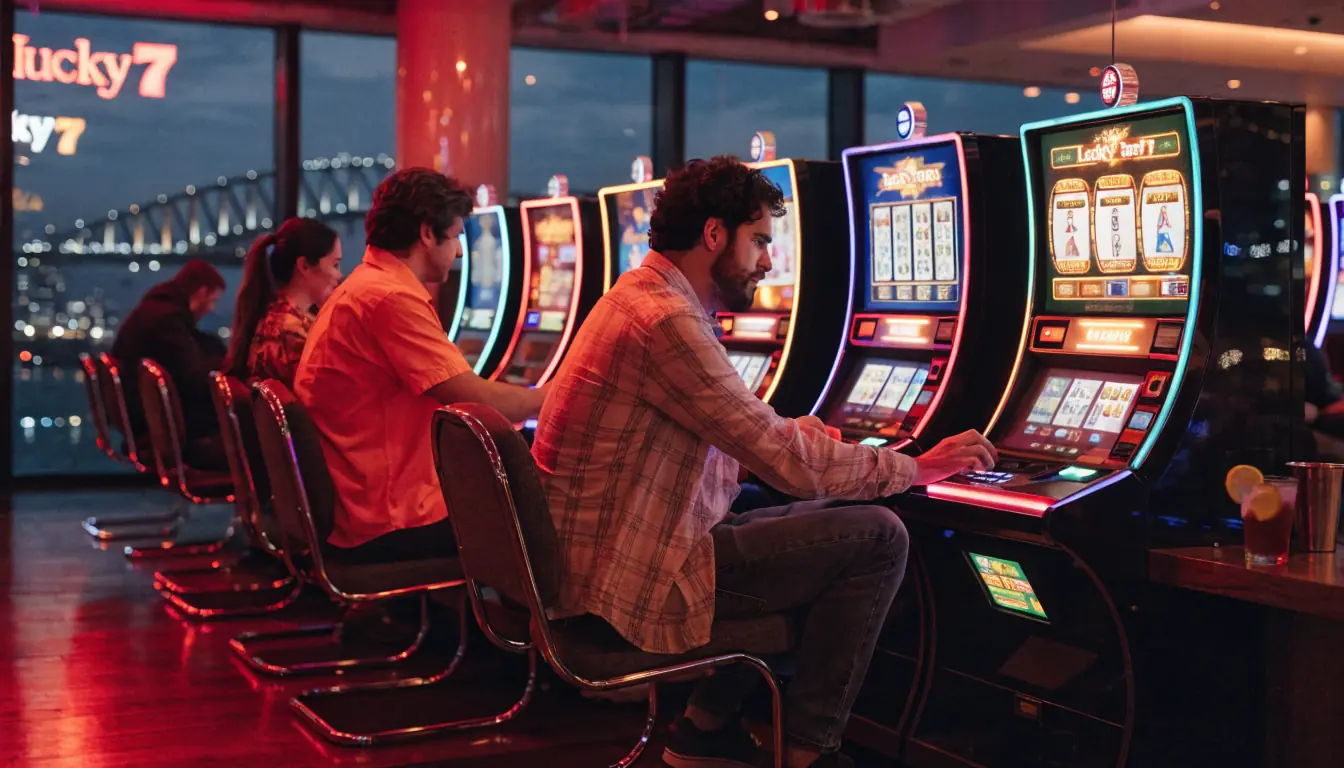
That doesn’t mean gambling isn’t taxed at all. Taxation of gambling operators varies by state and by the type of gambling service being offered, which is part of why pokies rules can feel inconsistent as you cross a state border — venues in different states are working under different tax regimes and different regulatory bodies, like the ACT Gambling and Racing Commission or the Office of Liquor and Gaming Regulation, depending on where you are. The tax burden sits with the operator, structured differently state by state, not with the person pulling the lever.
How pocket pokies actually work in a real venue
Strip away the marketing language and a modern pokie session looks like this: you sit down at a machine, load credit either with cash or, increasingly, through a linked account or card, choose your bet size, and spin. The "pocket" part — the mobile companion side — usually comes in around the edges of that experience rather than replacing it. Venues have been building apps that let members:
- Check their loyalty and rewards balance without walking to the front desk.
- See real-time availability of machines in a crowded room.
- Load funds onto a cashless account or card ahead of a visit.
- Track their own play history over time.
Mobile companion features
- Check loyalty and rewards balance without visiting the front desk.
- View real‑time machine availability in a crowded room.
- Load funds onto a cashless account or card before you arrive.
- Track personal play history over time.

That last point matters more than it sounds. A cash-fed machine leaves almost no trail — you put notes in, you get either nothing or a payout ticket, and that’s the entire record. An account-based, cashless setup is fundamentally different: it links every deposit, every spin, and every withdrawal to an identifiable account. That’s not a minor technical upgrade — it’s the single biggest structural change happening in this industry right now, and it’s happening for reasons that go well beyond convenience.
Why cashless is the direction everything is moving

The high volume of cash transactions and the limited traceability of pokies is exactly what makes them attractive to money launderers, and regulators know it. I’ll go into the mechanics of that — the specific laundering patterns, the red flags, the AUSTRAC reporting thresholds — in the section built for it, because that’s a different problem than the one I’m covering here. What belongs in this section is the industry-level response: cashless, account-based pokies are being pushed precisely because they close off the anonymity that makes cash-fed machines a soft target.
According to facctum.com, adoption of cashless, account-based pokies improves traceability and reduces anonymity — which lines up with what regulators themselves are recommending. Transparent, account-based pokies give a full record of deposits, gameplay and withdrawals in a way a coin slot or note acceptor never could. Regulators are recommending tighter customer due diligence, ongoing transaction monitoring, and a shift toward cashless gaming systems as the practical path forward — not as an abstract ideal, but as the direction venues are already being pushed to move in.
Regulators are pushing cashless, account‑based pokies because they improve traceability and reduce money‑laundering risks.
If you’re a regular player heading into 2026, the practical upshot is this: expect more venues to ask you to register an account, expect card or app-based credit systems to become more common than straight cash-in machines, and expect that your play is going to be more visible to the venue and to regulators than it used to be. Some players hate this — it feels like being watched. I get that reaction, I’ve had it myself. But it’s worth remembering what the anonymity was actually enabling on the other end, and why a NSW inquiry into pokies and organised crime landed where it did on this exact question. I won’t unpack that inquiry’s detail here since it belongs in the compliance section, but its existence is part of why cashless isn’t a fringe idea anymore — it’s becoming the baseline expectation.
What’s actually different between operators, and what isn’t
People ask me constantly what separates one pokies venue or one app from another, expecting a real answer with specifics — house edges, particular machine models, which club has "better" odds. I’m going to be straight with you: I can’t hand you that comparison, and neither can most of what you’ll read online, because the specific figures that would make it a real comparison — RTP by title, volatility by machine, which named games sit in which venues — aren’t published anywhere I can verify. If a piece of content tells you "Game X has a 96% RTP at this casino," ask where that number came from, because reputable public sources for exact per-title figures in the Australian club and pub context are thin on the ground.
What I can tell you with confidence, because it’s consistent across every jurisdiction:
- Winnings aren’t taxed anywhere in the country — that’s uniform.
- Operator taxation varies by state and by gambling type — that’s the actual point of difference, not the player-facing experience.
- Every state, the ACT and the Northern Territory run EGMs under their own regulator, which is why compliance requirements and machine caps differ by location even though the machines themselves look and feel the same everywhere.
What genuinely varies — venue by venue, app by app — isn’t something I have hard data on, and I’d rather tell you that plainly than invent a comparison table to look thorough. If you want to know how a specific club’s cashless system works or what a specific app actually offers, that’s a conversation with that venue, not something a general market overview can responsibly answer for you.
The offshore app problem, spelled out
Since a chunk of people landing on this page are specifically wondering whether a named "Pocket Pokies" app or site is safe, is legit, or offers things like free spins or no-deposit bonuses, I want to address that directly rather than dodge it.
I am not going to tell you to "check the operator is licensed" as if that’s a meaningful safety check here, because for a real-money online pokies offering aimed at Australian players, there is no local licence to check — the Interactive Gambling Act prohibits the offering outright, and no domestic regulator issues one. Any site presenting itself as a licensed Australian online pokies casino with real-money play is misrepresenting its position, because that licence category doesn’t exist. Full stop.
That doesn’t automatically make every offshore-facing site a scam — plenty operate under licences from regulators like the Malta Gaming Authority or the UK Gambling Commission, which are real regulators, just not ones with jurisdiction here, and not ones that give Australian players the protections a domestic licensing regime would. It’s not illegal for you personally to play at an offshore-licensed site — the law is aimed at the operator offering the service, not at you for using it. But understand what that means practically: if something goes wrong — a delayed withdrawal, a disputed bonus, an account frozen without explanation — you have no local regulator, no local ombudsman, and no local ADR scheme to turn to. You’re relying entirely on whatever process that offshore operator has set up, in whatever jurisdiction they’re actually based in.
On offers like "free spins" or "no deposit" bonuses specifically: I don’t have verified terms for any named operator to hand you, and I’m not going to fabricate wagering requirements, expiry windows or bonus caps just because that’s the kind of detail people expect to see in a casino review. If a site doesn’t publish its wagering requirements clearly before you claim anything, that’s the red flag right there — a legitimate offer, wherever it’s licensed, should show you the conditions up front, not bury them in a terms page you find after you’ve already deposited.
Where this leaves you heading into 2026

The legal, regulated pokies industry in Australia is enormous — tens of billions in turnover, billions in player losses annually, machines in essentially every pub and club you’ll walk into — and it’s shifting toward mobile-linked, cashless, account-based systems faster than most players have noticed. That shift is being driven by traceability concerns as much as by convenience, and it’s going to keep reshaping what a "normal" pokies session looks like over the next few years.
Separately, and this is the part I actually want you to walk away remembering: there is no legal Australian real-money online pokies casino, "pocket" or otherwise, and no licence exists here for one to point to. If you’re 18 or over and choosing to play at an offshore site anyway, that’s a decision the law leaves to you — but go in knowing you’re outside any local protection, and treat every claim about bonuses, fairness or legitimacy as something you have to verify yourself, because nobody here is verifying it for you.
If pokies — pocket, cashless, or otherwise — start feeling less like entertainment and more like something you can’t put down, Gambling Help Online and BetStop exist specifically for that, and reaching out to them isn’t a bigger admission than the twenty-dollar notes I fed into a machine thinking I was close to getting them back.
Are crypto casinos legal in Australia in 2026?
No. The Interactive Gambling Act 2001 prohibits operators from offering any real-money online gambling, including crypto casinos, to Australian residents.
Can I play on an Australian online casino on mobile?
You can use licensed venues’ companion apps for account features while physically on-site, but standalone real-money mobile pokies apps are illegal under the Interactive Gambling Act 2001.
How can a player verify that an online casino holds a valid licence in Australia?
You can’t verify this, because no Australian state or territory issues licences for online casinos. There is nothing to check.
What does the future outlook look like for the Australian online casino market?
The legal landscape is shifting toward cashless, account-based pokies in licensed venues to improve traceability, following recommendations like making all NSW pokies cashless by 2028.
What is the role of the Australian Ad Observatory in monitoring online gambling ads?
It monitors online gambling advertisements to identify non-compliant or misleading promotions targeted at Australians.
What are the top welcome bonuses for Australian players in 2026?
They typically include deposit matches, free spins, and no-deposit offers, but always verify the terms and wagering requirements before claiming.