
Best Online Casino Payment Methods for Aussies in 2026
 Available in AU
Since how you fund and cash out your account matters just as much as the games themselves, it’s worth checking what payment terms and welcome offers each casino puts on the table before you commit.
License: Curacao · Bonus: up to A$2,000 Operates under a Curacao licence and offers a welcome bonus worth up to A$2,000, giving you a solid starting boost on your first deposits.
License: Curacao Gaming Control Board OGL/2023/176/0095 (Hollycorn N.V.) · Bonus: up to A$5,000 + 300 free spins across 4 deposits Licensed by the Curacao Gaming Control Board under Hollycorn N.V., it backs new players with a bonus package worth up to A$5,000 plus 300 free spins spread across four deposits.
License: international iGaming licence – jurisdiction not named in the source · Bonus: 100% up to A$1,000 + 100 free spins, 35x wagering · Payout speed: PayID 1-24 hours · Min. deposit: A$30 (PayID from A$10) With an international iGaming licence, this casino stands out for fast PayID withdrawals processed within 1-24 hours and a low minimum deposit from A$10 via PayID, alongside a 100% match bonus up to A$1,000 plus 100 free spins.
License: Curacao Gaming Control Board OGL/2023/174/0082 (Dama N.V.) · Bonus: up to A$5,000 + 300 free spins across 4 deposits Regulated by the Curacao Gaming Control Board through Dama N.V., it offers up to A$5,000 plus 300 free spins across your first four deposits.
License: Curacao eGaming OGL/2024/923/0383 (Antillephone N.V.) · Bonus: up to A$2,000 + 100 free spins across 2 deposits · Min. deposit: A$30 Licensed under Curacao eGaming via Antillephone N.V., this casino provides a bonus of up to A$2,000 plus 100 free spins over two deposits, with a minimum deposit of A$30.
License: Curacao eGaming (Dama N.V.) · Bonus: up to A$10,000 + 180 free spins, 40x wagering Holding a Curacao eGaming licence through Dama N.V., it offers one of the larger welcome packages on this list, up to A$10,000 plus 180 free spins.
License: Curacao Gaming Control Board OGL/2023/176/0095 (Hollycorn N.V.) · Bonus: up to A$11,000 + 300 free spins (code NEO100) Licensed by the Curacao Gaming Control Board via Hollycorn N.V., you can claim up to A$11,000 plus 300 free spins using a dedicated bonus code.
Bonus: 240% up to A$4,100 + 300 free spins This casino welcomes you with a generous 240% match bonus up to A$4,100 plus 300 free spins.
License: Curacao (operating since 2017) · Bonus: 250% up to A$2,000 + 50 free spins on the first of six deposits · Min. deposit: A$20 Operating under a Curacao licence since 2017, it brings established experience to the table along with a 250% bonus up to A$2,000 plus 50 free spins on your first of six deposits, and a minimum deposit of A$20.
Bonus: 100% up to A$750 + 200 free spins, 35x wagering · Payout speed: crypto 30-120 minutes, fiat 24-72 hours · Min. deposit: A$30 This casino is built for speed, with crypto payouts landing in as little as 30-120 minutes and fiat withdrawals within 24-72 hours, plus a 100% bonus up to A$750 with 200 free spins.
Table of Contents
- Overview of Payment Methods Available to Australian Players
- Phone‑Based Payment Options (PayID, Flexepin & More)
- Mobile Payments: Using Your Smartphone for Casino Transactions
- Dedicated Casino Payment Apps and E‑Wallets
- Instant and Low‑Fee Methods: Cards, E‑Wallets, Crypto
- Understanding Payment Systems and How They Affect Speed
- Payment Providers and Processing Portals You’ll Encounter
- Payment Gateways, Encryption and Security Standards
- Fastest Withdrawal Channels for Aussie Gamblers
- Key Payment Terms, Fees and Withdrawal Rules
Overview of Payment Methods Available to Australian Players
First time I tried to cash out from an offshore casino, I picked a card because it was the only option I recognised. Money went in instantly. Getting it back took days, plus a request for ID I hadn’t expected. Nobody explained any of that before I deposited. That’s the gap this whole guide is trying to close, starting here.
Before you touch best online casino payment methods for aussies in 2026, it helps to know there isn’t one system behind them — there are several, and they don’t behave the same way. Cards, e‑wallets, bank transfers and crypto each carry their own speed and fee profile. A card deposit and a crypto deposit might both land in seconds, but what happens when you try to pull money back out is where they split apart.
Why the deposit side feels the same everywhere
Deposits are the easy part. Whatever method you choose — card, e‑wallet, transfer, coin — the money usually goes in fast, and that’s exactly why so many players never think about payment methods again until the day they want to withdraw. That day is when the differences actually matter.
Why withdrawals are where it gets complicated
Most delays on the way out aren’t about the casino stalling you on purpose, and they’re rarely about the game you played. They come down to three things: verification steps, limits attached to the payment method itself, and the operator’s own processing window. Line those up badly — say, you deposited with a method that has strict caps, and you haven’t finished verification — and a withdrawal that should take hours can sit for days.
Verification pause
The most common reason a withdrawal is paused is the verification step (KYC checks) or unmet bonus conditions. If your identity isn’t fully verified, the casino will hold the funds regardless of the payment method you used.
The single most common reason a withdrawal gets paused is verification, known on this market as KYC checks, or unmet bonus conditions. Neither of those is a payment problem exactly, but they attach themselves to whichever payment method you’re using and decide how fast it actually pays out.
The rule that catches people off guard
Australian casinos generally send withdrawals back to the same method you used to deposit. Deposit with a card, expect the payout to try to return to that card first, not to your bank account or an e‑wallet you’d prefer. This "Same Method Rule" gets covered properly later in this piece, but it needs saying now because it should shape which method you pick on day one — not after you’ve already deposited and are staring at a withdrawal form with no good options.
Speed and fees, roughly sorted

Here’s the pattern I’ve seen hold up across different operators, with the caveat that specifics vary by casino:
| Method type | Deposit speed | Withdrawal speed | Fee risk |
|---|---|---|---|
| Cards (Visa, Mastercard) | Instant | 1–5 business days | Low, but possible FX charges |
| E‑wallets | Instant | Faster in many cases, casino‑dependent | Withdrawal fees possible |
| Bank transfer | Slower | Slowest of the group | Transfer fees possible |
| Crypto | Minutes | Faster than cards for many players | Network fees possible |
Card deposits with Visa or Mastercard land instantly, but the withdrawal side can run into a multi‑day wait — that’s the trade‑off you’re accepting the moment you tap "deposit" with a card. E‑wallets flip that a little: some players get their money out faster than card users do, though that depends heavily on how quickly the casino processes it and whether your verification is already sorted. Bank transfers tend to sit at the slow end of the scale on withdrawals, in my experience and by most accounts.
Fees overview
Fees are rare at Australian‑facing casinos. When they do appear they are usually a crypto network fee, a bank transfer charge, an FX conversion cost, or an e‑wallet withdrawal fee.
Fees themselves are the exception rather than the rule at most Australian‑facing casinos. When they do show up, it’s usually one of a handful of culprits: a crypto network fee, a bank transfer charge, an FX conversion because your account isn’t in AUD, or an e‑wallet withdrawal fee. None of these are guaranteed to hit you, but knowing the short list means you’re not surprised when one does.
None of this is really about which method is "best." It’s about matching the method to what you actually want — fast access to winnings, minimal fees, or just something familiar. The next sections break each type down properly, starting with the phone‑based options a lot of Australian players default to without knowing why.
Phone‑Based Payment Options (PayID, Flexepin & More)
The first time someone told me to use "PayID" at an offshore casino, I assumed it was some kind of app I’d need to download. It’s not. It’s just your phone number, or your email, linked to your bank account. You type it in, the operator matches it to your account, and the money moves. No card numbers, no BSB-and-account-number typos at 1am.
By what I’ve seen in most offshore operators’ own payment pages, PayID has become the default AUD deposit option for a lot of them. Makes sense — it’s built on the local banking system, so there’s no currency conversion, no "why is this a US processor" moment on your statement.
How it actually works

You link your phone number to PayID through your own bank’s app, once. After that, any casino that supports it just asks for the number. You confirm the amount on your end, and that’s it. The part people get wrong: PayID is a deposit rail, not a wallet. There’s no balance sitting anywhere. It’s your bank account with a friendlier front door.
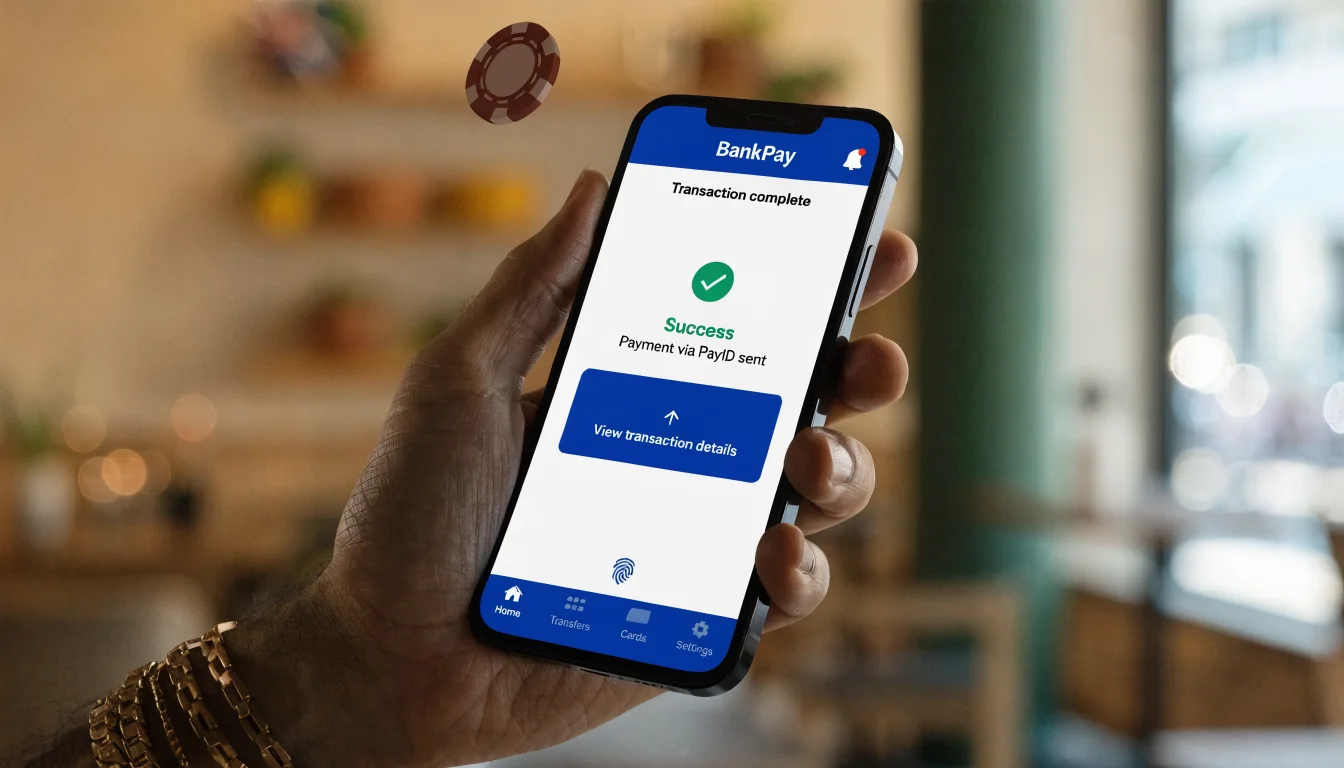
For withdrawals, this matters more than it sounds like it should — the casino usually expects to send money back through the same channel you deposited with. If you paid in with PayID, don’t be surprised when that’s also where the payout lands.
Flexepin: the voucher you buy before you play
Flexepin sits in a completely different category. It’s a prepaid voucher — you buy a PIN code, either in a physical store or online, and that code has a fixed value baked into it. You punch the code into the casino’s cashier, and whatever the voucher was worth gets credited.
According to one industry roundup I came across, Flexepin has held on as a popular local option for Australian players heading into 2026, and I get why. There’s no bank link, no card details anywhere near the casino, and you can’t lose more than what you loaded onto the voucher. It’s the closest thing to gambling with cash in your hand.
The catch, and it’s a real one: prepaid vouchers like this are deposit-only. Once the value’s in your casino account, that specific voucher is spent. If you win, the payout isn’t coming back to a Flexepin code — it can’t. You’ll need a different method set up for that side of things, which is annoying if you assumed one payment option would cover you start to finish.
Where Revolut fits in here
Revolut gets lumped in with "phone payment" conversations a lot, partly because people manage it entirely from their phone and it feels like it belongs in the same bucket as PayID. It’s really a bank alternative with a card and app attached, so I won’t go deep on the app side here — that’s its own topic.
What’s worth flagging in this context: Revolut lets you block gambling transactions or set your own spending limits directly in the app, based on what the provider itself discloses about the feature. If you’re the type who’s tried to set boundaries before and blown through them anyway, that’s a real lever, not a gimmick. Whether a casino even accepts Revolut as a funding source is a separate question and depends on the operator.
The verification part nobody skips

Doesn’t matter which of these you pick — phone number, voucher code, whatever — you’re still going through KYC checks before a withdrawal clears. Every licensed-elsewhere operator taking Australian players runs identity verification, no exceptions I’ve found. I used to think a "casual" payment method like a prepaid voucher meant a casual approach to who you are. It doesn’t. The payment method decides how fast money moves; it doesn’t decide whether they check your ID.
And this is where most of the frustration actually lives. The single biggest reason a withdrawal sits there doing nothing isn’t the bank, isn’t PayID, isn’t Flexepin being slow — it’s verification not being finished, or a bonus condition still hanging over the account. I’ve stared at a "pending" withdrawal convinced my bank had eaten it, when the real problem was a document I hadn’t uploaded yet. Worth checking that box first before blaming the payment rail.
Mandatory KYC
All licensed offshore operators accepting Australian players require identity verification before any withdrawal can be processed. Skipping this step will lock your winnings.
If you’re weighing PayID against Flexepin, the honest split is: PayID for speed and round-trip convenience since it can often handle withdrawals too, Flexepin for keeping your banking details completely away from the casino, at the cost of needing a separate method for getting paid out.
Mobile Payments: Using Your Smartphone for Casino Transactions
Here’s the distinction that took me a while to get straight: a phone-based method like PayID uses your number or a code as the identifier, but the money itself still moves through a bank rail behind the scenes. Mobile payments are a different animal — your phone becomes the actual wallet. Apple Pay, Google Pay, and banking apps like Revolut sit on your device and push a payment through when you tap "confirm." No card number typed anywhere, no BSB to remember.
The appeal is obvious once you’ve fumbled through entering sixteen digits on a phone screen at 1am. You unlock your phone, confirm with a fingerprint or face scan, done. Most offshore operators lean on PayID as their main AUD deposit rail, according to one industry comparison, but that’s a separate rail from what I’m talking about here — PayID is number-based, not device-based. Mobile payment apps sit on top of your existing bank or card, using the phone as the authentication layer rather than replacing the underlying rail.
What actually supports it
Not every casino accepting deposits will let you use Apple Pay or Google Pay — support depends on whether the operator’s payment gateway has bothered to integrate it, and that varies site to site. When it works, deposits go through instantly because you’re really just authorising a card or bank payment with biometrics instead of typing details.
Revolut deserves a specific mention here, because it’s not just a payment rail — it doubles as a control tool. You can block gambling transactions entirely or set spending limits directly in the app. I set a limit on mine after a weekend I’m not proud of, and having the app enforce it rather than relying on my own willpower made an actual difference. Worth doing before you deposit anywhere, not after.
KYC doesn’t disappear because it’s a phone
This is the bit people assume they can skip. Using Apple Pay to fund an account doesn’t replace the casino’s own verification — KYC checks are mandatory at every Australian online casino, full stop, regardless of which button you tapped to deposit. The phone’s biometric lock authenticates you to your phone. It says nothing to the casino about who you are. Expect the same ID request before any withdrawal, no matter how frictionless the deposit felt.
Security-wise, mobile payments piggyback on whatever encryption your card network or bank already runs, plus the device-level lock. That’s a reasonable stack. It just isn’t a shortcut past the casino’s own checks — I learned that the slow way, assuming a smooth deposit meant a smooth withdrawal too.
Dedicated Casino Payment Apps and E‑Wallets
Somewhere between "just use your card" and "set up a crypto wallet" there’s a middle category people forget about: apps and e‑wallets built specifically to move money into a casino account and nowhere else. I didn’t take these seriously at first — they felt like a workaround for people who couldn’t get a card approved. Turned out they’re just a different tool, with a different catch.
The catch is right there in the name: deposit‑only. Digital vouchers like CashtoCode and Neosurf work by giving you a code — bought in‑store or online — that you punch into the cashier. Money goes in instantly. But there’s no way to send winnings back to a voucher. It doesn’t exist as a withdrawal rail, full stop. So if a site’s cashier only shows you a voucher logo and nothing else for getting money out, that’s not an oversight, that’s the structure of the product.
E‑wallets sit one level up from vouchers. Skrill, MiFinity, Jeton — these are real accounts you top up, and unlike vouchers, most of them do support withdrawals, not just deposits. That’s the practical difference worth remembering: vouchers are one-way, e‑wallets are (usually) two-way. Mixing the two up is the mistake I made once, sitting there waiting for a Neosurf withdrawal that was never coming.
PayID deserves a mention here too, even though it’s really a bank-linked identifier rather than an app. According to one industry review, most offshore operators lean on PayID as their go-to AUD deposit rail — which tracks with what I’ve seen at the cashier screens myself. It’s fast to set up and doesn’t need you to hand over card numbers.
Quick reference
| Type | Deposits | Withdrawals |
|---|---|---|
| Prepaid vouchers (CashtoCode, Neosurf) | Yes | No |
| E‑wallets (Skrill, MiFinity, Jeton) | Yes | Usually yes |
| PayID | Yes | Casino-dependent |
None of these need a dedicated "casino app" in the App Store sense — you’re mostly using the wallet’s own app or a browser, then linking it at checkout. The limits on how much you can move usually come from the voucher or wallet provider itself, not the casino, so it’s worth checking the wallet’s own terms before assuming the casino is the one capping you.
Instant and Low‑Fee Methods: Cards, E‑Wallets, Crypto
Deposits are the easy part. Every method I’ve used gets money into an account fast — cards, e‑wallets, crypto, doesn’t matter. Where they actually split apart is on the way out, and that’s the bit nobody tells you about until you’re staring at a "processing" status wondering if it’s stuck.
Cards are the obvious starting point because everyone already has one. Visa and Mastercard deposits land instantly — no waiting, no thinking about it. Withdrawals are a different story. According to one industry review, card withdrawals can take anywhere from one to five business days. That’s not a flaw in the card itself, it’s the bank sitting on the other end doing its own checks. I’ve had a Visa withdrawal clear in a day and another one drag out closer to the full window, same casino, same card. No pattern I could find.
E‑wallets are where things speed up. Deposits are instant, same as cards, but the withdrawal side tends to move quicker too — the same review put e‑wallet withdrawals at same‑day to 48 hours once verification is sorted. "Instant" gets thrown around a lot in casino marketing, and with e‑wallets it’s at least closer to true than most places that use the word.

Crypto sits in its own category. Deposits take a few minutes — you send the transaction, wait for network confirmations, and it’s in your balance. Withdrawals, per the same source, are usually processed within 24 hours. Notice I say "processed" and not "confirmed in your wallet" — those are two different clocks. The casino approving it and the blockchain actually settling it aren’t the same moment, and mixing them up is how people convince themselves something’s broken when it isn’t.
Why the gap between deposit and withdrawal exists
None of these methods are actually slow at moving money. Card networks, e‑wallet platforms and crypto chains can all settle a transaction in minutes when nothing’s in the way. The delay you feel on withdrawals almost always comes from the casino’s side — KYC checks, internal review queues, whatever risk flags got tripped. The payment method is just the pipe; the casino decides when to open the tap.
Rough speed order, deposits vs withdrawals
| Method | Deposit | Withdrawal |
|---|---|---|
| Visa / Mastercard | Instant | 1–5 business days |
| E‑wallets | Instant | Same‑day to 48 hours |
| Crypto | A few minutes | Within 24 hours |
Low fees follow a similar logic to speed — they show up less on the deposit side and more depending on what happens after. Crypto can carry network fees, e‑wallets sometimes charge on withdrawal, and card transactions occasionally pick up an FX conversion if the casino isn’t settling in AUD. None of that is guaranteed; it depends entirely on the operator and the specific provider behind the method, so check the cashier page rather than assume.
Understanding Payment Systems and How They Affect Speed
Here’s the thing I didn’t get for way too long: a "payment method" and a "payment system" aren’t the same object. The method is what you click. The system is the plumbing behind it, and the plumbing decides how fast your money actually moves.
Card network limitation
Card withdrawals go through the card network’s settlement cycle, which is slower than e‑wallet or crypto rails. Depositing with a card does not guarantee a fast payout.
Card payments run on networks built for retail purchases, not gambling payouts. That’s the whole problem in one sentence. When a casino sends money back to your Visa or Mastercard, it doesn’t go straight to your account — it goes through the card network’s settlement cycle first, which is why card withdrawals crawl compared to deposits on the same card.
E-wallets are a different architecture entirely. Your balance sits on the e-wallet provider’s own ledger, not inside the banking settlement system, so moving funds between your e-wallet and the casino is closer to updating two numbers on the same spreadsheet. That’s structurally why e-wallet withdrawals can come out faster than card withdrawals — though how fast depends on the casino’s own processing queue and whether your KYC checks are already cleared, not just the wallet itself.
Bank transfers use the traditional interbank rails, and those rails were never designed for speed. According to one industry review, bank transfer withdrawals in Australia can take up to seven business days — the slowest of the lot. That’s not the casino being slow on purpose; it’s the infrastructure the transfer rides on.
Crypto chains work on yet another logic. A deposit gets confirmed on the blockchain in minutes because you’re just waiting for network confirmations, not a bank’s back office. Withdrawals add the casino’s own manual or automated review on top, which is why crypto withdrawals in practice are usually processed within a day rather than instantly, even though the blockchain part itself is quick.
Why this matters beyond the wait
The system you’re on also sets the ceiling on how much you can move and how often:
- Card networks enforce their own transaction caps, separate from whatever limit the casino sets.
- E-wallet platforms run their own risk checks, which can throttle bigger withdrawals until you’ve verified more.
- Crypto chains don’t cap you, but network fees and confirmation times can shift depending on how busy the chain is.
- Bank rails move in business-day batches, so a Friday withdrawal doesn’t move until Monday regardless of the amount.
I used to blame the casino every time a withdrawal sat there. Half the time it wasn’t the casino. It was whichever system I’d chosen fighting its own architecture. Pick the rail, not just the button, and you’ll stop being surprised by the wait.
Payment Providers and Processing Portals You’ll Encounter

Here’s a distinction that confused me for way longer than it should have: a payment method and a payment provider aren’t the same thing. Visa is a payment method. The company that actually moves your money from your bank to the casino’s account and back — that’s a provider. You rarely see their name in lights, but they’re the ones deciding whether your withdrawal clears in a few hours or sits in some queue for days.
Every deposit or cashout you make gets handed off to one of these processors behind the scenes. The casino’s cashier page is basically a shopfront window; the provider is the warehouse doing the actual work. When people complain that "the casino is holding my money," it’s very often the provider’s verification queue, not the casino itself, chewing up the time.
What these providers actually do
A processing provider sits between the casino and your bank or card network. It handles the authorisation, checks the transaction against fraud rules, and routes the funds. Some providers specialise in cards, some in e‑wallets, some in crypto rails, and a few try to do all three under one dashboard so the casino only needs one integration instead of five.
This is also where a lot of the speed difference actually comes from. Cards, e‑wallets, bank transfers and crypto all have different speed and fee profiles for Australian casino payments, and part of that is the method itself — but part of it is which provider is handling the back end. Two casinos offering the same card option can still give you noticeably different withdrawal experiences because they’re plugged into different processors.
E‑wallet and third‑party portals
Names like Skrill and MiFinity turn up constantly on Australian casino cashier pages, and they’re doing double duty — they’re the payment method from your side, but on the casino’s side they’re also acting as the processing portal. You fund your Skrill balance once, then use that same balance across multiple casinos without re-entering card details each time. It’s the closest thing to a "wallet" in the literal sense: money sits there between transactions instead of moving straight from your bank every time.
According to one industry summary I’ve seen quoted around, e‑wallet withdrawals can come out faster than card withdrawals — though that really depends on the casino’s own processing queue and whether your account has already cleared KYC checks. I’ve had it go both ways myself, so I wouldn’t treat that as a guarantee, just a general tendency worth knowing about.
Crypto processing portals
Crypto payments are widely accepted at Australian online casinos now, and behind each one is usually a blockchain payment processor converting your coins into the casino’s ledger balance and back again. These portals watch the chain for your transaction, confirm it, then credit your account — which is why deposits can feel almost instant while the underlying transfer is still technically settling on the network.
Bank-linked portals

Bank transfers route through their own processing layer too, and this is where the pace really drops. Bank transfers are the slowest withdrawal method around, sometimes stretching out to a full week of business days, mostly because the provider handling that transfer has to work within traditional banking hours and clearing cycles rather than an instant settlement rail.
Why this matters for you
You don’t get to pick your provider directly — the casino chooses which ones it integrates with. But you can ask, before you deposit, what handles withdrawals for the method you’re eyeing. All the legitimate options you’ll run into use SSL/TLS encryption and PCI‑DSS compliance, so security isn’t usually the deciding factor. Speed and how well the provider talks to your specific bank or wallet is.
Payment Gateways, Encryption and Security Standards
Nobody talks about the gateway. Everyone talks about cards, e‑wallets, crypto — the stuff you actually see on the deposit screen. But behind that screen sits a layer that decides whether your card number ends up somewhere safe or somewhere it shouldn’t. That’s the gateway, and it’s worth understanding even if you never see it directly.
Think of the gateway as the middleman between the button you press and the provider that actually moves your money. It doesn’t hold your funds. It just checks the data, encrypts it, and passes it along. When I first looked into this — after a deposit stalled and I wanted to know why — I expected each casino to run its own custom system. Most don’t. They plug into the same handful of gateway providers everyone else uses, which is partly why the deposit page often looks near‑identical across different casino brands.
What "secure" actually means here
The two terms that matter are SSL/TLS encryption and PCI‑DSS compliance. Every payment option worth using on an Australian‑facing casino site runs on both. SSL/TLS scrambles the data between your device and the server so a card number typed on your phone isn’t sitting in plain text somewhere in between. PCI‑DSS is the compliance standard that dictates how that card data gets stored and handled once it arrives — who can touch it, how long it’s kept, what gets logged.
You won’t see either of these mentioned on the deposit page. There’s no badge that says "we’re encrypted, promise." The padlock in your browser bar and the "https" are the only visible signs, and honestly that’s normal — this isn’t something a casino advertises, it’s something it’s simply expected to have.
The prepaid voucher exception
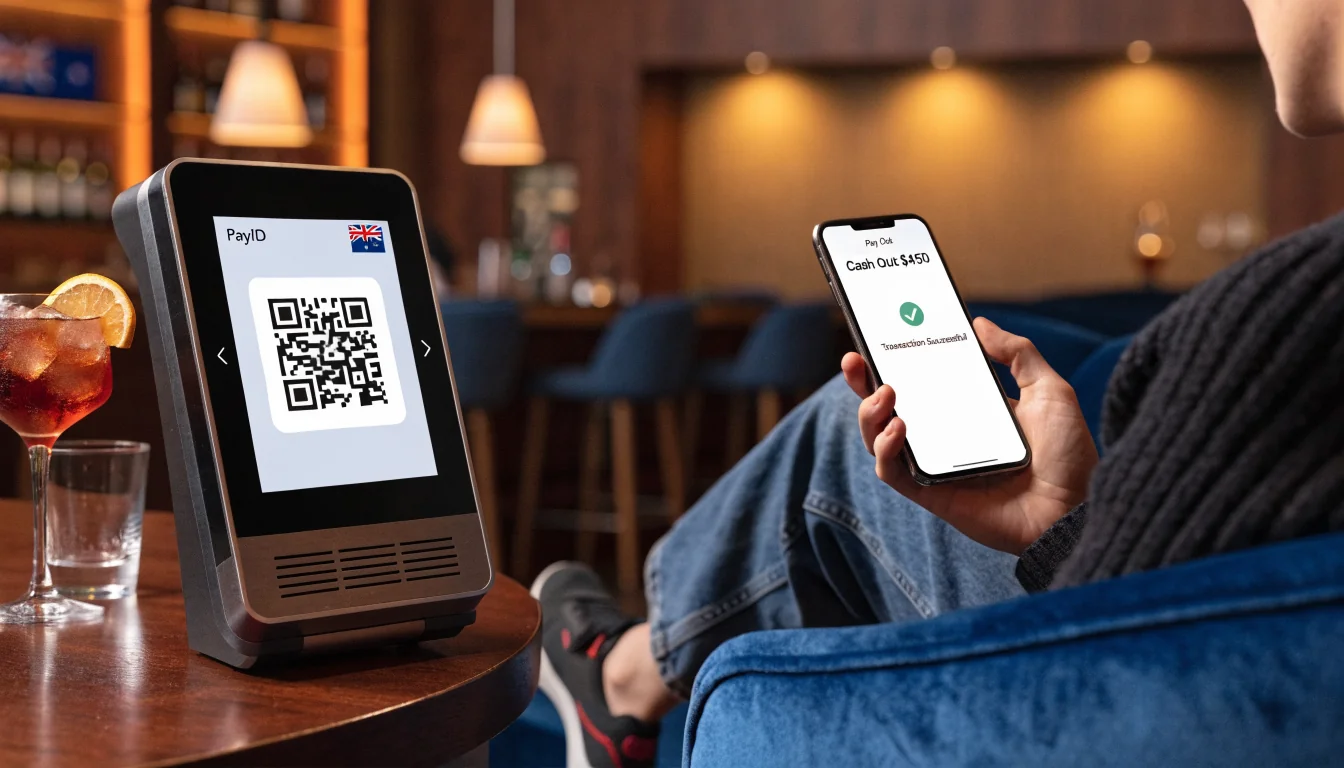
There’s one gateway model that skips card and bank details entirely: the prepaid voucher. You buy a PIN — in a shop or online — load it with a fixed amount, and that PIN is the only thing that touches the casino’s system. No card number, no account number, nothing tied back to your bank. The gateway just checks the code is valid and unused. Deposits are capped at whatever the voucher was worth, which is a limitation, but it’s also the closest thing to handing over cash without handing over any of your actual financial details.
Where fees quietly show up
Encryption doesn’t cost you anything extra, but the gateway layer is where certain charges get added before the transaction even reaches the casino. Fees aren’t common on the Australian side of things, but when they appear, it’s usually a crypto network fee, a bank transfer charge, an FX conversion, or an e‑wallet withdrawal fee — added by the network or provider itself, not by the casino sitting on top of it.
Fastest Withdrawal Channels for Aussie Gamblers
The first time I pulled a decent win out of a casino account, I stared at the "processing" status for what felt like a week. It wasn’t a week. But it also wasn’t the "instant" the deposit page had promised, and that gap between marketing and reality is where most of the frustration lives.
Here’s the pattern I’ve seen hold up across different operators: the channel that got your money in usually decides how fast it comes back out, and some channels are just built for speed while others aren’t.
E‑wallets tend to lead the pack. Once your KYC checks are cleared and the casino’s own processing is done, e‑wallet withdrawals can move faster than card withdrawals — not always, but often enough that I default to them when I have a choice. The catch is that "faster" depends entirely on the casino’s internal queue and how quickly they’ve verified your account, so the wallet itself is only half the story.
Crypto isn’t far behind. Deposits land in a few minutes, and cashouts are usually sorted within a day. That’s slower than the quickest e‑wallet payouts but still nowhere near what a bank transfer asks of you. If you’re already holding crypto and comfortable with wallet addresses, it’s a genuinely quick route out.
Cards sit in the middle, and this is worth repeating because it trips people up: fast deposit does not mean fast withdrawal. A Visa or Mastercard deposit clears instantly, but getting funds back onto that same card runs through bank settlement rails that e‑wallets and crypto simply skip.

According to one industry review of the Australian market, the quickest withdrawals overall land under two hours, and occasionally hit instant. I’d treat that as a best‑case scenario rather than a promise — it describes what’s possible under good conditions, not what every casino delivers every time.
What actually determines your spot on that spectrum:
- Whether your KYC checks were completed before you requested the withdrawal
- Which method you deposited with, since most casinos push payouts back through it
- Whether any bonus wagering is still attached to the balance
- The operator’s own processing window, which sits on top of whatever the payment method itself can do
None of this is instant in the way the homepage banner implies. "Fast" here means faster than a bank transfer, not faster than checking your phone twice in an hour and seeing nothing change.
Key Payment Terms, Fees and Withdrawal Rules
By now you’ve read about phones, apps, wallets, gateways and the fastest ways to cash out. Before you go, it’s worth pinning down the few terms and rules that actually decide whether your money moves smoothly or sits there while you refresh the page every ten minutes. I used to skip this part. Cost me a weekend once.
The Same Method Rule
Almost every Australian-facing casino sends your withdrawal back the way it came. Deposit with a card, get paid to that card. Deposit with an e‑wallet, get paid to that e‑wallet. This isn’t a suggestion buried in fine print — it’s how the system is built, and it’s the reason "just send it to my bank instead" requests usually go nowhere. If you want flexibility on withdrawals, you need to think about that before you deposit, not after.
What "fees" actually means here
Fees aren’t a constant in this market. Most of the time there’s nothing to pay — no line item, no percentage taken off the top. But "rare" isn’t "never," and when a fee does show up, it’s usually one of these:
- Crypto network fees — the blockchain itself charges to move a transaction, not the casino.
- Bank transfer fees — occasionally applied on the banking side, not the operator’s.
- FX conversion fees — if your account or card isn’t in AUD and something has to be converted.
- E‑wallet withdrawal fees — some wallets take a cut on the way out, even when deposits were free.
None of these are guaranteed to hit you. But if a withdrawal comes back short, one of these four is almost always why.
Speed, in plain terms
There’s no single number that covers every method, but the shape of it is consistent enough to plan around:
| Method | Deposit | Withdrawal |
|---|---|---|
| Visa / Mastercard | Instant | 1–5 business days |
| E‑wallets | Instant | Same day to 48 hours |
Cards are quick going in and slow coming out — that gap catches people who expect symmetry. E‑wallets are closer to symmetrical, which is part of why I lean on them when I actually want my winnings back soon rather than eventually.
The vocabulary worth knowing
- KYC checks — the identity verification every operator runs before releasing a withdrawal. Not optional, not a red flag on your account, just the process.
- Wagering requirements — conditions attached to bonus funds that have to be met before that money (or winnings from it) can be withdrawn at all.
- Processing window — the operator’s own internal delay before your withdrawal request even reaches the payment provider. This sits on top of whatever the payment method itself adds.
Tying it together
Every section before this one was really answering one question from a different angle: how do you get money in, and how do you get it back out without losing days to it. The honest answer is that speed depends on the method you chose at the start, the fees depend on what sits behind that method, and the return trip depends on going back the way you came. Pick the deposit method with the withdrawal in mind, not just the deposit.
What payment methods are available for Australian players at online casinos?
You can use cards (Visa, Mastercard), e-wallets, bank transfers, PayID, prepaid vouchers like Flexepin and Neosurf, and cryptocurrency. Availability varies by operator, so check the cashier page before you deposit.
What payment methods are common on Aussie casino sites?
Cards, PayID, e-wallets, prepaid vouchers like Flexepin, and crypto are the most common options. PayID has become the default AUD deposit method for most offshore operators, while Visa and Mastercard are widely accepted across the board.
Are my personal and financial details safe?
Yes — all featured payment options use SSL/TLS encryption and PCI-DSS compliance. KYC checks are mandatory at every Australian online casino, which means your identity is verified but kept under standard security protocols.
What does RTP mean in pokies?
RTP stands for Return to Player — the percentage of wagered money a pokie pays back to players over time. Higher RTP means a better long-term payout rate, though individual sessions vary.
Written by the editors at Casino Payments Guide.