
Best Offshore Casinos for Australian Players in 2026

Table of Contents
- Online Offshore Casinos: What Australian Players Should Look For
- Choosing the Best Offshore Casinos for Australian Players in 2026
- Navigating Offshore Casino Sites and Licenses
- Mobile Experience: Playing Offshore Casinos on Your Device
- Offshore Gambling: Definitions and Legal Landscape for Australians
- Offshore Casinos in Australia vs. the USA: Key Differences
- Offshore Online Casinos for Canadian Players – What’s Similar?
- No‑Deposit Bonuses at Offshore Casinos: What to Expect
- Crypto Casinos: Are They Viable for Australian Players?
- Alternatives to Offshore Casinos for Australian Gamblers
Online Offshore Casinos: What Australian Players Should Look For
I lost count of how many offshore sites I opened on my phone, tapped around for thirty seconds, and closed again. Most of them fail before you even get to the games — a menu that doesn’t fit the screen, a deposit button that needs three taps to find, a lobby that loads like it’s still 2015. If you’re going to spend real money on one of these platforms, the site itself needs to work properly first. Everything else is secondary.
Here’s the thing nobody tells you upfront: there’s no app store download for this. The Australian mobile casino market runs almost entirely on browser-based HTML5 web apps, not native downloads. You won’t find these listed in the Play Store or App Store as gambling products in the way you might expect. Instead, you open Safari or Chrome, load the site, and play there. Add it to your Home Screen on iOS or Android and it behaves like a proper app instantly — icon, full screen, no browser bar. That’s the whole trick, and once you know it, the rest makes more sense.
Why the browser matters more than you think
I used to assume a "casino app" meant something you install. Wrong assumption, and it cost me time testing sites that were never going to give me that anyway. What you’re actually judging is how well the site performs as a website on a phone. A well-built HTML5 casino loads in Safari or Chrome, responds properly to touch, scales to whatever screen you’re holding, and lets you register, deposit, play, and withdraw without ever leaving that one session. If any part of that chain breaks — say withdrawals only work on desktop — you’ve found a weak build, not a minor bug.
Speed is the first thing you’ll notice, good or bad. On a decent 4G connection, most games should load in under five seconds. If a slot takes longer than that to open, either the site is overloaded with stuff you don’t need, or the backend wasn’t built with mobile in mind. I’ve sat there watching a loading wheel spin on a game I wanted to play for two minutes on a train, and that’s when you close the tab and don’t come back.
What a properly built lobby looks like
The layout tells you a lot before you’ve placed a single bet. A mobile lobby that’s designed properly uses vertical scroll with game tiles you can actually tap without missing and hitting the one next to it. Sounds basic. It isn’t, because a lot of sites still cram desktop layouts into a phone screen and call it "mobile-friendly."
A well‑built lobby scrolls vertically, puts filters and the cashier within one tap, and keeps the top menu visible at all times.
A few things worth checking in the first couple of minutes on any new site:
- Filters and search should be reachable in one tap, from any screen you’re on — not buried three menus deep.
- Cashier and account settings need to sit in a persistent top menu, so you’re never hunting for the deposit button mid-session.
- The lobby should scroll smoothly and respond to touch the way any decent app does — no lag, no misfires.
None of this is complicated to test. Load the lobby on your phone, scroll around, tap a few filters, open the cashier, close it again. Do this for a couple of minutes before you put any money in. I know it sounds like overkill for a casino site, but two minutes of poking around tells you more than any review will — including this one. If the menu structure annoys you before you’ve deposited a cent, it’s not going to improve after.
Payments: the part that actually matters
Whatever else a site gets right, payments are where it either earns your trust or loses it. For Australian players, PayID is the one to look for specifically — it’s available directly on mobile, deposits go through instantly, and it supports high limits without the faffing around you get with some other methods. I switched to using PayID almost exclusively once I realised how much friction it removes compared to older transfer methods.
Currency conversion risk
Using a site that forces conversion to USD or EUR will eat into your bankroll on every deposit or withdrawal.
Currency matters too, more than people expect. If a site supports Australian dollars natively, deposits and withdrawals just work — the number on screen is the number in your account. The moment a platform forces conversion through USD or EUR, you’re losing a bit on every transaction and dealing with rounding that never seems to go in your favour. It’s a small thing until you add it up over a few months.
And withdrawals — this is the test that separates a real platform from a marketing page. Full cashier functionality, including withdrawals, has to work on mobile, not just deposits. I’ve used sites where depositing on the phone was seamless, and then withdrawing required switching to desktop because the mobile cashier only had half the options built in. That’s not a small inconvenience, that’s a sign the mobile build was an afterthought.
One account, not three
Something I didn’t expect the first time I switched from phone to laptop mid-session: your account, balance, and session should carry over without you doing anything. Log in on your phone in the morning, pick it back up on a laptop that evening, same balance, same history, nothing lost. If a site makes you feel like you’re managing two separate accounts depending on the device, that’s friction you don’t need — and a signal the platform wasn’t built with continuity in mind from the start.
A short checklist before you deposit anything

Before putting money into any offshore casino site, spend a couple of minutes actually testing it on your phone rather than reading someone else’s opinion of it. Specifically:
- Load the lobby and scroll — does it feel like an app, or like a shrunk-down desktop page?
- Tap the search and filter icons — are they one tap away from wherever you are?
- Open the cashier — is AUD the native currency, or are you being converted?
- Check if PayID is listed as a deposit method, and whether withdrawals are handled on the same menu.
- Switch devices mid-session if you can, and see whether your balance and progress follow you.
If a site fails more than one of these in the first two minutes, that’s your answer. Not every offshore casino is built the same way, and the gap between a well-made HTML5 platform and a lazy one shows up fast once you’re actually using it on the device most Australians actually play on — their phone, in a browser, no download required.
The sections ahead go deeper into how to judge bonus terms, licensing, and the legal side of all this. But none of that matters much if the basic mobile experience doesn’t hold up first. Get that part wrong and you’re troubleshooting a website instead of playing a game.
Choosing the Best Offshore Casinos for Australian Players in 2026
Choosing an offshore casino means weighing licensing, bonus terms, and payout speed before you deposit a single dollar — this rundown gives you the essentials for each site so you can compare quickly.
License: Curacao · Bonus: up to A$2,000 Operates under a Curacao licence and offers a welcome bonus worth up to A$2,000, giving you a straightforward entry point if you’re after offshore play.
License: Curacao Gaming Control Board OGL/2023/176/0095 (Hollycorn N.V.) · Bonus: up to A$5,000 + 300 free spins across 4 deposits Licensed by the Curacao Gaming Control Board under Hollycorn N.V., it backs up its credentials with a substantial bonus package of up to A$5,000 plus 300 free spins spread across four deposits.
License: international iGaming licence – jurisdiction not named in the source · Bonus: 100% up to A$1,000 + 100 free spins, 35x wagering · Payout speed: PayID 1-24 hours · Min. deposit: A$30 (PayID from A$10) Runs on an international iGaming licence and pairs a 100% bonus up to A$1,000 with 100 free spins at 35x wagering; PayID withdrawals in 1-24 hours and a low A$10 minimum via PayID make it accessible for quick, small deposits.
License: Curacao Gaming Control Board OGL/2023/174/0082 (Dama N.V.) · Bonus: up to A$5,000 + 300 free spins across 4 deposits Holds a Curacao Gaming Control Board licence via Dama N.V. and matches its regulatory standing with a bonus of up to A$5,000 plus 300 free spins across four deposits.
License: Curacao eGaming OGL/2024/923/0383 (Antillephone N.V.) · Bonus: up to A$2,000 + 100 free spins across 2 deposits · Min. deposit: A$30 Licensed through Curacao eGaming under Antillephone N.V., it offers up to A$2,000 plus 100 free spins over two deposits, with a modest A$30 minimum deposit.
License: Curacao eGaming (Dama N.V.) · Bonus: up to A$10,000 + 180 free spins, 40x wagering Operating under a Curacao eGaming licence via Dama N.V., it stands out for a sizeable bonus of up to A$10,000 plus 180 free spins, though the 40x wagering requirement is worth noting.
License: Curacao Gaming Control Board OGL/2023/176/0095 (Hollycorn N.V.) · Bonus: up to A$11,000 + 300 free spins (code NEO100) Licensed by the Curacao Gaming Control Board through Hollycorn N.V., it offers one of the larger bonuses on this list at up to A$11,000 plus 300 free spins via a bonus code.
Bonus: 240% up to A$4,100 + 300 free spins A notable pick for its bonus structure alone, offering a 240% match up to A$4,100 along with 300 free spins.
License: Curacao (operating since 2017) · Bonus: 250% up to A$2,000 + 50 free spins on the first of six deposits · Min. deposit: A$20 Licensed in Curacao and operating since 2017, it brings some track record along with a 250% bonus up to A$2,000 plus 50 free spins on the first of six deposits, and a low A$20 minimum deposit.
Bonus: 100% up to A$750 + 200 free spins, 35x wagering · Payout speed: crypto 30-120 minutes, fiat 24-72 hours · Min. deposit: A$30 Offers a 100% bonus up to A$750 plus 200 free spins at 35x wagering, with fast crypto payouts of 30-120 minutes or 24-72 hours for fiat, and a A$30 minimum deposit.
Every operator wants you to believe its bonus is the biggest one out there. It isn’t a competition you can win by reading headlines — you have to read the terms attached to the number, because that’s where the real offer lives.
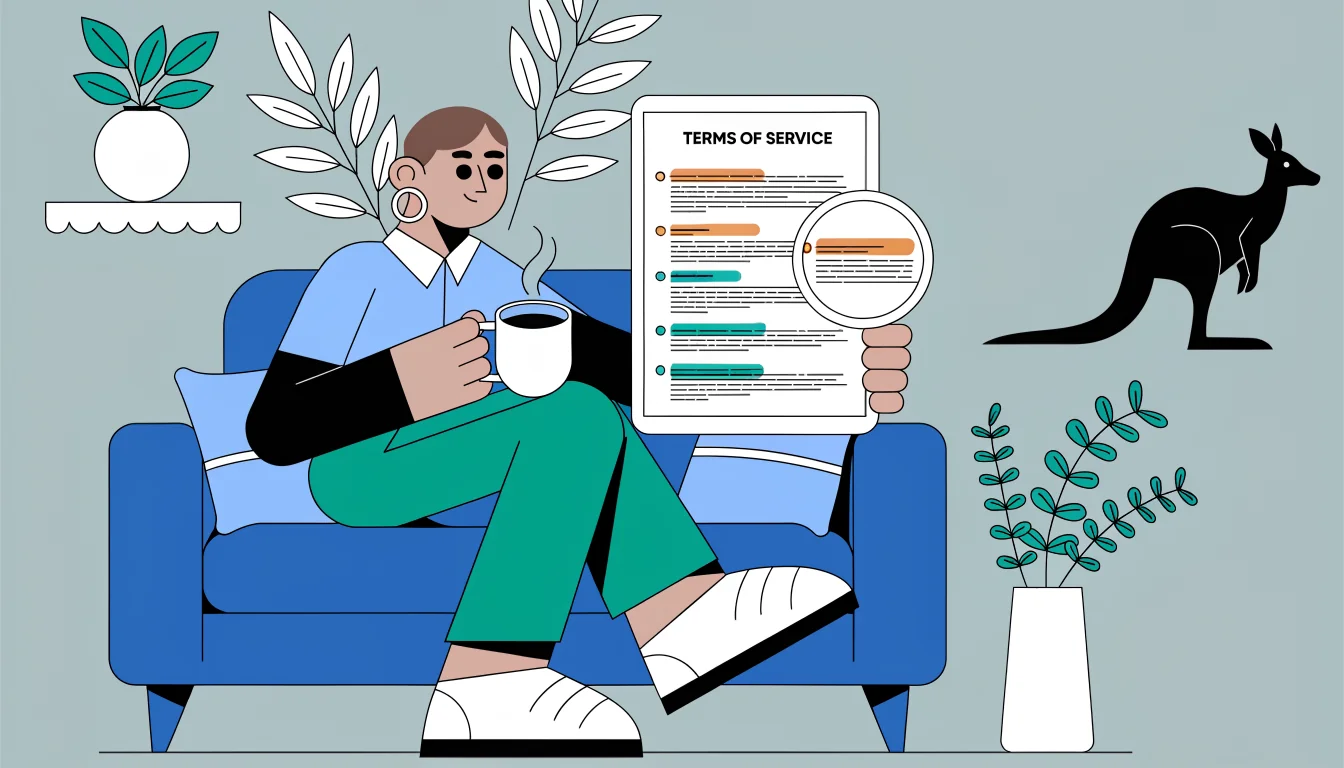
I used to pick a site because the front page promised the fattest match bonus, deposited, and only found the wagering conditions after I’d already put money in. That’s backwards. If you’re comparing offshore casinos in 2026, the order should be: terms first, bonus size second.
What "welcome bonus" actually means
According to one industry overview of operator terms, a fairly common welcome structure looks like 100% up to A$750 plus 200 free spins. That’s a real shape a bonus can take — but it’s one operator’s number, not a market standard, and the next site you check might structure it completely differently. Treat any headline figure as a starting point for reading the fine print, not as something you can bank on before you’ve seen the actual terms page.
The number that matters more than the bonus size is the wagering multiplier attached to it. Per that same source, standard wagering requirements sit somewhere in the 35x to 45x range on the bonus amount, and you’re usually given a window — commonly cited as 7 to 30 days — to clear it. Miss that window and the bonus, along with whatever you won with it, disappears. So before you get excited about "up to A$750," work out what 35x or 45x of that actually means in turplaythrough, and whether you can realistically get through it in the time given.
Reload and cashback offers — read past the percentage
Reload bonuses are the ones you get for topping up an existing account rather than opening a new one. One operator’s terms I looked at required a minimum deposit around A$30 to qualify — small enough that it’s not really a barrier, but worth checking anyway, because reload bonuses can carry their own separate wagering clock even if the percentage looks identical to the welcome offer.
A bonus applied when you top up an existing account, usually requiring a minimum deposit and often carrying its own wagering clock.
A periodic return of a percentage of your losses, typically 10‑25% weekly, often with friendlier or no wagering attached.
Cashback works differently: instead of matching a deposit, it gives a slice of what you lost back. According to the same source, cashback sat around 10% weekly, with VIP tiers climbing as high as 25% weekly and capped around A$4,500 for the top level. Cashback tends to have friendlier — sometimes no — wagering attached, which is exactly why some experienced players value it more than a splashy match bonus buried under a 40x requirement.
None of these numbers are fixed across the industry. They’re what one operator was offering when someone checked. Use them as a sense of scale, not a promise.
The checklist that actually separates good offers from bait
When I’m sizing up an offshore casino now, I go through the same short list before the size of the bonus even registers:
- Wagering multiplier — is it closer to 35x or 45x, and is that multiplier applied to the bonus alone or the bonus plus deposit combined?
- Time limit — how many days do you get to clear it, and does the clock start on deposit or on first bet?
- Game weighting — slots usually count fully toward wagering; table games and live dealer often count for less or nothing.
- Max bet while wagering — some terms cap how much you can stake per spin while a bonus is active, and breaking that cap can void winnings.
- Withdrawal cap on bonus wins — a few operators cap how much bonus-derived money you can actually cash out.
Skip any one of these and you’re reading half a bonus.
Bonuses are a filter, not a reason to sign up
The mistake I made early on was ranking casinos by bonus size, as if that told me anything about the site itself. It doesn’t. A generous headline number with a brutal wagering multiplier and a short clock is worse than a modest bonus you can actually clear. Read the terms page before the promo page. If a site makes that page hard to find, that’s the review right there.
Treat the bonus as one input among several — alongside licensing, payment speed, and how the platform actually runs on your phone — rather than the deciding factor. The sites worth your time are the ones where the terms hold up once you’ve actually read them, not just the ones with the loudest number on the homepage.
Navigating Offshore Casino Sites and Licenses
The first time I actually read a casino’s terms page instead of just clicking “accept,” I found the licence number buried in the footer, in grey text on a grey background. That’s normal. That’s just how these sites are built.
An offshore casino site is basically a web app dressed up to feel local. It’ll show AUD prices, it’ll load fast on a Telstra connection, and it’ll never once mention that the licence sitting in the footer has nothing to do with Australia. It can’t — there’s no domestic licence for online casino games. None exists to display, because none exists to hold. So when you’re checking a footer, you’re not confirming the site is "approved for Australians." You’re confirming the operator holds a licence from somewhere else entirely, and that the game providers running the slots and tables are the same names you’d see anywhere else in the world.
What the licence actually tells you
I stopped assuming a licence meant "safe" and started treating it as just one data point among several. A licence from a recognised offshore regulator tells you the operator has passed some baseline checks — game fairness audits, some dispute process, an actual legal entity behind the brand rather than a shell that vanishes with your balance. It does not tell you the site is regulated for the Australian market, because nothing is. There’s no local register to check the operator against, so "verify the licence" here just means: read what’s in the footer, and treat it as background information, not a green light.
How these sites are actually built
Under the hood, most of these platforms are HTML5 web apps, not installed software. That matters more than it sounds like it should. It means:
Technical details
- The platform runs in the phone’s browser, not as a native app.
- The same account, balance and session follow you across devices.
- All registration, deposits, gameplay and withdrawals happen inside a single browser session without redirecting to external portals.
- The site runs in your phone’s browser, not as something sitting on your home screen pretending to be native.
- The same account, balance and session follow you whether you open it on your laptop at home or your phone on the train.
- Everything — registration, deposits, gameplay, withdrawals — happens inside that one browser session, without bouncing you to a separate app or portal.
A well-built one feels tight. A badly built one makes you hunt for the cashier button through three sub-menus. The difference usually shows up fastest in the navigation: on a decent site, there’s a persistent top menu that stays put no matter where you scroll, and the promotions tab is one tap away, not buried under "more." If you’re pinching and zooming just to find your account settings, that’s not a mobile quirk — that’s a site that wasn’t built for the market it’s selling to.
Payments: what’s actually safe to use

This is where I paid closest attention after getting burned once by a site that took my deposit in about four seconds and then took a week to explain why my withdrawal was "under review." A few things I check now before putting money anywhere:
Currency. If the site doesn’t support AUD natively and quietly runs everything through USD or EUR conversion, that’s friction you’re paying for on every transaction — in and out. A properly built site prices everything in AUD from the start.
Deposit methods. Apple Pay and Google Pay both work on mobile casino platforms, mainly on the deposit side — quick, no card number typed out, no drama. E-wallets are the other reliable route: MiFinity, Jeton, Skrill and MuchBetter show up across most decent offshore sites, and they’re generally the fastest way to get money back out too, not just in. If a site pushes you hard toward a bank transfer and has nothing in the e-wallet column, I take that as a sign to look elsewhere.
Fees. Nobody advertises fees clearly, which is exactly why you check before you deposit, not after. E-wallets tend to be cleaner on this front than card deposits, partly because withdrawals back to a card are rarely even offered — most sites will happily take a card deposit and then ask you to nominate an e-wallet or bank account for anything going the other way.
Support as a test, not an afterthought
Before I put real money anywhere now, I open live chat from my phone and just ask something basic — how long a withdrawal takes, what documents they’ll want for verification. Not because I expect a perfect answer, but because how fast and how clearly they respond tells you more about the operator than anything in the marketing copy. A site with quick, multi-channel support during a live session is a site that’s set up to actually deal with problems. One that leaves you on hold with a chatbot looping the same three lines isn’t.
None of this replaces checking the licence footer or reading the terms. It’s just the part most people skip, right before they need it most.
Mobile Experience: Playing Offshore Casinos on Your Device
I used to think a good casino site meant a good casino app. Wrong assumption, and it cost me twenty minutes on a hotel Wi-Fi trying to find a "download" button that was never going to exist for what I needed. What actually matters on a phone is completely different from what matters on a desktop, and nobody tells you that until you’re squinting at a lobby that wasn’t built for your screen.
- Choose a lobby with vertical scrolling and thumb‑friendly tiles.
- Verify filters, search and cashier are reachable in one tap.
- Test game loading times stay under five seconds on 4G.
- Use a site that forces horizontal swipes or hidden menus.
- Accept a platform where withdrawals are desktop‑only.
- Play on a lobby that hides the top menu until you scroll up.
On desktop you scroll sideways, hover over things, click through menus without thinking twice. None of that translates to a phone. If a lobby still tries to make you swipe horizontally through game categories, that’s your first sign the platform wasn’t built mobile-first — it was just squeezed into a smaller frame. A proper mobile lobby scrolls vertically, and the game tiles are sized so your thumb actually lands where you meant to tap. Sounds basic. It’s the thing that’s missing more often than you’d expect.
Speed is the second thing. Most casino games load fast on a normal 4G connection — under five seconds is the benchmark I hold every site to now. If a slot takes longer than that to open on mobile data, something’s wrong with how the platform was built, not with your signal. I’ve sat there watching a spinning wheel for way too long and eventually just closed the tab. Not worth the wait, and there’s always another game.
What "one-tap" actually means
This phrase gets thrown around a lot, so here’s what it should look like in practice, not marketing copy:
- Filters and search need to be reachable in a single tap, from whatever screen you’re on — not buried three menus deep after you’ve already forgotten what you were searching for.
- The cashier and your account settings should sit behind a persistent top menu, always visible, not something you have to scroll up to find.
- Same goes for general navigation and the promotions tab — one tap, every time, no hunting.
If you find yourself tapping back-and-forth more than once to get from a game to your balance, that’s the platform failing the basic mobile test, not you being impatient.
Where mobile still can’t match desktop
I’ll be honest about the limits too. Live dealer tables are noticeably better on stable Wi-Fi than on 4G — the video feed just handles it better, and you’ll notice the difference the first time a stream stutters mid-hand on mobile data. That’s not a mobile-browser failure, it’s just physics. Save the live tables for when you’re on Wi-Fi if you can.
Everything else — slots, table games, your account, deposits — runs the same regardless of device, because the actual game logic sits on the server, not on your phone. Your device is just the window. Worth remembering next time someone tells you an "app version" would somehow play differently. It wouldn’t.
Before you put money anywhere, open the lobby on your phone first and just poke around for a couple of minutes. Tap through the menu, open the cashier, try the search. You’ll know within that time whether the site respects your thumb or just tolerates it.
Offshore Gambling: Definitions and Legal Landscape for Australians

"Offshore gambling" gets thrown around like it means one thing, but it’s really just a description of geography, not a product category. It means the operator is licensed and based outside Australia, usually somewhere like Curaçao or Malta, and offers casino games to Australian players over the internet. That’s it. No mystery, no grey zone hiding in the name itself.
The reason these sites exist at all comes down to Australian law. The Interactive Gambling Act bans anyone from offering online casino games — slots, roulette, blackjack, the lot — to people living in Australia. But here’s the part people get twisted around: the law goes after the operators, not the players. If you’re the one placing the bet from your loungeroom, you’re not the one breaking the law. There’s no domestically licensed real-money casino you could even sign up with instead — the option simply doesn’t exist here. That’s the whole reason offshore platforms fill the gap.
Why there’s no app waiting for you on iPhone
I spent a good twenty minutes once searching the App Store for a casino app, convinced I was just bad at searching. I wasn’t. Apple blocks these apps outright for Australian accounts, full stop. Android is a bit different — some native apps make it through there — but if you’re on iPhone, a browser is your only route in.

That’s not really a downback once you get used to it. The Australian mobile casino scene runs almost entirely on browser-based HTML5 platforms anyway, built to work the same whether you’re on Android or iOS. Add the site to your Home Screen and it sits there looking and behaving like any other app — icon, full screen, no address bar. Takes about ten seconds and nobody would guess it’s “just a website” underneath.
What the law actually leaves untouched
Because the Act targets operators rather than individuals, the practical legal picture for a player is simpler than it sounds on paper. You’re not doing anything illegal by playing. What the law doesn’t do is give you any protection — no local regulator is standing behind these sites, and there’s nowhere official to check who’s legitimate and who isn’t. That gap is exactly why other things matter more day to day: whether support actually answers when you test it out mid-session, whether withdrawals move the way they claim to, whether the site behaves the same on your phone as it did in the ad.
Interactive Gambling Act
Australian legislation that prohibits operators from offering online casino games to Australian residents, targeting the providers rather than the players.
Definitions aside, none of this tells you whether a specific site is worth your time. That’s a separate question, and a more useful one.
Offshore Casinos in Australia vs. the USA: Key Differences
Talk to American players and the whole conversation is different. State by state, some form of licensed real-money play exists in parts of the US, so the offshore route isn’t the only door in. Here, it’s the only door — no domestic licence has ever existed for this, and the industry got used to that a long time ago. The regulatory question you’re asking is basically "am I allowed to play at all," not "which state licence covers this operator."
Payments are where it actually shows up in your day-to-day. US players lean heavily on cards and ACH transfers for offshore sites, because their banking system makes that the default rail, clumsy as it is. Australian banks push you a different way. PayID is built for exactly this — deposits land instantly, straight from your banking app, and the limits are high enough that you’re not splitting a deposit into three transactions to get around a ceiling. I switched to it after getting tired of card declines that had nothing to do with my balance and everything to do with the bank flagging the merchant.
E-wallets close the gap on both sides, but the names differ. MiFinity, Jeton, Skrill and MuchBetter show up constantly on operators serving Australians, and they’re consistently the fastest way to get money back out — faster than waiting on a card reversal that may or may not ever post. American players see a different wallet lineup depending on the state and the operator’s payment processor.
None of this changes what you’re legally allowed to do. It just changes how fast your money moves and how many steps stand between you and playing.
Offshore Online Casinos for Canadian Players – What’s Similar?
I compared notes with a Canadian mate who plays the same offshore circuit, curious whether we were getting the same deal or just the same marketing. Turns out the overlap is bigger than the differences.
The platform side is nearly identical. A well-built HTML5 casino behaves the same whether you’re loading it in Melbourne or Toronto: it opens in Safari or Chrome, responds to touch instead of clicks, and scales to whatever screen you throw at it. Registration, deposits, gameplay and withdrawals all happen inside that one browser session, no separate app, no separate build for each country. The code doesn’t know or care which side of the Pacific you’re on.
Game catalogues line up too. On a properly built platform, mobile gets the full lobby, not a stripped-down "mobile version" with half the slots missing. My mate scrolled through his lobby while we were on a call and it looked like mine, tile for tile, same providers showing up in the grid. That’s not a coincidence — these operators run one platform and push it to every market they’re licensed to serve, rather than building separate mobile experiences per country.
Where things diverge is everything around the games — which I’m not going to repeat here since it belongs to the specific market you’re playing in. Payment rails, currency handling, the legal framing of "offshore" itself, all of that changes depending on where you sit. What doesn’t change is the underlying tech: touch-first layout, full catalogue, one session that carries your balance from lobby to cashier and back.
If you’re checking whether a site is worth your time, the mobile behaviour is a decent shortcut regardless of which country you’re playing from. Load the lobby, scroll it, tap a few tiles. A casino that gets that part right usually gets the rest right too.
No‑Deposit Bonuses at Offshore Casinos: What to Expect
A no-deposit bonus sounds like free money, and technically it is — you sign up, verify your email, and credits or spins land in your account before you’ve put a cent in. The catch is what happens after you win with it.
One industry review I checked listed a welcome package sitting at 100% up to A$750 plus 200 free spins for a regular deposit bonus. No-deposit offers are always a fraction of that. Nobody’s giving away hundreds of dollars for free — that math doesn’t work for the house.
Wagering requirement
No‑deposit bonuses typically carry a 35× wagering condition and a limited time window, meaning the free funds can disappear quickly if not cleared.
The real difference is in the fine print you’re forced to clear before withdrawing. According to the same review, wagering sat around 35x, with a window of 7 to 30 days to finish it. Miss that window, the balance disappears.
So treat a no-deposit bonus as a free trial of the site, not a free trial of winning. Play it, test the lobby, then decide if you’re depositing at all.
Crypto Casinos: Are They Viable for Australian Players?
I tried a crypto deposit once, mostly out of curiosity about how fast it actually moves. It cleared quicker than I expected, and the withdrawal came back within a couple of hours. On paper, that’s the whole pitch: no bank in the middle, no card details sitting on a server somewhere.
The catch is what sits underneath that speed. There’s no local framework for this at all — casino-style gambling isn’t something an Australian licence covers, digital currency or otherwise, and the rules that exist here are built entirely around operators, not around which payment rail you use. That’s exactly why regulators don’t wave crypto through: it moves money in a way that’s hard to trace back to a person, and that cuts against the whole point of harm-minimisation rules built into the law.
So it works, technically. Whether it’s a smart place to put money you can’t easily get back is a different question — and one worth sitting with before you send anything.
Alternatives to Offshore Casinos for Australian Gamblers
Not everyone wants to deal with offshore sites at all, and that’s fair. There’s a legal path that doesn’t involve any of it.
Licensed sports betting is the obvious one. State and territory licensed bookmakers operate legally, take AUD without friction, and you’re not gambling on whether a support ticket ever gets answered. Racing and lotteries fall into the same category — properly licensed, properly regulated, no guesswork about where your money is going.
Peer-to-peer betting exchanges are worth a look too if what you actually enjoyed about casino games was the strategy side, not the slots. You’re betting against other players, not the house, which changes the maths entirely.
None of this replaces table games or pokies — it’s a different kind of gambling, not a workaround. If that’s what you’re after, be honest with yourself about that before you sign up anywhere.
If gambling stops feeling optional, that’s worth addressing directly rather than switching platforms.
What should Australian players look for in an offshore casino in 2026?
A properly built mobile site is the first thing to check — load the lobby on your phone, test the filters, open the cashier, and make sure deposits and withdrawals both work in the same session. If any of that feels clunky before you’ve put money in, the platform wasn’t built with mobile in mind.
Can Australian players deposit and withdraw on mobile?
Yes, but full cashier functionality has to be built into the mobile version — some sites only handle deposits on mobile and force you to switch to desktop for withdrawals. PayID is the best option to look for: instant deposits, high limits, and it works directly from a mobile browser.
Can I play on an Australian online casino on mobile?
Yes — the market runs almost entirely on browser-based HTML5 web apps rather than native downloads. You load the site in Safari or Chrome, and adding it to your Home Screen on iOS or Android gives it a native-app feel with a full-screen icon and no browser bar.
What are the top welcome bonuses for Australian players in 2026?
A typical welcome offer is 100% up to A$750 plus 200 free spins, with standard wagering requirements of 35x to 45x and a bonus expiry window of 7 to 30 days.
What is the minimum deposit at an Australian crypto casino?
Reload bonuses generally require a minimum deposit of around A$30, and cryptocurrency withdrawals are processed within 30 minutes to 2 hours.