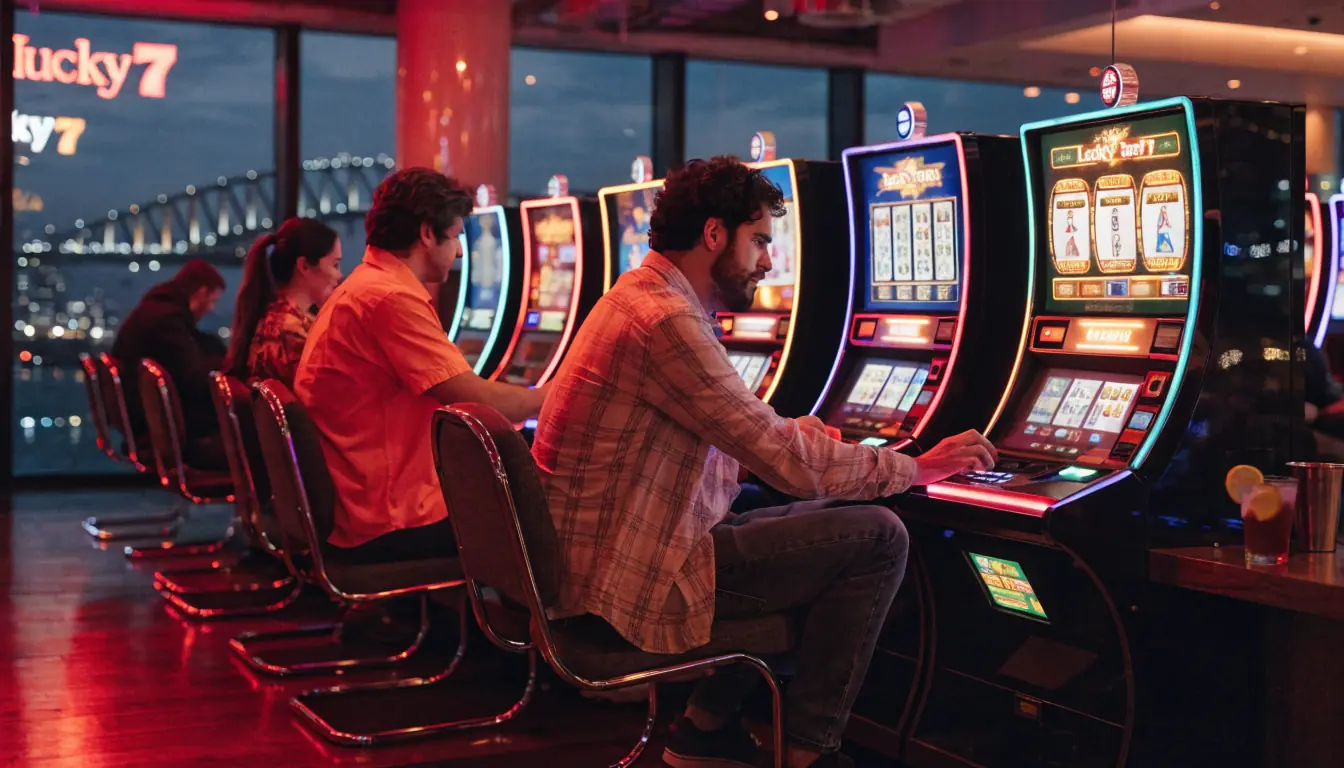
Pokies Parlour Casinos in Australia: What to Know for 2026
 Available in AU
Before you spin at any pokies parlour online in 2026, it pays to check how each casino stacks up on licensing, bonus terms and payout speed. Here’s a quick, no-frills verdict on each operator to help you weigh your options.
License: Curacao · Bonus: up to A$2,000 Holds a Curacao licence and offers a welcome bonus up to A$2,000, giving newcomers a straightforward reason to check it out.
License: Curacao Gaming Control Board OGL/2023/176/0095 (Hollycorn N.V.) · Bonus: up to A$5,000 + 300 free spins across 4 deposits Licensed under the Curacao Gaming Control Board via Hollycorn N.V., with a sizeable welcome package of up to A$5,000 plus 300 free spins spread across four deposits.
License: international iGaming licence – jurisdiction not named in the source · Bonus: 100% up to A$1,000 + 100 free spins, 35x wagering · Payout speed: PayID 1-24 hours · Min. deposit: A$30 (PayID from A$10) Operates under an international iGaming licence and pairs a 100% match up to A$1,000 with 100 free spins under 35x wagering; fast PayID withdrawals (1-24 hours) and a low A$10 PayID deposit minimum add convenience.
License: Curacao Gaming Control Board OGL/2023/174/0082 (Dama N.V.) · Bonus: up to A$5,000 + 300 free spins across 4 deposits Licensed by the Curacao Gaming Control Board through Dama N.V., offering up to A$5,000 plus 300 free spins across four deposits for players building a bankroll over time.
License: Curacao eGaming OGL/2024/923/0383 (Antillephone N.V.) · Bonus: up to A$2,000 + 100 free spins across 2 deposits · Min. deposit: A$30 Licensed via Curacao eGaming under Antillephone N.V., with a bonus of up to A$2,000 plus 100 free spins across two deposits and an accessible A$30 minimum deposit.
License: Curacao eGaming (Dama N.V.) · Bonus: up to A$10,000 + 180 free spins, 40x wagering Holds a Curacao eGaming licence through Dama N.V. and stands out for a large bonus of up to A$10,000 plus 180 free spins, though the 40x wagering requirement is on the higher side.
License: Curacao Gaming Control Board OGL/2023/176/0095 (Hollycorn N.V.) · Bonus: up to A$11,000 + 300 free spins (code NEO100) Licensed by the Curacao Gaming Control Board via Hollycorn N.V., with a notably large offer of up to A$11,000 plus 300 free spins available through a bonus code.
Bonus: 240% up to A$4,100 + 300 free spins Features a generous 240% match up to A$4,100 alongside 300 free spins, making its welcome offer one of the more eye-catching on this list.
License: Curacao (operating since 2017) · Bonus: 250% up to A$2,000 + 50 free spins on the first of six deposits · Min. deposit: A$20 A Curacao-licensed operator running since 2017, offering a 250% bonus up to A$2,000 with 50 free spins on the first of six deposits and a low A$20 minimum deposit.
Bonus: 100% up to A$750 + 200 free spins, 35x wagering · Payout speed: crypto 30-120 minutes, fiat 24-72 hours · Min. deposit: A$30 Combines a 100% bonus up to A$750 with 200 free spins under 35x wagering, plus notably fast crypto payouts (30-120 minutes) and reasonable fiat withdrawal times.
Table of Contents
- What Are Pokies and How They Shape Australian Parlour Casinos
- The Parlour Casino Experience: Pokies in Pubs, Clubs and Casinos
- Signing Up: No‑Deposit and Deposit Bonuses at Australian Pokies Parlours
- VIP Treatment in Pokies Parlours: What High‑Rollers Need to Know
- Understanding Pokie Parlour Bonus Structures and Their Conditions
What Are Pokies and How They Shape Australian Parlour Casinos
I lost more money on pokies in my twenties than I care to admit on a tax return. Not one big night — small, forgettable amounts, bled out over years, in pubs where I went in for a beer and stayed for the machine in the corner. That’s the thing about pokies nobody tells you when you’re starting out: they’re not really about the jackpot. They’re about the room being designed so you don’t notice the time.
If you’re researching a pokies parlour casino in Australia for 2026, you need the numbers first, because the numbers explain the room. Everything else — the free spins, the sign-up offers, the VIP lounges — sits on top of an industry that is genuinely enormous, genuinely regulated in patches, and genuinely misunderstood by most people who play.
The Machines Are Everywhere, Legally
Electronic gaming machines — pokies, if you’re using the word Australians actually use — are operated in every state, plus the Australian Capital Territory and the Northern Territory. There’s no part of the country where they don’t exist in some legal form. That’s worth sitting with for a second, because it means the "parlour casino" experience isn’t a niche thing you have to travel for. It’s the pub down the road, the club where your parents play bowls, and the casino floor in the city, all running the same basic machines under different signage and different house rules.
Pokies are legally present in every Australian state and territory, so you’ll encounter them in pubs, clubs and casinos alike.
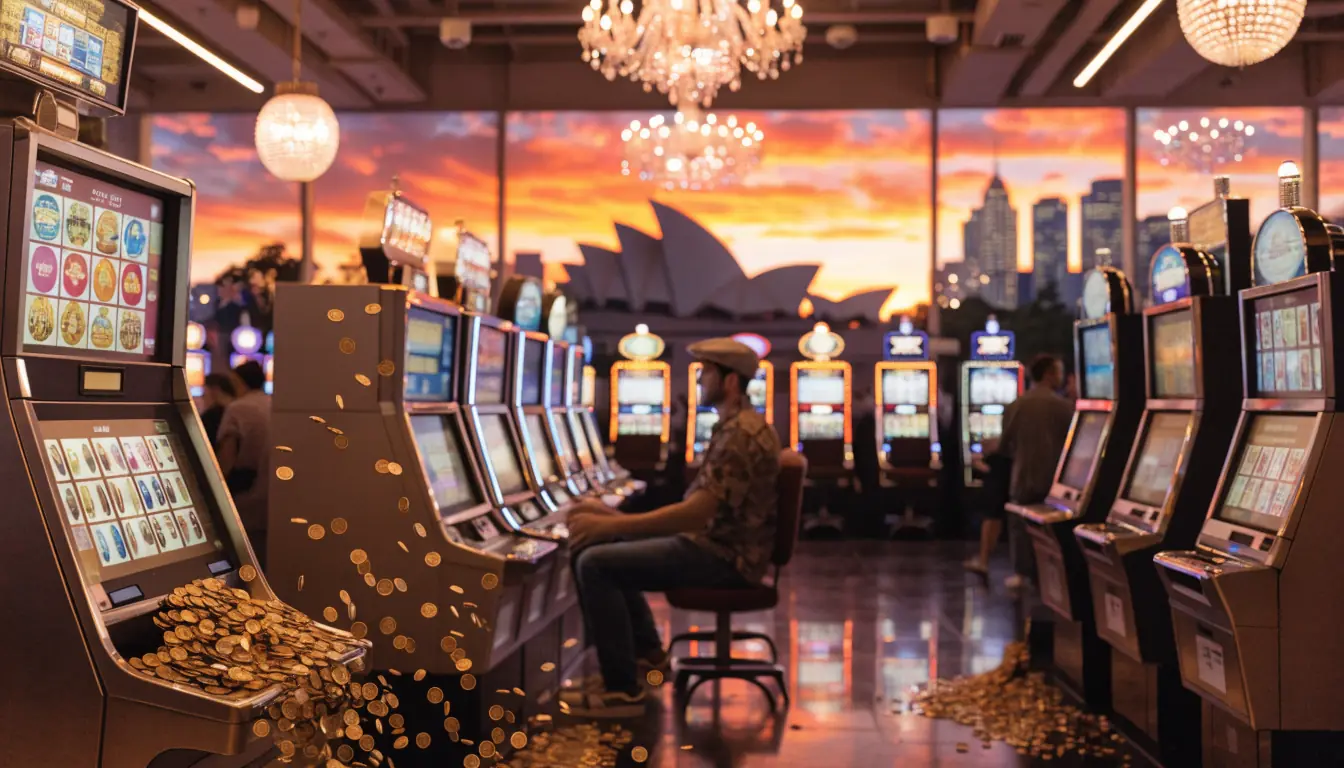
I used to think of pokies as a casino thing — something you did on a trip, in a big room with carpet patterns designed to make you dizzy. That’s wrong, and it’s an important wrong to correct before you go any further, because it changes how you should think about a "pokies parlour." In Australia, the parlour isn’t one building. It’s a category of experience that shows up in three very different settings, each with its own rules, its own atmosphere, and its own reasons for having the machines there at all. (I’ll get into how those settings actually differ from each other in the next part — for now, just hold onto the fact that pokies are not confined to casinos.)
The Scale Is Bigger Than Most Players Realise
Here’s where it gets uncomfortable. In the 2020–2021 financial year, Australians placed bets worth almost AUD 150 billion on electronic gaming machines. That’s not turnover for the whole gambling industry — that’s pokies specifically. Betting volume like that doesn’t happen because a small number of people are having enormous nights. It happens because the machines are in tens of thousands of venues, running continuously, taking small bets from a huge number of people, over and over, all year.
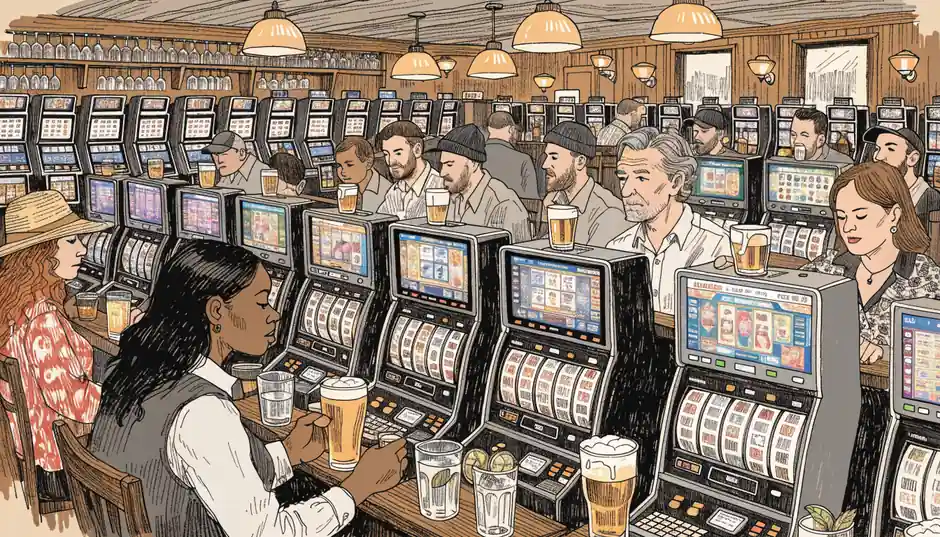
Of that AUD 150 billion in bets, the total player loss for the same financial year was about AUD 12 billion. That gap between what gets bet and what gets lost is the house edge working exactly as designed — money churns through the machine many times before it’s finally gone, which is part of why a session can feel like you’re "doing fine" for an hour before you check your wallet and you’re not.
Break that AUD 12 billion down to a per-person basis and it comes out to per-capita losses of AUD 608 in that financial year. That’s an average across the whole population, including people who never touch a pokie in their life, which tells you something important: for the people who do play regularly, the real number is a lot higher than 608 dollars. I was one of those people for a while. The average always looks softer than reality when you’re the one skewing it.
Be aware that money‑laundering patterns linked to pokies can lead to tighter ID checks and compliance scrutiny.
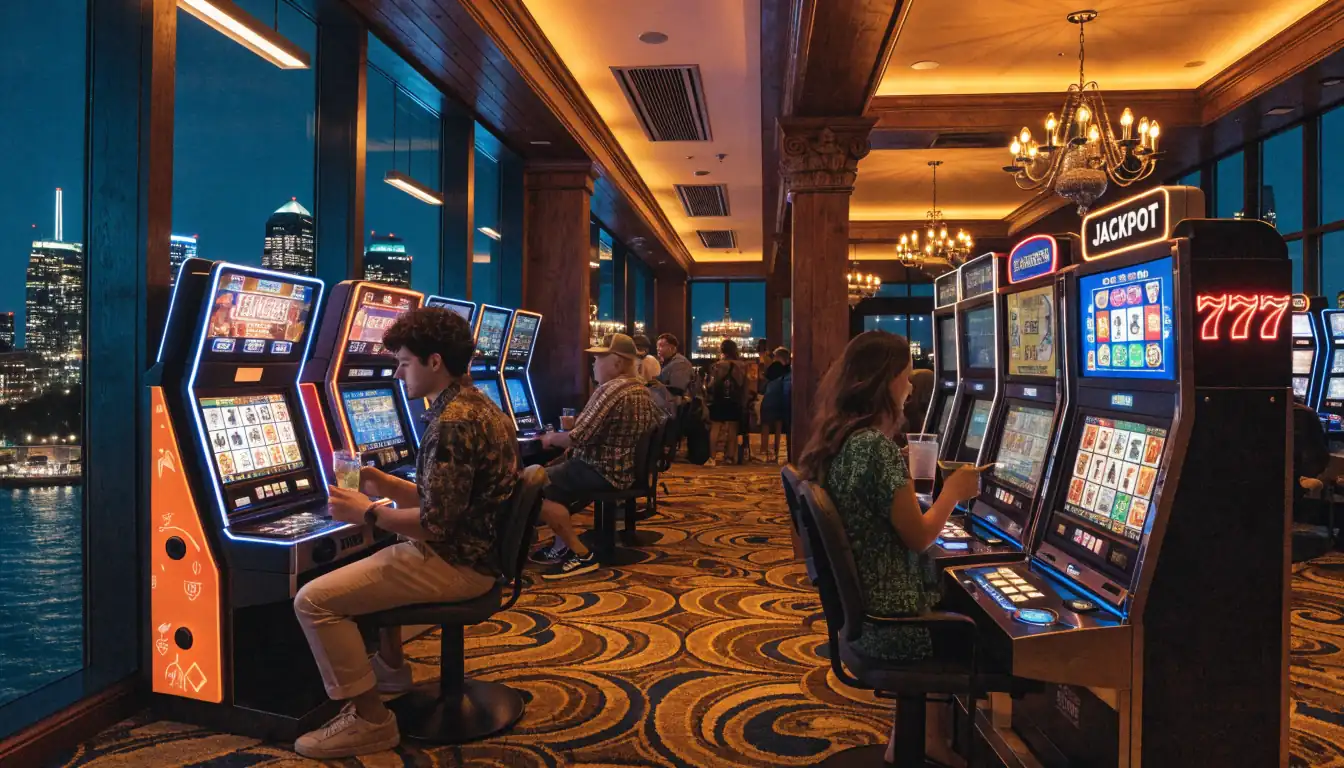
More recent figures paint an even bigger picture. One industry source — complyadvantage.com — reported that pokies generated AUD 191.2 billion in gambling turnover in 2023. I want to flag that carefully rather than present it as some agreed-upon industry benchmark: that’s one source’s figure, for one year, and it’s turnover (money cycled through the machines), not loss. It’s not directly comparable to the 2020–2021 numbers above, which came with a clearer breakdown of bets versus losses. But even treated cautiously, it points the same direction the other numbers do — this is one of the largest gambling verticals in the country, not a side activity.
Australia’s Share of the World’s Machines — and Why the Number Depends on Who You Ask
You’ll sometimes see claims that Australia has an outsized share of the world’s poker machines relative to its population, and other times you’ll see a smaller figure. Both versions exist in circulation, and they don’t agree with each other, so I’m not going to pretend one is settled fact.
One figure says Australia accounts for 3% of the world’s pub and club poker machines. Another puts it at about 18% of the world’s poker machines. That’s a huge gap — not a rounding difference, a genuine disagreement between sources on what’s being counted. My guess, without a source to back it up, is that the two figures are measuring different things: one might be counting only pub-and-club style machines specifically, the other might be counting a broader category of machine, or using a different global baseline. But that’s a guess, not a fact, and I’d rather tell you the numbers disagree than quietly pick the one that sounds more dramatic.
Some sources claim Australia holds about 3 % of the global pub‑and‑club poker‑machine stock.
Other estimates put the figure as high as 18 % of all poker machines worldwide.
What both figures agree on, regardless of which one you believe, is the underlying point: Australia has a lot of these machines relative to a lot of other countries. Whether that’s 3% or 18% of the world’s total, it’s a striking amount of machinery for one country’s population, and it’s a big part of why pokies discussions in Australia tend to be louder and more policy-heavy than in most other markets.
Why Pokies End Up at the Centre of Every AML Conversation
If you spend any time reading about pokies regulation in Australia, you’ll notice the conversation keeps circling back to money laundering, and there’s a straightforward reason for that. The high volume of cash transactions and the limited traceability of pokies make them attractive for money laundering. It’s not that pokies are uniquely corrupt as a form of gambling — it’s that cash goes in, cash comes out, and a machine doesn’t ask where the money came from or where it’s going next.
The pattern that shows up again and again in the reporting is fairly simple to describe, even though I’d never have thought of it myself before reading about it: criminals insert large sums of cash into EGMs, perform minimal gambling activity, and cash out to create a false record of winnings. From the outside, that looks like someone had a lucky session. On paper, it turns dirty cash into a "win" that’s far easier to explain than an unexplained pile of banknotes.
Money‑laundering risk
Using pokies to launder cash can result in severe penalties for both players and venues.
This matters for anyone reading about pokies parlours in 2026, not because it’s going to affect your Friday night at the pub, but because it’s shaping the rules you’ll bump into as a regular player — the ID checks, the reporting thresholds, the compliance officers standing behind the scenes at bigger venues. Those things exist because of exactly this pattern, and they’re only getting more consistent across the industry, not less.
The Cashless Shift, and Why It’s Being Pushed So Hard

One development that keeps coming up in industry writing is the move toward cashless, account-based pokies. According to facctum.com, adoption of cashless, account-based pokies improves traceability and reduces anonymity — and again, I want to be clear that’s one provider’s framing of the trend rather than a settled industry-wide standard everyone has agreed to. But the logic behind it isn’t hard to follow: if every dollar going into a machine is tied to a verified account instead of loose cash, the whole laundering pattern described above becomes much harder to pull off. No anonymous cash in, no anonymous cash out.
For a player, this is worth knowing about because it’s likely to change what "playing pokies" feels like over time — less cash in hand, more account-based play, more identity checks up front. It’s not a universal rule yet, and I’m not going to pretend it is. But it’s the direction the conversation keeps moving, and if you’re planning around pokies parlours in 2026, it’s the kind of shift you want to see coming rather than be surprised by.
Where the Machines Actually Live
Pokies are widely used in Australian pubs, clubs, and casinos — that’s the short version, and it’s genuinely all three, not casinos with the other two as an afterthought. A suburban pub with six machines by the pokies room door is running the same basic mechanics as a casino floor with hundreds of units. The difference is scale, atmosphere, and — increasingly — the compliance apparatus sitting behind the scenes, which is a subject worth its own space rather than a paragraph tacked onto the end of this one.
Where the machines actually live
Pokies are found in three main venue types:
- Pubs – a handful of machines near the bar, casual and low‑commitment.
- Clubs – larger floors, membership desks, and amenities that encourage longer sessions.
- Casinos – extensive floors with hundreds of units, higher lighting budgets and more staff. All operate under the same regulatory framework across Australia.
What I will say here, because it’s the foundation everything else in this article builds on, is that the sheer size of the pokies market — that near-AUD-150-billion betting figure, that AUD-12-billion loss figure, that AUD 608 average per person — is why a "parlour casino" in Australia isn’t a small, specialist thing. It’s mainstream. It’s the machine you walked past on the way to the bathroom at your local. It’s also, increasingly, the machine that regulators are watching more closely than almost anything else in the gambling sector, precisely because of how much cash moves through it and how easily that cash can be made to look clean.
What This Means Before You Read Any Further

I’ll be honest about why I’m laying out these numbers before anything else in this piece: I think most people go into pokies without any real sense of scale, the way I did. You see a machine, you see a jackpot number flashing, and none of that tells you anything about the actual economics of what you’re doing. The AUD 608 per-capita loss figure isn’t a scare tactic — it’s an average, and averages hide plenty of people who lost far less and plenty who lost far more. I was closer to the far-more end for longer than I’d like.
None of this means pokies parlours are some kind of trap you should avoid entirely — plenty of people play within limits that suit them and walk away fine, and that’s their call to make. It means that if you’re going to engage with a pokies parlour casino at all, in a pub, a club, or a full casino floor, it’s worth going in with the real numbers in your head instead of the ones on the machine’s screen. The next parts of this piece get into how those venues actually differ from each other, what kinds of offers you’ll be shown when you sign up, and what conditions sit underneath those offers — but none of that means much without understanding the size of the thing you’re stepping into first.
If nothing else, remember this: the industry moves close to AUD 150 billion in bets a year through these machines, loses out about AUD 12 billion of that to players collectively, and is genuinely large enough — by either the 3% or the 18% measure — to be one of the most significant pokies markets on the planet. That’s the scale behind every "parlour casino" you’ll walk into in 2026. It’s not a small room with a few blinking lights. It’s a national industry wearing a small room’s disguise.
The Parlour Casino Experience: Pokies in Pubs, Clubs and Casinos
You can find pokies in three kinds of places, and each one feels different once you’ve spent a few nights in them.
The pub is the easiest to walk into. No membership, no dress code, just a corner with a handful of machines humming next to the bar. People play between rounds, sometimes standing with a beer in hand, sometimes just killing time before a mate turns up. It’s casual, low-commitment, and that’s exactly why it’s easy to lose track of how long you’ve been standing there.
Clubs are a different animal. Bigger floors, more machines, and a membership desk you sign at on the way in. RSLs, footy clubs, bowls clubs — the pokies room is usually the biggest room in the building, and it’s built to keep you there: air conditioning, cheap meals, a bit of ceremony around it. The atmosphere is quieter than a pub, more focused, because that’s the point of the room.
Then there’s the full-scale casino floor, which is a different scale of experience altogether. Rows of machines stretching further than any club, mixed in with table games, higher lighting budgets, more staff walking the floor. It’s the version built for people who plan a night around it rather than stumble into it after work.
What ties all three together is that they’re running on the same machines, in the same regulatory system. Pokies operate across every Australian state, plus the ACT and the Northern Territory — there’s no corner of the country where you won’t find them, whether that’s a servo-adjacent pub in a small town or a casino floor in a capital city.

I’ve seen a claim that Australia holds 3% of the world’s pub and club poker machines, and another that puts the figure closer to 18%. Nobody seems to agree on which one’s right, and honestly, I haven’t found a source that settles it. Either way, the machines are everywhere you look here — pub, club or casino, they’re part of the furniture.
Signing Up: No‑Deposit and Deposit Bonuses at Australian Pokies Parlours
The first time I heard someone mention a "no-deposit bonus" for pokies, I went looking for it online, like an idiot. Took me about ten minutes of scrolling to remember why that search was pointless: the Interactive Gambling Act 2001 makes it an offence for online operators to offer real-money gambling to Australian residents at all. No licence, no loophole, no "exclusive" sign-up offer waiting in your inbox. If a site is dangling a deposit match or free credit for online pokies and it’s not sports betting or a lottery product, it’s not operating within the law here, full stop.
So where do sign-up and deposit bonuses actually exist? In the physical world — pubs, clubs, land-based casino floors. That’s the space this section is about, and it looks nothing like the online offers people expect from overseas gambling marketing.
What a real sign-up offer looks like
Venues use loyalty programs and membership schemes rather than the "100% match up to $X" language you’d see plastered across an offshore casino homepage. Sign up for a venue’s player card, and you might get access to member pricing, event invites, or point accrual on machine play. It’s slower, less flashy, and — importantly — it comes with paperwork. Because there’s no public licensee register on this market, you can’t "check the licence" the way you might elsewhere. What you can do is expect the venue to ask for identification before it hands over anything of value. That’s not bureaucracy for its own sake.
Why the ID checks aren’t optional
Regulators have flagged specific patterns as red flags for money laundering through pokies: unusually high cash access, large deposits, cash transfers, disbursement checks tied to casino payouts, and even certain occupations that correlate with structuring behaviour. A "bonus" or loyalty credit sitting on top of cash transactions is exactly the kind of thing that gets scrutinised, not waved through.
This is why a legitimate venue offer will always come wrapped in identity verification. It’s not the venue being precious about your privacy — it’s the venue protecting its own licence. Operators that skip this step, or wave through large unexplained cash movements without asking questions, risk remedial directions, infringement notices, and civil fines. Reputational damage tends to follow, and word travels fast on a small market.
What this means for you as a player
- Any bonus you’re offered in person should come after, not before, identification.
- Winnings from a legitimate venue bonus aren’t taxed — that part, at least, works in your favour, since Australia doesn’t tax gambling winnings for the player.
- If a deposit or sign-up bonus is being pushed at you through cash top-ups with no questions asked, that’s not generosity. That’s the exact behaviour regulators say they’re watching for.
The direction of travel
Regulators have been pushing operators toward tighter customer due diligence, ongoing transaction monitoring, and — increasingly — cashless gaming systems that leave a traceable record instead of a pocket full of coins. Practically, that means the "bonus" of the future looks less like a wad of cash handed over the counter and more like credit sitting inside an account-based system tied to your verified identity.
I get why that feels less exciting than a flashing "free spins" banner. It is less exciting. But the trade-off is a system where the operator handing you that bonus is actually accountable for where the money came from and where it’s going — which matters a lot more once you’re the one trying to cash out.
If you’re chasing sign-up offers, chase the ones a real venue can put its name to, not the ones promising to bypass a law that exists specifically to keep online real-money pokies out of Australian hands.
VIP Treatment in Pokies Parlours: What High‑Rollers Need to Know
I never made it into a VIP room myself — my bankroll wasn’t exactly "high roller" material — but I watched enough from the outside to know it’s a different world. Private lounges, dedicated hosts, better odds of getting a free drink without asking twice. That’s the glamour part.
What doesn’t get talked about much is the paperwork behind it. A pub with a handful of machines just has to register with AUSTRAC, keep basic ID records and file a suspicious matter report if something looks off. A parlour running a serious VIP program is a different animal entirely. Once a venue runs more than 15 pokies, it needs a compliance officer on staff, proper risk assessments, a working AML/CFT program, and customer due diligence that goes well beyond checking your ID at the door. Any cash transaction over AUD 10,000 gets reported, VIP or not.
So the "exclusive" treatment cuts both ways. You get the perks, sure. But you also get watched more closely than the guy feeding twenties into a machine near the bar. The bigger the spend, the bigger the file someone’s keeping on you.
Understanding Pokie Parlour Bonus Structures and Their Conditions
Here’s the thing nobody tells you upfront: every bonus a parlour hands out sits inside a compliance framework, not just a marketing one. The "free credit" or "welcome match" isn’t just about getting you to play — it’s also a transaction the operator has to be able to explain later if someone asks.
That’s not paranoia. AUSTRAC put out a guide in 2024 specifically to help operators spot money-laundering red flags, and bonus claims are exactly the kind of activity that gets a second look — sudden deposits, odd patterns, cashing out before any real play happens.
So when you’re chasing a bonus, expect identity checks to be part of the deal, not an afterthought bolted on at withdrawal. Skip that step, and the bonus goes nowhere.
Operators that don’t follow through on these checks aren’t just risking a slap on the wrist. They can face remedial directions, infringement notices, civil fines — and the kind of reputational damage that follows a venue around.
Bottom line: the bonus is real, the paperwork behind it is too.
Where are pokies operated in Australia?
Electronic gaming machines operate legally in every Australian state, plus the Australian Capital Territory and the Northern Territory. You’ll find them widely available in pubs, clubs, and dedicated casinos.
How did Covid-19 lockdowns affect land-based casinos and boost online gambling?
The provided material doesn’t explain the Covid-19 lockdowns’ effect on land-based casinos or how they boosted online gambling.
How can I verify if a gambling operator is legal?
You can check if an online operator is legally allowed to serve you by verifying it against the Interactive Gambling Act (2001), which makes it an offence for online operators to offer real-money gambling to Australian residents.
Are my personal and financial details safe?
The provided material doesn’t discuss the safety of personal and financial details.
Are crypto casinos legal in Australia in 2026?
The Interactive Gambling Act (2001) makes it an offence for online operators to offer real-money gambling to Australian residents, which applies to crypto casinos as well.
Prepared by the Casino Payments Guide editorial staff.