House of Pokies Casino Australia: 2026 Overview
 Available in AU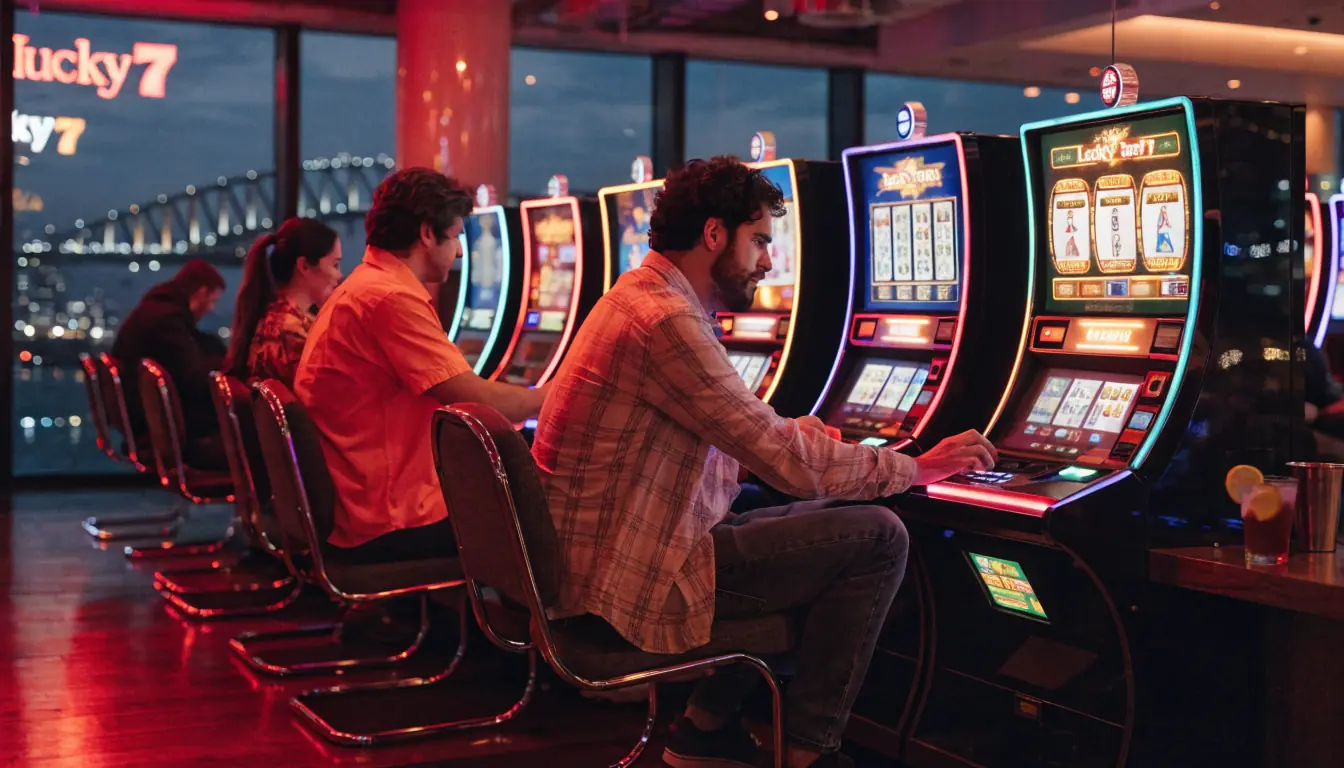
Before you commit real money to any casino, it helps to see how a handful of options actually compare on licensing, bonus terms, and cash-out speed. Here’s a quick rundown to help you weigh your options.
License: Curacao · Bonus: up to A$2,000 Operates under a Curacao licence and offers a welcome bonus of up to A$2,000, giving newcomers a solid starting incentive.
License: Curacao Gaming Control Board OGL/2023/176/0095 (Hollycorn N.V.) · Bonus: up to A$5,000 + 300 free spins across 4 deposits Licensed by the Curacao Gaming Control Board under Hollycorn N.V., it stands out with a generous bonus package of up to A$5,000 plus 300 free spins spread across four deposits.
License: international iGaming licence – jurisdiction not named in the source · Bonus: 100% up to A$1,000 + 100 free spins, 35x wagering · Payout speed: PayID 1-24 hours · Min. deposit: A$30 (PayID from A$10) Holds an international iGaming licence and pairs a 100% match bonus up to A$1,000 with 100 free spins, plus fast PayID withdrawals within 24 hours and a low minimum deposit starting from A$10 via PayID.
License: Curacao Gaming Control Board OGL/2023/174/0082 (Dama N.V.) · Bonus: up to A$5,000 + 300 free spins across 4 deposits Regulated by the Curacao Gaming Control Board through Dama N.V., it offers a bonus of up to A$5,000 with 300 free spins across four deposits, matching a strong entry offer.
License: Curacao eGaming OGL/2024/923/0383 (Antillephone N.V.) · Bonus: up to A$2,000 + 100 free spins across 2 deposits · Min. deposit: A$30 Licensed via Curacao eGaming under Antillephone N.V., it provides a bonus of up to A$2,000 with 100 free spins over two deposits and a modest minimum deposit of A$30.
License: Curacao eGaming (Dama N.V.) · Bonus: up to A$10,000 + 180 free spins, 40x wagering Licensed by Curacao eGaming through Dama N.V., it features one of the larger bonus packages here—up to A$10,000 plus 180 free spins with 40x wagering requirements.
License: Curacao Gaming Control Board OGL/2023/176/0095 (Hollycorn N.V.) · Bonus: up to A$11,000 + 300 free spins (code NEO100) Under the Curacao Gaming Control Board licence held by Hollycorn N.V., it offers a substantial bonus of up to A$11,000 with 300 free spins, redeemable via a specific promo code.
Bonus: 240% up to A$4,100 + 300 free spins Notable for its high-percentage bonus structure, offering 240% up to A$4,100 along with 300 free spins.
License: Curacao (operating since 2017) · Bonus: 250% up to A$2,000 + 50 free spins on the first of six deposits · Min. deposit: A$20 A long-running operator licensed in Curacao since 2017, offering a 250% bonus up to A$2,000 with 50 free spins on the first of six deposits and a low A$20 minimum deposit.
Bonus: 100% up to A$750 + 200 free spins, 35x wagering · Payout speed: crypto 30-120 minutes, fiat 24-72 hours · Min. deposit: A$30 Offers a 100% bonus up to A$750 with 200 free spins, and is notable for fast crypto payouts within minutes alongside standard fiat processing times.
Understanding Pokies in Australian Casinos: Scope, Scale, and Impact
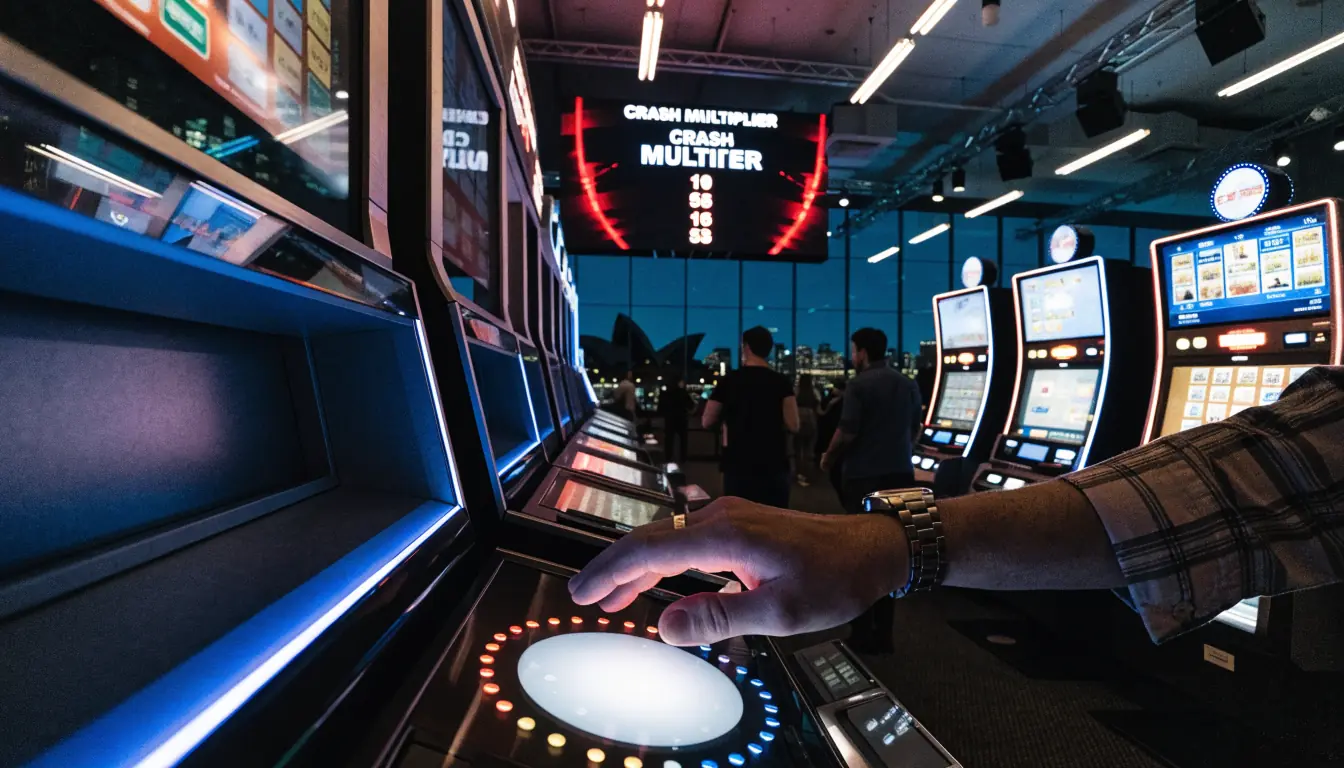
I lost more money to a machine in a pub than I ever did at a card table. That’s not a confession dressed up as an intro — it’s the reason I started paying attention to what pokies actually are, how many of them there are, and where all that cash actually goes. If you searched for house of pokies casino Australia 2026 hoping to understand the landscape before you put a dollar into anything, this is the part where we slow down and look at the machine itself, not the marketing around it.
"Pokies" is the word everyone here actually uses. You’ll see "poker machines" or "gaming machines" in government reports and legal documents, but nobody standing at the bar says that. If you’re reading anything about EGMs — electronic gaming machines — and it feels stiff, that’s just the regulatory version of the same box that eats your twenty in under a minute.
What a pokie actually is
Strip away the lights and the sound design, and a pokie is a computer running a random number generator, dressed up as a reel-spinning slot machine. There’s no skill lever. There’s no pattern to crack, no matter what the guy two stools down tells you about "hot machines." Every spin is independent. The screen just makes it feel like something is building toward something.
Pokies operate on a random number generator; each spin is independent and there is no skill involved.

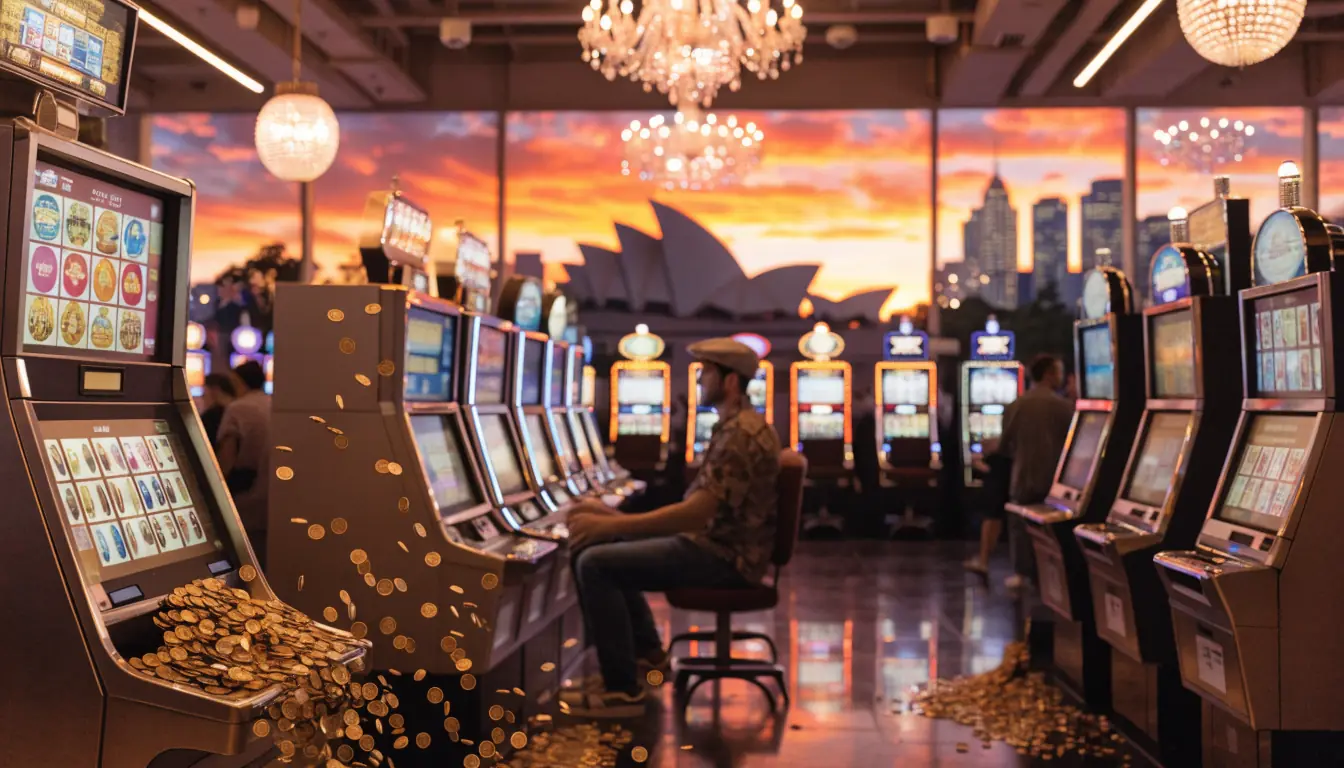
What varies from machine to machine — the specific game titles, the software behind them, which studio built the math model — isn’t something I’m going to pretend to know for every cabinet sitting in every pub across the country. Venues don’t publish that breakdown, and there’s no single registry you or I can check that lists it out machine by machine. So I won’t invent names or numbers here. What I can tell you, because it’s documented, is where these machines sit, how much moves through them, and what that scale actually means.
Where pokies operate
Here’s the thing that surprised me when I first looked into this properly: pokies aren’t a Sydney thing, or a Melbourne thing, or something confined to casino floors. Electronic gaming machines operate in every Australian state, plus the Australian Capital Territory and the Northern Territory. There’s no corner of the country where you can’t find one within a short drive — usually a much shorter drive than that.
That’s the part people underestimate. You picture a casino when you hear "pokies," but the vast majority of these machines are sitting in the local pub and the suburban club, the ones with the calamari special and the trivia night. That’s precisely why the numbers get as big as they do — the machines aren’t concentrated in a handful of gambling palaces, they’re everywhere, all the time, all pulling from the same pool of players.
The scale: numbers that actually stopped me
I’d heard "pokies are big business" for years before I looked at what that meant in dollars. It’s bigger than I expected, and not in a way that felt like a fun fact — more in a way that felt like a warning.
Turnover ≈ AUD 150 billion, Player loss ≈ AUD 12 billion (official government data).
Turnover ≈ AUD 191.2 billion (reported by complyadvantage.com, not independently verified).
In the financial year 2020–2021, Australians placed bets worth almost AUD 150 billion on electronic gaming machines. Read that again slowly. That’s the total amount wagered — money going in and (mostly) coming back out in smaller amounts, spun through the machines over and over. Betting turnover isn’t the same as loss, but it tells you how much liquidity is constantly cycling through these machines nationwide.
The loss side is the number that actually matters if you’re trying to understand the impact on people, not just the industry. In that same financial year, the total player loss from electronic gaming machines was about AUD 12 billion. That’s not turnover — that’s money that left players’ pockets and didn’t come back. Split that across the population and you get a per-capita loss of AUD 608 for the 2020–2021 financial year. Every adult, every kid, every person who’s never touched a pokie in their life — spread the national loss evenly across the population and that’s the number you land on.
I want to sit with that per-capita figure for a second, because it’s easy to read past it. AUD 608 isn’t what heavy players lost — it’s what the loss works out to if you divide it across everyone. The people actually playing regularly are losing far more than that, obviously, because plenty of Australians never feed a note into one of these machines. The average hides the real distribution, and the real distribution is uglier than the average suggests.
A number that needs a source attached to it
More recent figures put pokies turnover at AUD 191.2 billion in 2023, according to data reported by complyadvantage.com. I’m flagging where that number comes from deliberately, because it’s not something I’ve seen independently verified across multiple regulators or corroborated the way the FY 2020–2021 figures are. It’s one source’s accounting of a fast-moving industry, and the subject of that number — turnover in 2023 versus turnover in 2020–2021 — isn’t even measuring identically comparable things across the two periods. Treat it as a data point from that source, not as an agreed-upon industry benchmark.
That’s a distinction I wish more sites bothered making. It’s easy to blend numbers from different years and different sources into one tidy paragraph that reads like consensus. It isn’t consensus. It’s a collection of separate reports, and some of them disagree.
The 3% versus 18% problem
Here’s where things get genuinely messy, and I’m not going to pretend otherwise. You’ll see claims that Australia accounts for 3% of the world’s pub and club poker machines. You’ll also see claims — from other sources — that Australia accounts for about 18% of the world’s poker machines. Those two figures are wildly different, and I can’t reconcile them for you, because the sources themselves don’t reconcile them.
I think it’s worth naming that discrepancy outright rather than picking whichever number sounds more dramatic or more comforting. Different sources are almost certainly counting different things — total machines worldwide versus a specific category like pub and club machines excluding casino floors, or using different baseline years, or different definitions of what counts as a "poker machine" versus a broader EGM category. Without knowing the methodology behind each figure, I’m not going to tell you one is right and one is wrong. What I will tell you is that both numbers get repeated as fact online, and that alone should make you cautious about any single-line stat you see thrown around without a citation.
Percentage discrepancy
Claims that Australia accounts for 3% or 18% of global machines are based on different methodologies and should be treated cautiously.
What isn’t in dispute, regardless of which percentage you believe, is that Australia has a disproportionately large presence of these machines relative to its population. Whether that’s 3% of a global total or 18%, either number is startling for a country with Australia’s population size. That’s the point that actually matters, more than nailing the exact percentage.
Where the machines actually live: pubs, clubs, casinos
Pokies are widely used in Australian pubs, clubs, and casinos — and I mean widely in the literal sense, not as a rhetorical flourish. This is the detail that took me the longest to really absorb: the pokie in the corner of your local isn’t a novelty or an afterthought for the venue. For a huge number of pubs and clubs, the machines are the actual business model, and food and drink are the thing that keeps you in the building long enough to feed them.
That matters for understanding scale, because it means the "casino" in a search like house of pokies casino australia isn’t necessarily a big glass building with a car park and a buffet. It might just as easily be the machines lined up along the wall of the club where you go for a counter meal. The economic footprint isn’t concentrated in a few landmark venues — it’s distributed across thousands of ordinary rooms in ordinary suburbs.
The social footprint
Numbers like AUD 12 billion in annual losses and AUD 608 per capita aren’t abstract when you’ve watched someone you know chase a loss on one of these machines. I’m not going to lecture you about it — that’s not what this is — but the scale of the loss figures tells you something about the social weight these machines carry that individual stories alone don’t capture.

When an activity generates losses in the billions annually, spread across a population where a meaningful share of teenagers and young adults are already gambling — almost one in three 12–17-year-olds in Australia gamble, and 46% of 18-year-olds gamble — you’re not looking at a niche hobby. You’re looking at something woven into ordinary social life: the club after work, the pub on a Friday, the machine near the bathroom that everyone walks past a dozen times before someone finally sits down at it.
The minimum legal gambling age in Australia is 18, and that line matters — it’s the one clear boundary in a landscape that otherwise varies a lot by state and by venue type. Everything else about how pokies are taxed, licensed, and regulated differs depending on where you are, which is a separate conversation from the scale question, but it’s worth flagging here because "the rules are different in every state" is part of what makes the overall footprint hard to summarise in one clean sentence.
Why cash-heavy machines attract more than just players
This is the part of the pokies landscape that doesn’t get talked about enough outside of regulatory reports, and it’s worth understanding before you think about pokies purely as an entertainment or loss question. The high volume of cash transactions and limited traceability of pokies make them attractive for money laundering. That’s not a hypothetical risk regulators worry about in the abstract — it’s a documented pattern with a specific mechanic behind it.
Here’s roughly how it works, based on what’s been documented by regulators and researchers: criminals insert large sums of cash into EGMs, perform minimal gambling activity, and cash out to create a false record of winnings. The machine becomes a laundering tool rather than a gambling one — feed in dirty cash, barely touch the buttons, walk away with a payout slip that looks, on paper, like gambling winnings rather than what it actually is.
Money laundering via pokies
Criminals insert large sums of cash into EGMs, play minimally, and cash out quickly to create a false record of winnings. The cash‑out slip looks like legitimate gambling profit, effectively laundering the money.
There’s a second variant that’s a bit stranger and more deliberate: offenders purchase winning tickets from other players to convert dirty money into clean, traceable funds. Instead of gambling themselves, they buy someone else’s legitimate winning ticket for cash, effectively laundering the money through another person’s genuine win.
And then there’s structuring across venues — spreading smaller cash deposits across different venues specifically to avoid AML reporting thresholds. Rather than moving a large amount through one machine at one venue, which would trip reporting requirements, the money gets broken into smaller pieces and spread across multiple pubs and clubs, none of which individually looks suspicious.
According to reporting from complyadvantage.com, money mules are recruited specifically to launder money through pokies — people brought in to physically feed cash through machines on behalf of someone else, distancing the actual source of the funds from the transaction itself. Again, I’m naming the source on that one because it’s a specific claim from a specific report, not something I’ve seen treated as settled fact across the board.
The red flags regulators actually look for
AUSTRAC issued a guide in 2024 specifically to help firms recognise money-laundering red flags in this space, and the indicators it lays out are fairly concrete rather than vague suspicion. Reading through them gave me a much clearer picture of what "suspicious activity" actually looks like on the ground, rather than just a phrase regulators throw around.
The broad red-flag indicators include unusually high cash access, large deposits, cash transfers, casino disbursement checks, and certain occupations that correlate with elevated laundering risk. On top of those broader categories, there are specific behavioural patterns venues are trained to watch for:
- Large or repeated cash insertions followed by minimal play and immediate cash-out — someone feeding significant cash into a machine, barely pressing spin, then cashing out almost immediately.
- Frequent small redemptions across different venues within a short period — the structuring pattern in action, visible as a trail across multiple locations rather than one.
- Customers refusing identification or using multiple player cards — a direct attempt to avoid the kind of paper trail that would otherwise tie cash movements back to one identifiable person.
None of these on their own necessarily proves anything — plenty of people cash out quickly because they’ve had a bad run and want to stop, and plenty of people visit more than one club in a week for entirely innocent reasons. But taken together, and repeated as a pattern, they’re the kind of thing venue staff and compliance officers are specifically trained to notice and report.
How the compliance burden splits by size
One thing I didn’t appreciate until I looked into it: the regulatory obligations on venues aren’t uniform. They scale with how many machines a venue actually operates, which makes sense once you think about it — a small club with a handful of machines represents a very different risk profile than a large venue running dozens.
Register with AUSTRAC, keep ID records, submit suspicious matter reports.
Appoint a compliance officer, conduct risk assessments, implement AML/CFT program, perform customer due‑diligence, report cash transactions over AUD 10,000.
| Venue size | Core obligations |
|---|---|
| Up to 15 pokies | Register with AUSTRAC, keep identification records, submit suspicious matter reports |
| More than 15 pokies | Appoint a compliance officer, conduct risk assessments, implement AML/CFT programs, perform customer due diligence, report cash transactions over AUD 10,000 |

That threshold — more than 15 machines — is where the obligations jump from basic registration to something that looks much more like the compliance infrastructure you’d expect at a bank. A dedicated compliance officer, formal risk assessments, ongoing customer due diligence, and mandatory reporting of any cash transaction over AUD 10,000. It’s a meaningful jump, and it tells you that regulators clearly see larger venues as carrying proportionally larger laundering risk.
Non-compliant operators face a range of consequences depending on severity — remedial directions, infringement notices, civil fines, and the kind of reputational damage that doesn’t show up in a fine but costs a venue customers and trust regardless. It’s not a system built purely around punishment; a lot of the AUSTRAC framework is about catching problems early through the reporting obligations before they escalate into something requiring a bigger penalty.
NSW and the push toward cashless machines
New South Wales has been the most visible battleground for pokies reform, largely because it’s home to such a large share of the country’s machines relative to other states. The 2022 NSW Islington Report recommended making all NSW pokies cashless by the end of 2028 — a recommendation, worth stressing, rather than a law already in force. I’m naming the report directly rather than presenting cashless-by-2028 as settled policy, because a recommendation and a binding requirement aren’t the same thing, and it’s easy for that distinction to get lost when the claim gets repeated secondhand.
What is more concrete, because it’s an actual legislative change rather than a report’s recommendation, is an amendment to the Casino Control Act 1992 that allows NSW casino operators to be fined up to AUD 100 million for compliance failures. That’s a substantial figure, and it signals how seriously the state has decided to treat compliance failures at the casino level specifically — as distinct from the club and pub venues covered under the AUSTRAC thresholds above.
The logic behind pushing toward cashless, account-based machines comes down to traceability. Adoption of cashless, account-based pokies improves traceability and reduces anonymity, according to reporting from facctum.com — again, a claim I’m attributing to its source rather than presenting as an agreed industry fact, because it’s one report’s framing of a shift that’s still very much in progress rather than completed. What does seem to hold up as a straightforward, structural point rather than a contested claim: transparent, account-based pokies provide full traceability of deposits, gameplay, and withdrawals. When money moves through an account rather than as loose cash fed into a slot, there’s a record — who deposited what, when, and where it went. Cash, by its nature, doesn’t leave that trail.
What regulators are recommending going forward
Pulling the compliance and reform threads together, the direction regulators are pushing in is fairly consistent: tighter customer due diligence, more active transaction monitoring, and continued adoption of cashless gaming systems. None of these are radical departures from what larger venues already have to do under the AUSTRAC thresholds — they’re really an extension of the same logic to more of the industry, and a push to close the cash-based gaps that make structuring and machine-based laundering possible in the first place.
I don’t think it’s an accident that all three recommendations point in the same direction: less anonymous cash, more visible paper trail. Whether that actually changes how the average person on a Friday night interacts with a pokie machine is a separate question — cashless systems can still let someone lose just as much money just as fast, they just make it easier to trace afterward. Traceability protects the system from criminal misuse. It doesn’t, on its own, protect a player from themselves.
Why this matters before you think about bonuses or offers
It’s tempting to skip straight to what a casino or venue offers you — free spins, bonus credit, whatever hook gets used to get you sitting at a machine. But understanding the actual scale here — the billions in losses, the disproportionate share of global machines, the laundering mechanics regulators are actively fighting — changes how you read every offer that comes afterward. This is an industry operating at a scale of roughly a hundred and fifty billion dollars in annual turnover, embedded in nearly every pub and club in the country, under active regulatory scrutiny for the way cash moves through it.
None of that is a reason to panic every time you walk past a machine. It’s context. It’s the difference between seeing a pokie as a bit of harmless fun in the corner of the pub, and seeing it as one node in a national system that moves an enormous amount of money, most of which the industry keeps and most of which never should have gone into it in the first place. Keep that scale in mind — it’s the frame everything else about pokies in Australia sits inside.
No‑Deposit Bonuses and Promo Codes for Australian Pokies: What You Need to Know
I spent a solid chunk of a Sunday night hunting for a working promo code, convinced I was one search away from free spins that would somehow turn into real cash. That search is exactly how a lot of people land here, so let’s deal with it straight.
Here’s the thing nobody in the ads tells you: under the Interactive Gambling Act 2001, it’s an offence for online operators to offer real‑money gambling to Australian residents. That’s not a footnote, that’s the whole legal picture. Any site promising you a "no deposit bonus" or a "free chip" to play real‑money pokies from an Australian address is doing something the law doesn’t allow it to do — regardless of how legitimate the branding looks or how many "T&Cs apply" disclaimers are stacked underneath.

So when you see a bonus code floating around, ask what it’s actually attached to. A code for a sweepstakes‑style or social casino product, where nothing is redeemable for cash, is a different animal from a code promising withdrawable winnings. The second kind, offered to someone in Australia, sits outside what’s legally permitted here — full stop.
A few things worth holding onto:
- “Free chip no deposit” claims deserve scrutiny. If real money can come out the other end, the legal problem doesn’t disappear just because the entry was free.
- Winnings aren’t taxed in Australia — that part’s true and worth knowing, but it only matters if the win came from something legally offered in the first place.
- Operators who ignore the rules don’t get away quietly. Non‑compliant operators can face remedial directions, infringement notices, civil fines, and the kind of reputational damage that eventually shows up as “why did this site vanish overnight.”
I stopped chasing codes once I understood what I was actually being offered. Not a gift. A hook.
If a bonus sounds like it’s built for Australian pokies players specifically, with a code, a "signup bonus," and real cash sitting at the end of it — that’s the exact shape of an offer the law says shouldn’t exist here. Worth remembering before you type anything into a promo box.
What should a valid complaint include?
A valid complaint should include your personal details, account information, a clear description of the issue with dates and times, any relevant evidence like screenshots or transaction records, and the outcome you’re seeking.
How do criminals launder money through pokies?
Criminals insert large sums of cash into EGMs, perform minimal gambling, and cash out to create a false record of winnings. They also purchase winning tickets from other players and spread smaller cash deposits across multiple venues to avoid AML reporting thresholds.
How do recommended online casinos ensure game fairness?
Reputable online casinos ensure fairness by using random number generators (RNGs) that produce independent results for every spin, with no pattern or skill element that can influence the outcome.
Written by the editors at Casino Payments Guide.