
Golden Pokies Casino Australia: Rules, Risks and Bonus Terms
Before you commit real money at any online casino in 2026, it’s worth checking how each operator’s licensing, bonus terms, and payout speeds actually stack up. Here’s a quick rundown to help you see what each one offers at a glance.
License: Curacao · Bonus: up to A$2,000 Licensed in Curacao and offers a welcome bonus of up to A$2,000, giving you a solid starting incentive when signing up.
License: Curacao Gaming Control Board OGL/2023/176/0095 (Hollycorn N.V.) · Bonus: up to A$5,000 + 300 free spins across 4 deposits Operates under a Curacao Gaming Control Board licence held by Hollycorn N.V., backed by a generous multi-deposit bonus package of up to A$5,000 plus 300 free spins spread across your first four deposits.
License: international iGaming licence – jurisdiction not named in the source · Bonus: 100% up to A$1,000 + 100 free spins, 35x wagering · Payout speed: PayID 1-24 hours · Min. deposit: A$30 (PayID from A$10) Holds an international iGaming licence and pairs a 100% bonus up to A$1,000 with 100 free spins under 35x wagering; PayID withdrawals are processed within 1-24 hours, and deposits start from just A$30 (A$10 via PayID).
License: Curacao Gaming Control Board OGL/2023/174/0082 (Dama N.V.) · Bonus: up to A$5,000 + 300 free spins across 4 deposits Licensed by the Curacao Gaming Control Board under Dama N.V., with a welcome package reaching up to A$5,000 plus 300 free spins across your first four deposits.
License: Curacao eGaming OGL/2024/923/0383 (Antillephone N.V.) · Bonus: up to A$2,000 + 100 free spins across 2 deposits · Min. deposit: A$30 Regulated under Curacao eGaming via Antillephone N.V., offering up to A$2,000 plus 100 free spins across two deposits, with a low minimum deposit of A$30.
License: Curacao eGaming (Dama N.V.) · Bonus: up to A$10,000 + 180 free spins, 40x wagering Licensed under Curacao eGaming through Dama N.V., standing out with a large welcome bonus of up to A$10,000 plus 180 free spins, subject to 40x wagering.
License: Curacao Gaming Control Board OGL/2023/176/0095 (Hollycorn N.V.) · Bonus: up to A$11,000 + 300 free spins (code NEO100) Operates under a Curacao Gaming Control Board licence held by Hollycorn N.V., and offers a sizeable bonus of up to A$11,000 plus 300 free spins when you use the code NEO100.
Bonus: 240% up to A$4,100 + 300 free spins Features a standout welcome offer of 240% up to A$4,100 plus 300 free spins for those chasing a big first deposit boost.
License: Curacao (operating since 2017) · Bonus: 250% up to A$2,000 + 50 free spins on the first of six deposits · Min. deposit: A$20 Curacao-licensed and running since 2017, giving it a longer track record; its 250% bonus up to A$2,000 plus 50 free spins is spread across the first of six deposits, with a minimum deposit of A$20.
Bonus: 100% up to A$750 + 200 free spins, 35x wagering · Payout speed: crypto 30-120 minutes, fiat 24-72 hours · Min. deposit: A$30 Combines a 100% bonus up to A$750 with 200 free spins under 35x wagering, plus fast payout options—crypto withdrawals in 30-120 minutes or fiat within 24-72 hours—and a minimum deposit of A$30.
Understanding Pokies in Australia: Scope, Turnover and Impact
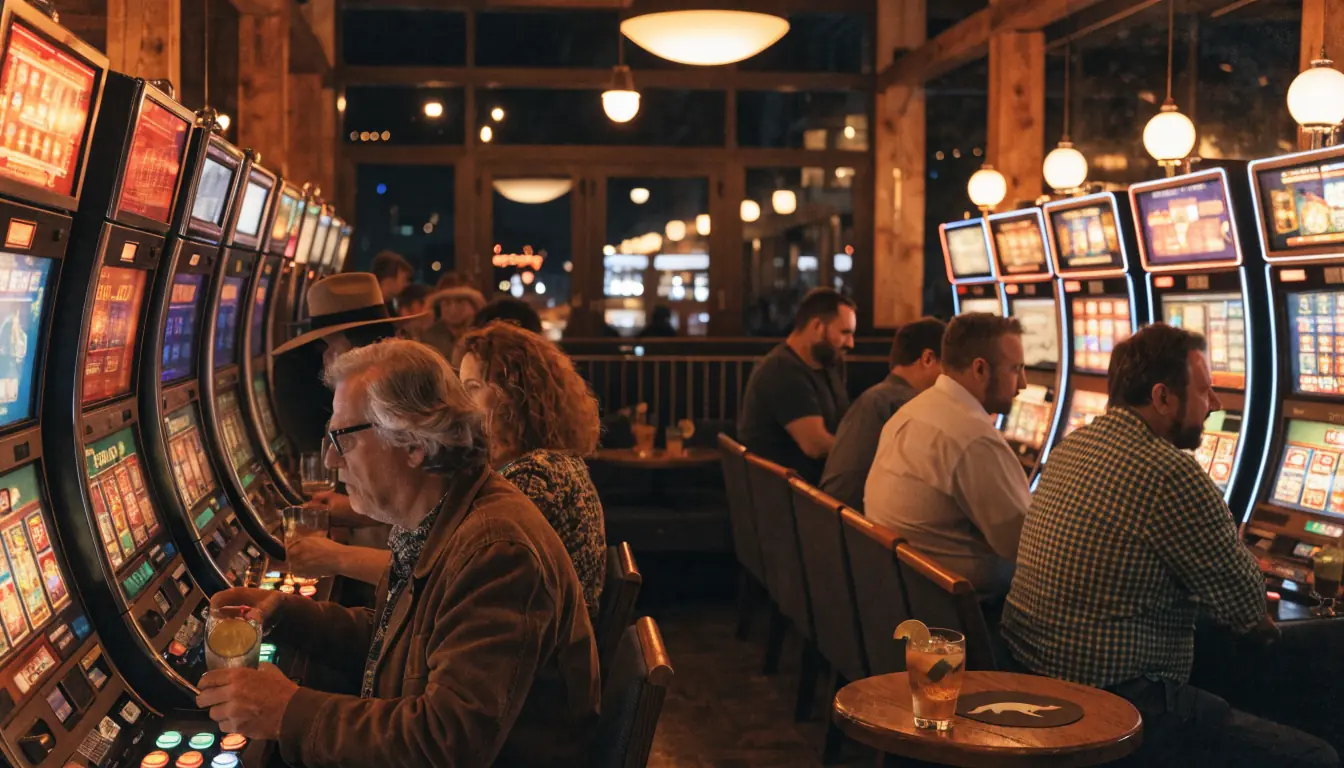
I lost track of how many hours I spent in front of a lit-up cabinet before I ever bothered to ask what the machine actually was, legally speaking. Everyone here calls them pokies. Not gaming machines, not slots — pokies. If you walk into a pub anywhere in the country and use the term "slot machine," people will know what you mean, but you’ll sound like you learned English from a Las Vegas brochure.
So let’s start with the boring part that turns out not to be boring at all once you see the numbers.
What a pokie actually is
A pokie is an electronic gaming machine — EGM in the regulatory paperwork — that takes cash or credit, runs a randomised game (usually reels, sometimes a video format), and pays out according to a fixed program. That’s it. No skill component that matters, no strategy that changes the math. You press a button, the machine does its thing, and the result is whatever the random number generator decided milliseconds before the reels stopped spinning.
Pokies are available in every Australian state and territory, in pubs, clubs and casinos.
What surprised me, once I started digging past my own bar tab, is how uniform this is across the country. Electronic gaming machines are operated in all Australian states, plus the Australian Capital Territory and the Northern Territory. There isn’t a single state or territory where you can’t find one. Pubs, clubs, casinos — pick a venue type, there’s a pokie in it somewhere. That universality is part of why the machines feel so background-noise normal to Australians and so baffling to visitors who don’t have this at home.
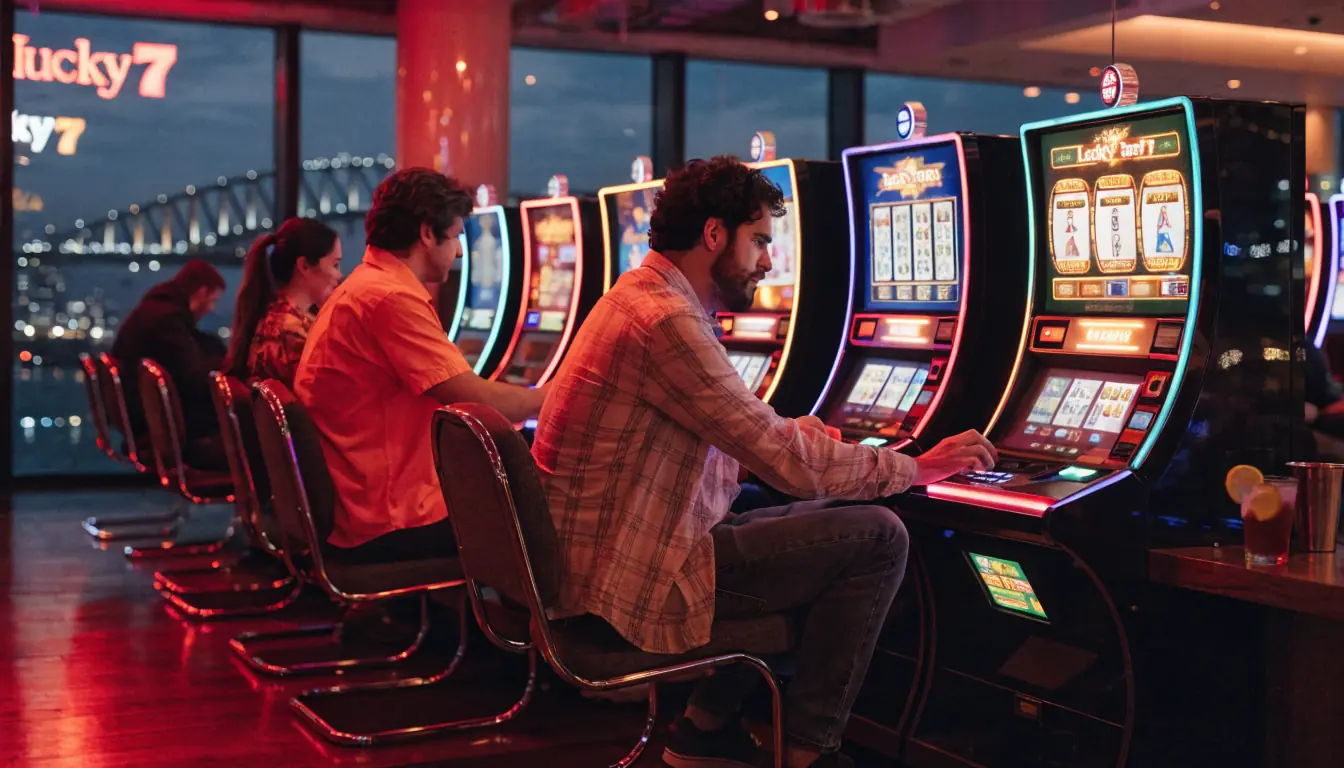
I used to think pokies were mostly a casino thing, something you’d encounter on a night out at a big venue with a doorman and a dress code. That’s backwards. The bulk of the machines I’ve personally fed coins into over the years weren’t in casinos — they were in the local pub, the RSL, the bowls club. Pokies are widely used in Australian pubs, clubs, and casinos, and the pub-and-club side is arguably the more culturally embedded one, precisely because it’s so unremarkable. You go in for a beer and a parma, and there’s a room in the back — sometimes not even a separate room, just a bank of machines against a wall — humming away.
The scale nobody talks about at the bar
Here’s the bit that actually made me sit up when I first read it, because no amount of personal losing prepares you for national numbers.
In the financial year 2020–2021, Australians placed bets worth almost AUD 150 billion on electronic gaming machines. Let that sit for a second. That’s turnover — the total value of bets made, which isn’t the same as losses, because most of that money cycles back to players as wins before it’s bet again. But even after accounting for that cycling, the amount actually lost — kept by the machines, functionally — came to about AUD 12 billion in the same financial year.
Twelve billion dollars. In one year. On machines that live in pubs and clubs and casinos across a country of roughly 26 million people.
Break that down to a per-person figure and it gets more uncomfortable, not less: per-capita losses from electronic gaming machines in FY 2020–2021 worked out to AUD 608 for every Australian. Not every gambler — every Australian, including infants, including people who’ve never touched a pokie in their life. That’s the number you get when you divide total losses by the whole population, and it tells you something about concentration: a relatively contained group of players is absorbing losses that, spread across the country, still average over six hundred dollars a head.
I did the mental exercise of comparing that to my own losses over a bad year once. I won’t share the figure, but I’ll say the national per-capita number didn’t make me feel better about my own choices. It made the whole thing look less like a personal failing and more like a machine — literally and figuratively — that’s built to produce this outcome at scale, regardless of who’s sitting in front of it.
Australia’s share of the world’s machines — and a disagreement worth naming
This is where I have to be upfront about something, because I went looking for a single clean statistic and didn’t find one.
Conflicting Share Data
Sources disagree on Australia’s share of world pokies, reporting either 3 % or 18 %.
One figure says Australia accounts for 3% of the world’s pub and club poker machines. Another, from a different source, puts it at closer to 18%. Those numbers aren’t in the same universe — one implies Australia is a modest player globally, the other implies it’s wildly overrepresented for its population size. I’m not going to pretend I can referee that dispute or quietly pick the version that sounds more dramatic. The sources disagree, and rather than smuggle one number in as settled fact, it’s more honest to say: depending on which count you trust, Australia’s share of the world’s pokies is either proportionate to a mid-sized nation or startlingly large for one. Either way, the per-capita loss figure above suggests the "startlingly large" version isn’t hard to believe.
What I can say without hedging is that the pokie is not a niche Australian curiosity. Whether the true global share is 3% or 18%, the volume of machines relative to the population is high enough that per-capita losses hit AUD 608 in a single year — a number that doesn’t happen with a handful of machines tucked away in a few casinos.
The 2023 turnover figure — reported, not gospel
There’s a more recent number floating around that I want to flag carefully rather than just drop into the text as settled truth. According to reporting from complyadvantage.com, pokies generated AUD 191.2 billion in gambling turnover in 2023. I’m naming the source deliberately, because this is one figure from one place, describing a market that shifts year to year, state by state, as machine counts change and venues open or close. It’s not something I’d treat as an official, audited industry-wide benchmark the way I’d treat a government financial-year report. Take it as a reported figure worth knowing, not as the kind of number you’d build a betting decision around.
What it does confirm, alongside the FY2020-21 figures, is direction: this isn’t a shrinking market. Turnover in the hundreds of billions, whichever year or source you’re looking at, isn’t the sign of something fading into irrelevance.
Why the machines end up wrapped up in bigger problems than "I lost money on Tuesday"
Once you sit with the scale of the cash moving through pokies, it stops being surprising that the machines attract attention well beyond frustrated punters like me. The high volume of cash transactions and the limited traceability of pokies make them attractive for money laundering — a topic the next sections will go into properly, but which is worth flagging here because it’s inseparable from the scale question. You can’t move AUD 150 billion in bets through machines that historically ran heavily on cash without creating exactly the kind of anonymous, high-volume cash flow that criminal finance loves.
I’m not going to get ahead of the dedicated section on this, but a few of the mechanics are worth planting here as context, because they explain why regulators care about scale and not just about problem gambling in the traditional sense.

Criminals insert large sums of cash into EGMs, perform minimal gambling activity, and cash out — creating a false paper record of "winnings" that’s actually just laundered cash with a receipt attached. Others buy winning tickets off other players, again converting dirty cash into something that looks like a legitimate payout. There’s also structuring across venues: spreading smaller cash deposits across multiple pubs or clubs specifically to stay under thresholds that would otherwise trigger reporting requirements.
The huge cash flow through pokies makes them attractive for money‑laundering schemes such as cash‑in, minimal play, cash‑out.
None of that is theoretical hand-wringing. It’s why the machines carry defined red flags that operators and regulators are trained to watch for: large or repeated cash insertions followed by minimal play and an immediate cash-out; frequent small redemptions across different venues within a short window; customers who refuse identification or who turn up using multiple player cards. If you’ve spent any real time on the pub circuit, you’ve probably seen behaviour that technically ticks one of these boxes without meaning anything sinister — someone cashing out fast because they’re late for something. The point of red-flag indicators isn’t that any single instance proves wrongdoing; it’s that the pattern, repeated, is what compliance teams and AUSTRAC’s 2024 guidance are built to catch.

That guidance matters because of how the machines are regulated based on their number. Venues with up to 15 pokies have to register with AUSTRAC, keep identification records, and submit suspicious matter reports when something doesn’t add up. Venues running more than 15 machines carry a heavier load: they need a dedicated compliance officer, formal risk assessments, a working AML/CFT program, customer due diligence procedures, and mandatory reporting of any cash transaction over AUD 10,000. That threshold split — 15 machines — tells you something about how the industry itself is structured. It’s not one uniform mass of identical venues; it’s a landscape of small local operators with a handful of machines sitting alongside large clubs and casinos running dozens or hundreds, each facing a genuinely different compliance burden because of it.
There’s also a technical shift underway that’s relevant to the scale conversation: the move toward cashless, account-based pokies. Transparent, account-based machines provide full traceability of deposits, gameplay, and withdrawals — a different animal entirely from a coin-fed cabinet where cash goes in, cash comes out, and nobody’s name is attached to either transaction. According to facctum.com, the adoption of cashless systems improves traceability and cuts down on the anonymity that makes the cash-heavy model attractive to launder money through. I’d flag that as one provider’s framing rather than an industry-wide consensus, but it lines up with the general direction regulators have pushed: tighter customer due diligence, better transaction monitoring, and a slow but steady move away from anonymous cash machines toward something that leaves a trail.
Why this baseline matters before anything else
I could have started this whole piece with bonus codes and welcome offers, because that’s what most people searching for pokies actually want on the surface. But none of that means much without understanding what you’re actually looking at: a machine type operating in every state and territory, moving turnover in the hundreds of billions, producing player losses in the double-digit billions annually, and carrying enough cash-handling weight that AUSTRAC has built a whole compliance tier system around venue size.
That’s the ground floor. Everything that follows — the online question, the money-laundering mechanics in more depth, the bonus fine print — sits on top of this. Once you’ve seen the per-capita loss number, AUD 608 in a single year, it’s harder to treat any of the rest as casual entertainment framing. It’s a genuinely large financial system, running through machines most people walk past without a second look on their way to the bar.
Online Pokies Landscape in Australia: Legal Boundaries and Reality
Here’s the thing that trips up half the people typing "golden pokies casino Australia 2026" or "online pokies golden crown" into a search bar: they’re looking for something that legally can’t exist. Not "hard to find." Can’t exist. There’s no Australian licence for an online casino, gold-themed or otherwise, and there never has been.
Online Pokies Illegal
Offering real‑money online pokies to Australian players breaches the Interactive Gambling Act and can lead to prosecution.
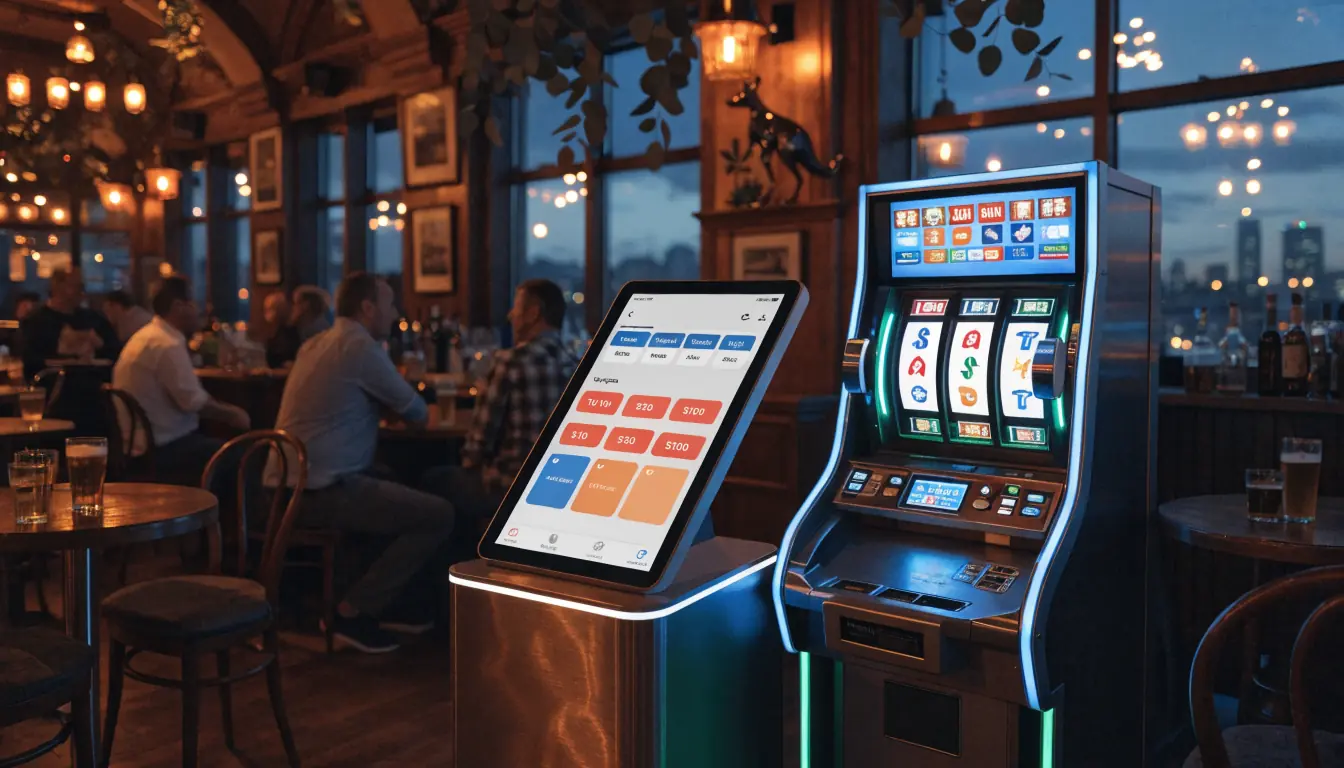
I know that’s a weird sentence to read on a page about pokies. So let me explain what’s actually going on, because the law here is narrower and blunter than most people expect.
What the Interactive Gambling Act actually bans
The Interactive Gambling Act 2001 makes it an offence for online operators to offer real-money gambling to Australian residents. That’s the whole mechanism. It doesn’t ban you from clicking a link. It bans the operator on the other end from taking your money.
So when a site brands itself as "golden crown online pokies" or "golden jaguar online pokies" or slaps "Australia" in its URL, it’s not operating under any Australian permission — it can’t, because that permission was never created. Whatever licence it shows you in a footer, if it shows one at all, comes from somewhere else entirely. It has nothing to do with the rules that apply to gaming rooms, pubs, and clubs across the states and territories I covered earlier.
This is the split you need to hold in your head:
- Land-based pokies — regulated state by state, taxed, inspected, physically sitting in a venue.
- Online real-money pokies aimed at Australians — prohibited at the federal level, full stop.
There’s no middle category. No "online but properly licensed for Aussies" tier sitting quietly between those two.
Tax rules don’t map across
One thing that carries over cleanly from the land-based side: if you win, the tax office doesn’t want a cut. Gamblers’ winnings in Australia are not taxed, online or off. That part’s consistent.
What isn’t consistent is how operators get taxed — and this only really applies to the land-based world I described in the previous section, because taxation of gambling operators in Australia varies by state and by type of gambling service. A pub in one state pays a different structure than a club in another. That variation is a domestic regulatory feature. It doesn’t transfer to offshore operators, because offshore operators aren’t inside the Australian tax system to begin with. There’s no state revenue office collecting a slice from a site running "golden goddess online pokies" out of a jurisdiction with its own licensing body.
Where the compliance weight actually sits
The heavier obligations kick in for operators running more than 15 pokies — appointing a compliance officer, running risk assessments, implementing AML/CFT programs, doing customer due diligence, reporting cash transactions over AUD 10,000. That’s a domestic regime, built for machines standing in a room, not for a browser tab.

Get it wrong on that side, and the consequences are concrete: remedial directions, infringement notices, civil fines, and the kind of reputational damage that follows a venue around. It’s a real enforcement ladder with real steps.
None of that ladder extends to an offshore site calling itself "golden century online pokies" or "golden strike pokies online." Not because those sites are somehow above scrutiny — they’re just outside the fence entirely, answering to whichever regulator issued their actual licence, if any did.
I used to assume "online version" meant the same rules, just on a screen. It doesn’t. It means a different legal universe wearing a familiar name.
Money‑Laundering Risks Linked to Pokies: What Players Should Know
Nobody explains this part when you’re feeding notes into a machine. You just play. But pokies sit on a pile of cash that moves fast and leaves almost no trail, and that combination is exactly what makes them useful to people who aren’t there to play at all.
The mechanics aren’t complicated once you see them. Someone inserts a large amount of cash, plays through a small fraction of it, then cashes out. On paper, that looks like a night at the venue. In practice, it’s a way to turn dirty money into a receipt that says "winnings." I’ve stood next to people doing exactly this and had no idea until a friend who used to work compliance pointed it out to me — the tell isn’t the machine, it’s how little they actually played before walking to the cashier.
Money Mule Risk
Recruiting money mules to funnel cash through pokies is a documented laundering method and attracts AUSTRAC scrutiny.
According to complyadvantage.com, part of this activity relies on recruiting so‑called money mules — people brought in specifically to move funds through pokies venues on someone else’s behalf. Whether that’s the dominant method or just one of several, I can’t tell you; the sourcing on this varies depending on who’s writing the report. But the pattern shows up often enough to matter.
What actually gets flagged

AUSTRAC put out a guide in 2024 aimed at helping venues and operators spot this kind of activity before it slides through. The red flags it lists aren’t exotic:
- Unusually high cash access — someone pulling far more cash than their apparent means would suggest.
- Large deposits — lump sums going into machines rather than the usual steady, smaller play.
- Cash transfers — money moving between people or accounts around the gaming session itself.
- Casino disbursement checks — payouts that don’t line up with the actual play recorded.
- Certain occupations — roles that give someone plausible cover for handling large cash volumes.
None of these prove anything on their own. I’ve had unusually large cash on me for boring reasons — sold a car, hadn’t been to the bank. The point of the guide isn’t to accuse every big spender, it’s to give venues a pattern to check against instead of just eyeballing it.
Why pokies specifically
It comes down to volume and traceability. Cash goes in, cash comes out, and unless a venue is tracking play closely, there’s no clean record connecting the two. Compare that to a bank transfer, which leaves a paper trail almost by design. Pokies, especially cash‑fed ones, don’t have that built in.
None of this means the machine next to you is part of something dodgy. Most people playing are exactly what they look like — bored, hopeful, occasionally furious at a machine that ate their last twenty. But if you’ve ever wondered why venues ask for ID more than they used to, or why staff seem to watch certain cash‑outs more closely, this is the reason. It’s not paranoia dressed up as policy. It’s a response to something regulators have already documented happening.
Bonuses, Deposit Codes and Compliance: Navigating the Fine Print
Every time I typed something like "no deposit bonus code" into a search bar, I found the same pattern: a shiny promo, a code you punch in, and a wall of text underneath that nobody reads. That wall of text is where the actual deal lives. "Free chips" sounds like a gift. What it actually is — a set of conditions written by someone whose job is to make sure the house doesn’t lose.
Here’s the part that matters more than any code: an online casino offering these promotions to Australian players isn’t operating under any local licence, because no such licence exists for online casino games here. So a "sign up bonus" from a site like that isn’t a regulated offer with a paper trail you can appeal to — it’s a private arrangement with an operator sitting outside Australian oversight entirely.
That doesn’t mean there’s no accountability anywhere in the pokies world. It’s just aimed at land-based venues, not at deposit-code promos. Operators — the actual venues holding pokies licences — face real consequences for compliance failures. Non-compliant ones can get remedial directions, infringement notices, civil fines, and the kind of reputational damage that doesn’t wash off. In NSW specifically, an amendment to the Casino Control Act 1992 lets regulators fine casino operators up to AUD 100 million for failing to meet their obligations.
None of that machinery applies to whoever emailed you a "golden" bonus code last week. There’s no register to check them against, no local fine waiting for them if the terms turn out rotten. The fine print isn’t a formality you skip to claim the chips faster — it’s the only document that tells you what you actually agreed to, from an operator nobody here is watching.
How can I verify if a gambling operator is legal?
The Interactive Gambling Act (2001) makes it an offence for online operators to offer real-money gambling to Australian residents. You can verify a venue’s compliance by checking if it follows AUSTRAC guidelines, such as keeping identification records and submitting suspicious matter reports.
Why are transparent pokies systems important for AML?
They provide full traceability of deposits, gameplay, and withdrawals, which directly reduces the anonymity criminals exploit. Cashless, account-based systems make it much harder to insert dirty cash, play minimally, and cash out to create a false record of winnings.
How to recognise problem signs and where to get help?
Key red flags include large or repeated cash insertions followed by minimal play and immediate cash-out, frequent small redemptions across different venues, and refusing identification or using multiple player cards. If you notice these patterns, contact AUSTRAC or a financial crime regulator, as they issued a guide in 2024 to help firms recognize money-laundering red flags.